

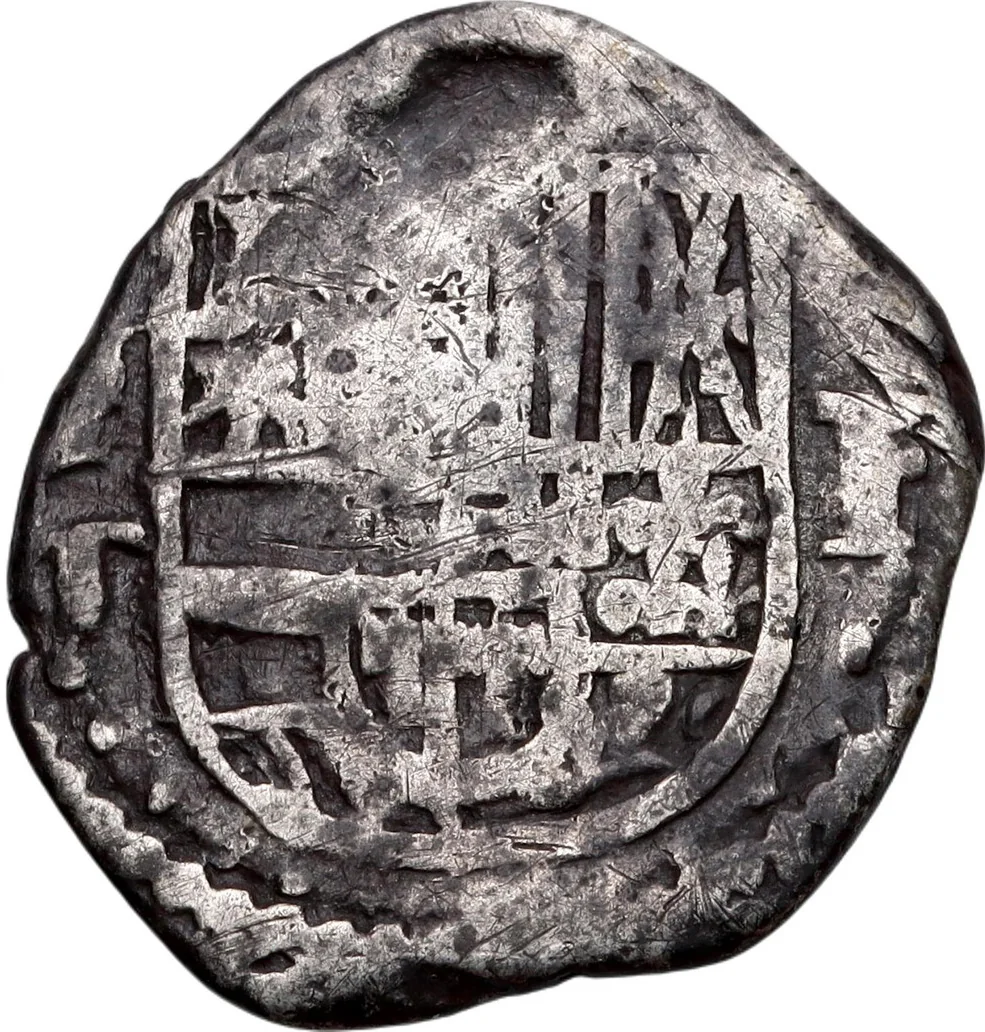
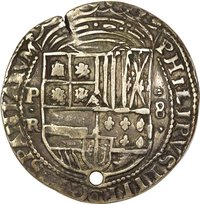
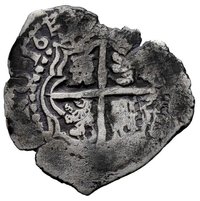
Obverse
Description:
Coat of arms with encircling legend.
Inscription:
PHILLIPPVS IIII D G HISPANIARVM
Script: Latin
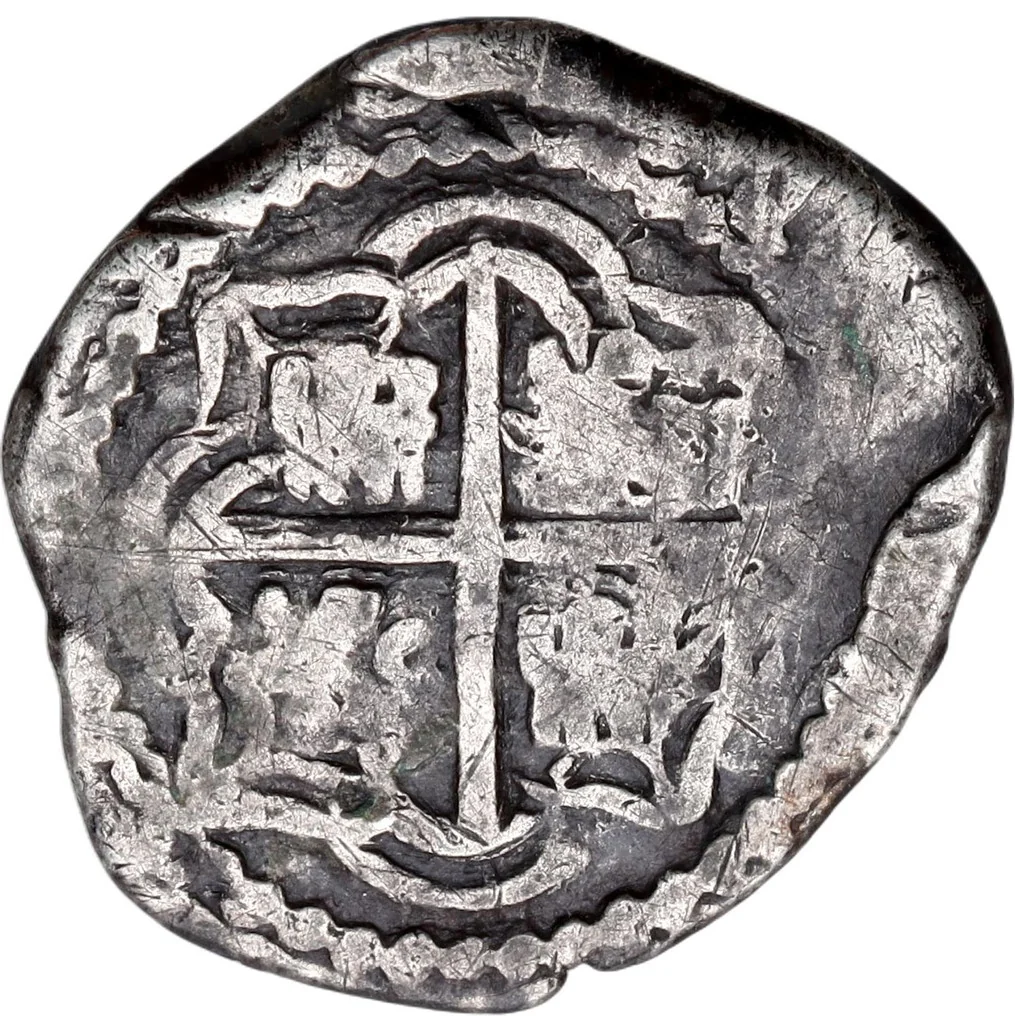
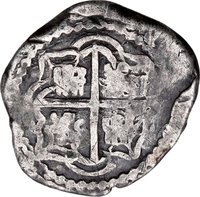
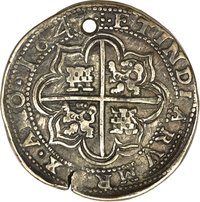
Reverse
Description:
Jerusalem Cross with interior castles and lions.
Edge
Mintings
| Year | Mint Mark | Mintage | Quality | Collection |
|---|---|---|---|---|
| 1626 | P | — | ||
| 1628 | P | — | ||
| 1629 | P | — | ||
| 1630 | P | — | ||
| 1631 | P | — | ||
| 1632 | P | — | ||
| 1633 | P | — | ||
| 1634 | P | — | ||
| 1636 | P | — | ||
| 1637 | P | — | ||
| 1638 | P | — | ||
| 1639 | P | — | ||
| 1640 | P | — | ||
| 1641 | P | — | ||
| 1642 | P | — | ||
| 1643 | P | — | ||
| 1644 | P | — | ||
| 1645 | P | — | ||
| 1646 | P | — | ||
| 1647 | P | — | ||
| 1648 | P | — |
Historical background
In 1626, the currency situation in the Royal Audiencia of Charcas (modern Bolivia) was defined by a profound duality. The region, centered on the wealthy silver mining city of Potosí, was the financial engine of the Spanish Empire, yet it suffered from a chronic shortage of official circulating coinage. The primary currency was silver, in both raw bar form (barras de plata) and as coins minted at the Potosí mint (Casa de la Moneda), established in 1574. However, the output of the mint struggled to keep pace with the immense volume of silver extracted from Cerro Rico, and much of the certified coin was immediately exported to pay for imperial expenses or goods from Europe and Asia, leaving the local economy starved of legal tender.
This scarcity led to the widespread use of informal and substitute currencies. The most common was macuquina—crude, irregularly cut and hammer-struck coins that were often debased or clipped. While officially illegal, their practicality made them a staple of everyday transactions. Additionally, in indigenous communities and local markets, traditional barter systems persisted, using goods like coca leaves, textiles, and agricultural products as mediums of exchange. This created a fragmented monetary landscape where large-scale imperial finance coexisted with a local economy reliant on unreliable coin and pre-Hispanic traditions.
The underlying tension in 1626 was one of imperial extraction versus local need. The Spanish Crown prioritized the flow of standardized silver to Seville, enforcing laws and taxes to that end. However, the distance from central authority and the economic realities of the Andes fostered a chaotic and adaptive monetary environment. This situation was poised for further turmoil, as the Potosí mint was still reeling from the great debasement scandal of the 1640s (though a few years in the future), which had its roots in the persistent pressures of the 1620s to produce more coin from declining ore grades, ultimately leading to widespread currency corruption.
This scarcity led to the widespread use of informal and substitute currencies. The most common was macuquina—crude, irregularly cut and hammer-struck coins that were often debased or clipped. While officially illegal, their practicality made them a staple of everyday transactions. Additionally, in indigenous communities and local markets, traditional barter systems persisted, using goods like coca leaves, textiles, and agricultural products as mediums of exchange. This created a fragmented monetary landscape where large-scale imperial finance coexisted with a local economy reliant on unreliable coin and pre-Hispanic traditions.
The underlying tension in 1626 was one of imperial extraction versus local need. The Spanish Crown prioritized the flow of standardized silver to Seville, enforcing laws and taxes to that end. However, the distance from central authority and the economic realities of the Andes fostered a chaotic and adaptive monetary environment. This situation was poised for further turmoil, as the Potosí mint was still reeling from the great debasement scandal of the 1640s (though a few years in the future), which had its roots in the persistent pressures of the 1620s to produce more coin from declining ore grades, ultimately leading to widespread currency corruption.
✨ Legendary