

1 Quattrino – Ravenna
Italy
Context
Year: 1744
Country: Italy 
Issuer: Ravenna
Ruler: Benedict XIV
Currency:
(1534—1835)
Demonetized: Yes
Material
References
KM: #Click to copy to clipboard5
Numista: #306959
Obverse
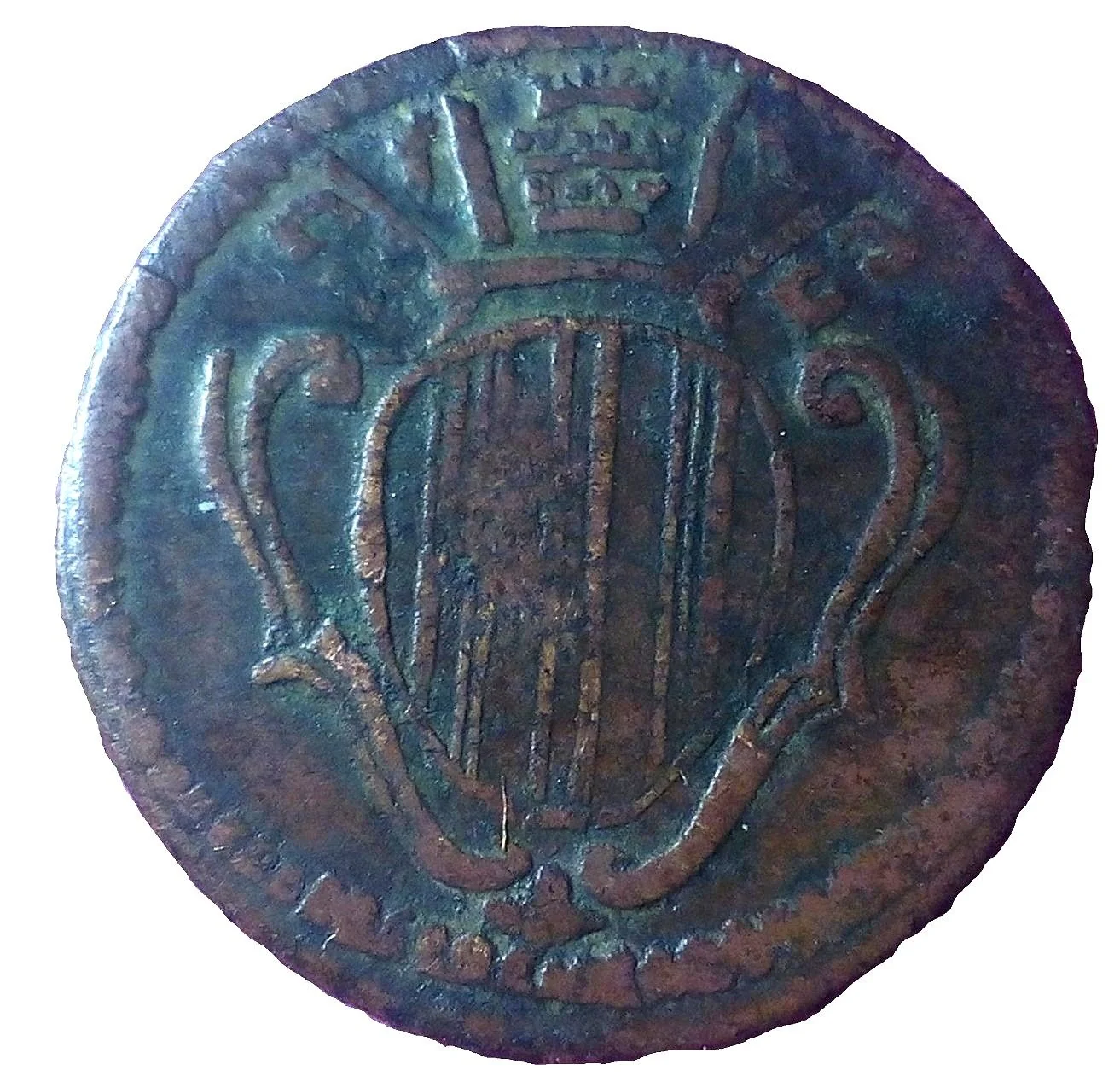
Description:
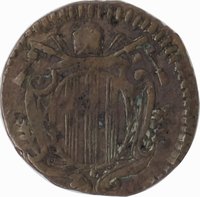
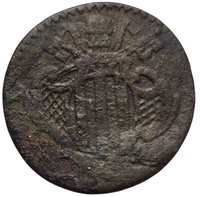
Papal arms over Lambertini shield.
Reverse
Description:
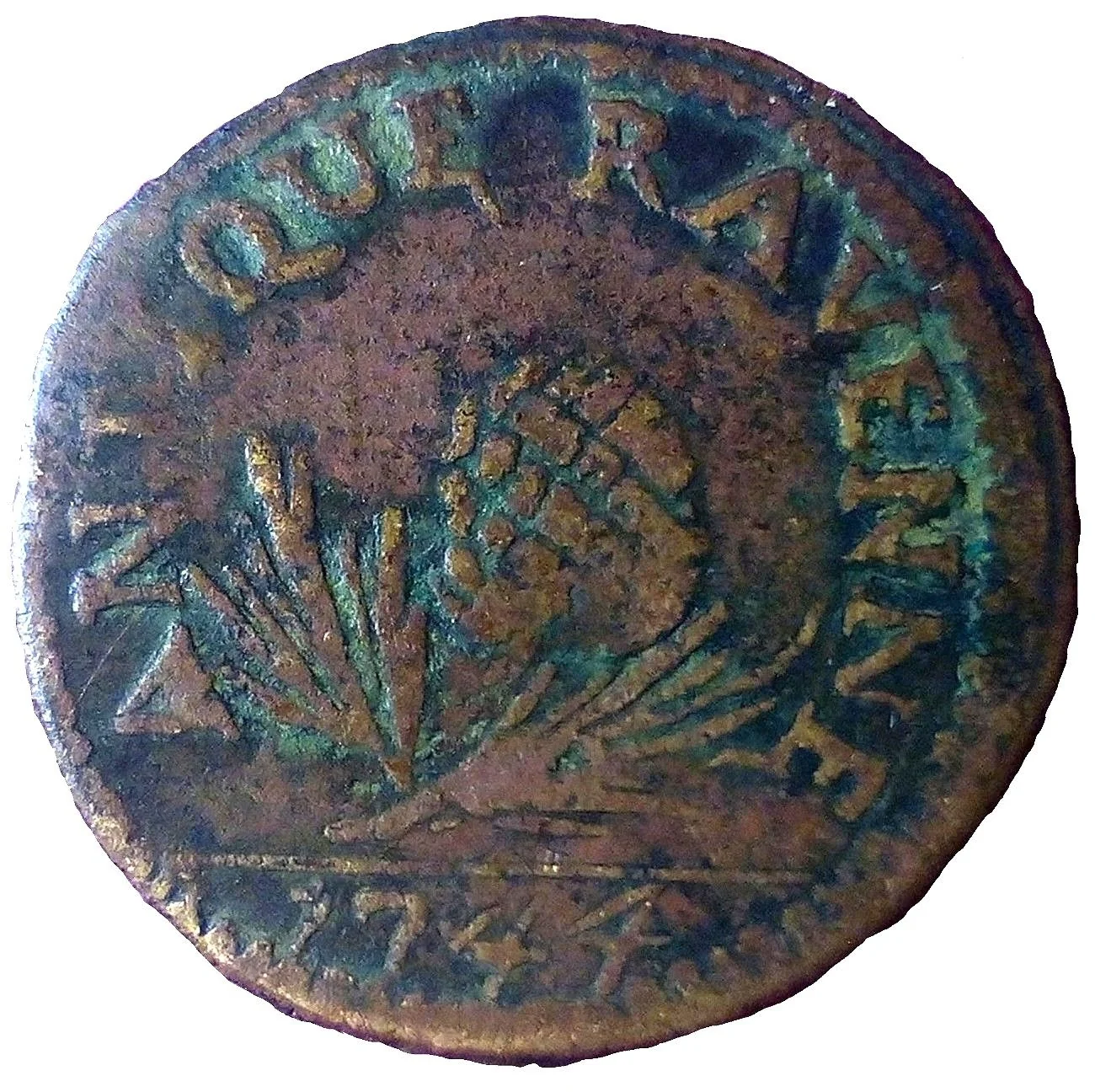
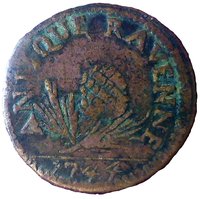
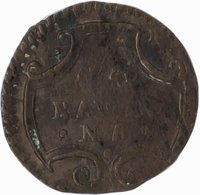
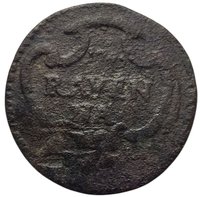
Pine branch with cone, date below. Legend begins left.
Inscription:
ANTIQUE RAVENNE
1744
1744
Script: Latin
Edge
Plain
Categories
| Symbols> Coat of Arms |
Mints
| Name | Mark |
|---|---|
| Ravenna | — |
Mintings
| Year | Mint Mark | Mintage | Quality | Collection |
|---|---|---|---|---|
| 1744 | — | — |
Historical background
In 1744, Ravenna, as part of the Papal States, operated within a complex and often chaotic monetary system. The city did not mint its own coins but used a mixture of currencies that circulated simultaneously. The official standard was the Papal scudo, divided into 100 baiochi, each worth 5 quattrini. However, the practical economy was dominated by a bewildering array of foreign coins, particularly from neighbouring states like the Republic of Venice (zecchino, ducato), the Grand Duchy of Tuscany (fiorino), and various Spanish and Austrian silver pieces. This created a daily reality of constant calculation and uncertainty for merchants and citizens alike.
The value of these coins was not fixed by a central authority but fluctuated based on their metallic content (gold, silver, or billon), wear, and market confidence. This led to widespread practices of clipping, counterfeiting, and the hoarding of "good" full-weight coins, which further degraded the circulating medium. Moneychangers (banchieri) held significant power, setting exchange rates that could vary from day to day and taking a profit on every transaction, effectively taxing commerce and adding to the cost of goods.
This monetary fragmentation mirrored Ravenna's political and economic position—a once-great city now under distant papal administration, with its Adriatic trade influenced by more powerful maritime economies. The lack of uniform currency stifled commerce, complicated tax collection for the papal legate, and created a constant source of grievance and fraud. It was a system that privileged those with financial expertise and access to hard currency, while burdening the local populace with inefficiency and instability in their most basic economic transactions.
The value of these coins was not fixed by a central authority but fluctuated based on their metallic content (gold, silver, or billon), wear, and market confidence. This led to widespread practices of clipping, counterfeiting, and the hoarding of "good" full-weight coins, which further degraded the circulating medium. Moneychangers (banchieri) held significant power, setting exchange rates that could vary from day to day and taking a profit on every transaction, effectively taxing commerce and adding to the cost of goods.
This monetary fragmentation mirrored Ravenna's political and economic position—a once-great city now under distant papal administration, with its Adriatic trade influenced by more powerful maritime economies. The lack of uniform currency stifled commerce, complicated tax collection for the papal legate, and created a constant source of grievance and fraud. It was a system that privileged those with financial expertise and access to hard currency, while burdening the local populace with inefficiency and instability in their most basic economic transactions.
✨ Legendary