

1 Dam – Afghanistan
Afghanistan
Context
Material
Diameter: 22 mm
Weight: 18.5 g
Thickness: 7 mm
Shape: Irregular round
Composition: Copper
Magnetic: No
References
KM: #Click to copy to clipboard561
Numista: #30306
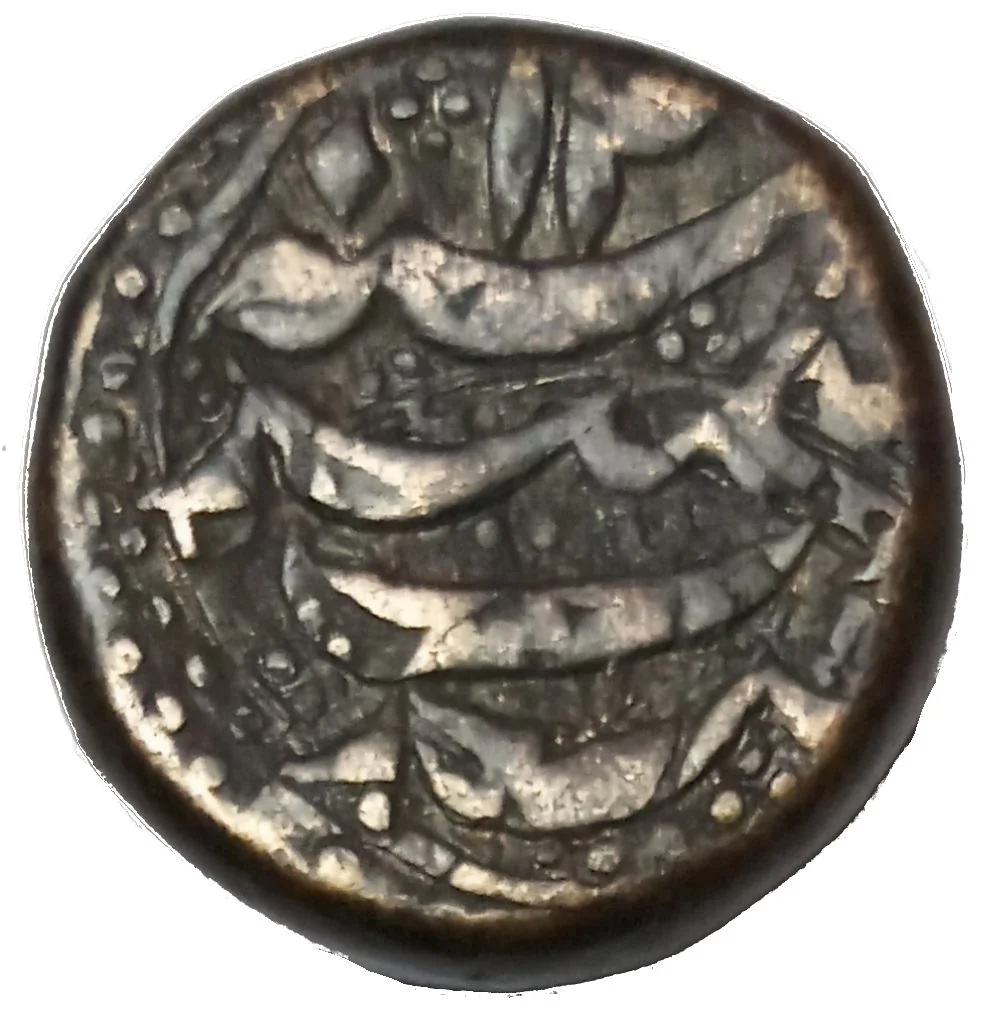
Obverse
Description:
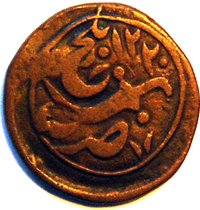
The reign year is off the edge on the obverse.
Script: Arabic
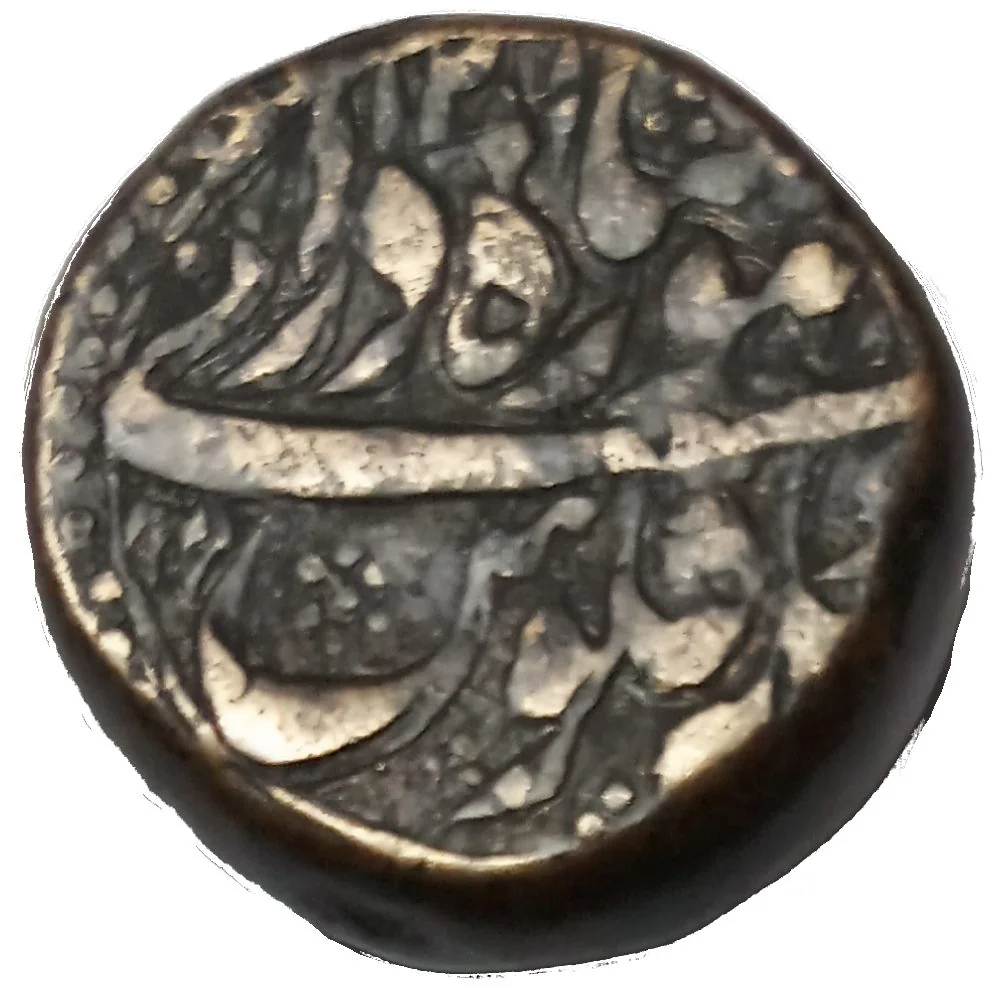
Reverse
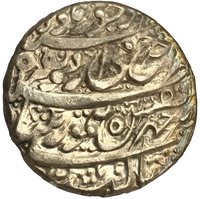
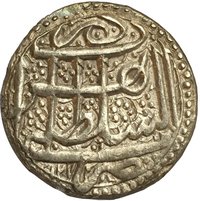
Script: Arabic
Edge
Smooth (irregular) with reignal year inscripted in arabic numerals
Mintings
| Year | Mint Mark | Mintage | Quality | Collection |
|---|---|---|---|---|
| 1785 | — | — | ||
| 1786 | — | — | ||
| 1787 | — | — | ||
| 1788 | — | — | ||
| 1789 | — | — | ||
| 1790 | — | — |
Historical background
In 1785, Afghanistan was not a unified nation-state but a patchwork of competing principalities and tribal confederacies, most notably under the Durrani Empire, founded by Ahmad Shah Durrani. The empire, though past its zenith following Ahmad Shah's death in 1772, remained the dominant political framework. The currency situation was therefore intrinsically linked to the empire's vast but fracturing territories, which stretched from eastern Persia to northern India. This geographic span placed Afghanistan at the crossroads of major trade routes, making its monetary system a complex amalgam of local and foreign influences.
The primary circulating currency was the Durrani silver rupee, first minted by Ahmad Shah Durrani, which served as the standard monetary unit. These coins were often minted in major cities like Kabul, Kandahar, and Peshawar, bearing the ruler's name and religious inscriptions. However, the political instability following Ahmad Shah's death led to inconsistent minting standards and weight, causing fluctuations in purity and value. Alongside these rupees, a plethora of other coins circulated freely, including older Mughal rupees from India, Safavid and Afsharid coins from Persia, and even Bukharan tenga from Central Asia. This created a monetized but heterogeneous economy where merchants and money-changers (sarraf) were essential for assessing and exchanging this mixed specie.
The currency system in 1785 was thus characterized by decentralization and practical adaptation. While the Durrani rupee provided a nominal standard, the reality in bazaars and trade caravans was one of calculated barter and careful evaluation of diverse coinage. The authority to mint was a key prerogative of power, contested among Ahmad Shah's successors, meaning that the currency's reliability was directly tied to the fluctuating fortunes of regional governors and claimants to the throne. This monetary landscape reflected the empire's condition: still functioning within established commercial traditions but increasingly vulnerable to the centrifugal forces of regional fragmentation.
The primary circulating currency was the Durrani silver rupee, first minted by Ahmad Shah Durrani, which served as the standard monetary unit. These coins were often minted in major cities like Kabul, Kandahar, and Peshawar, bearing the ruler's name and religious inscriptions. However, the political instability following Ahmad Shah's death led to inconsistent minting standards and weight, causing fluctuations in purity and value. Alongside these rupees, a plethora of other coins circulated freely, including older Mughal rupees from India, Safavid and Afsharid coins from Persia, and even Bukharan tenga from Central Asia. This created a monetized but heterogeneous economy where merchants and money-changers (sarraf) were essential for assessing and exchanging this mixed specie.
The currency system in 1785 was thus characterized by decentralization and practical adaptation. While the Durrani rupee provided a nominal standard, the reality in bazaars and trade caravans was one of calculated barter and careful evaluation of diverse coinage. The authority to mint was a key prerogative of power, contested among Ahmad Shah's successors, meaning that the currency's reliability was directly tied to the fluctuating fortunes of regional governors and claimants to the throne. This monetary landscape reflected the empire's condition: still functioning within established commercial traditions but increasingly vulnerable to the centrifugal forces of regional fragmentation.
💎 Very Rare