

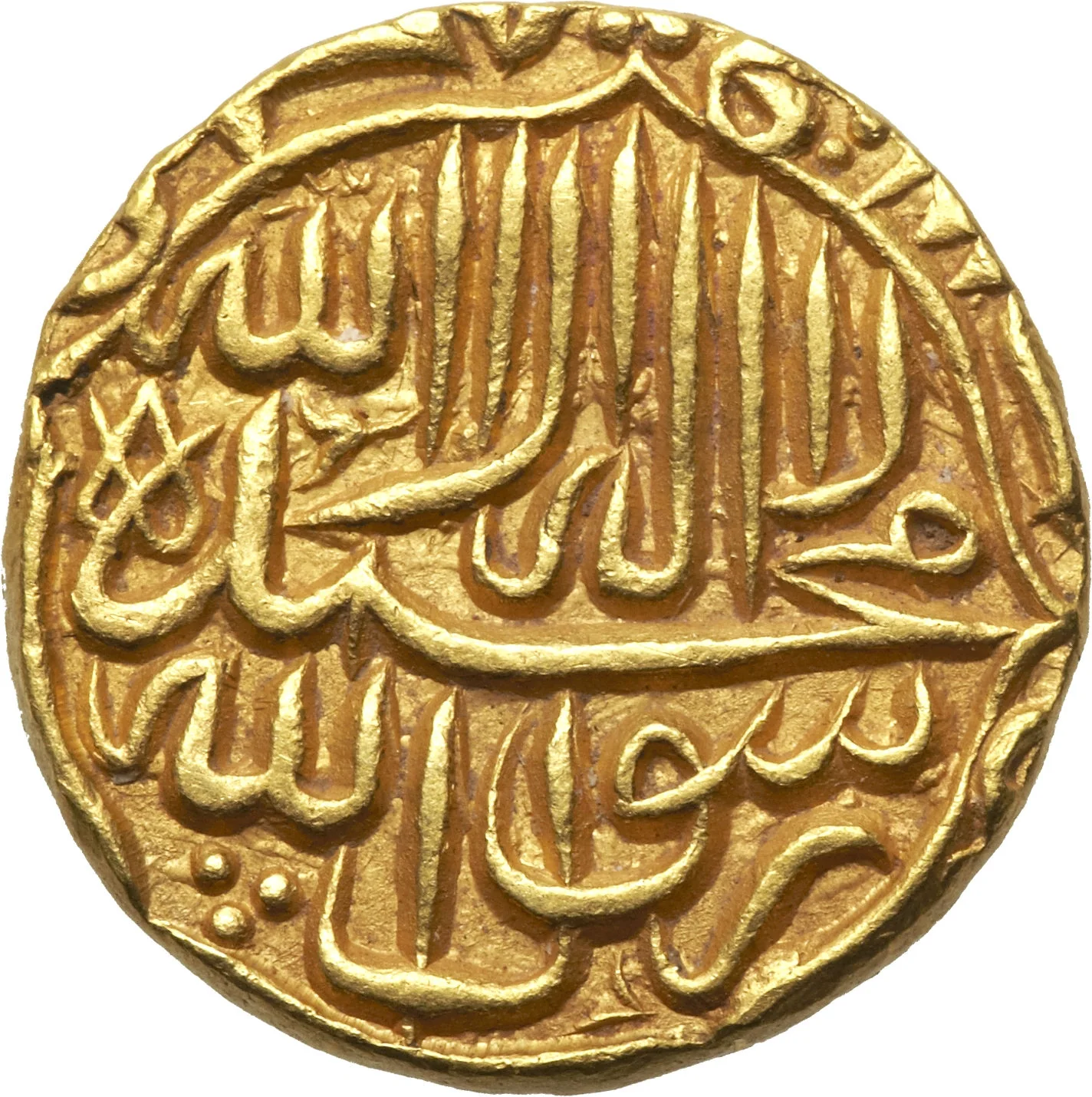
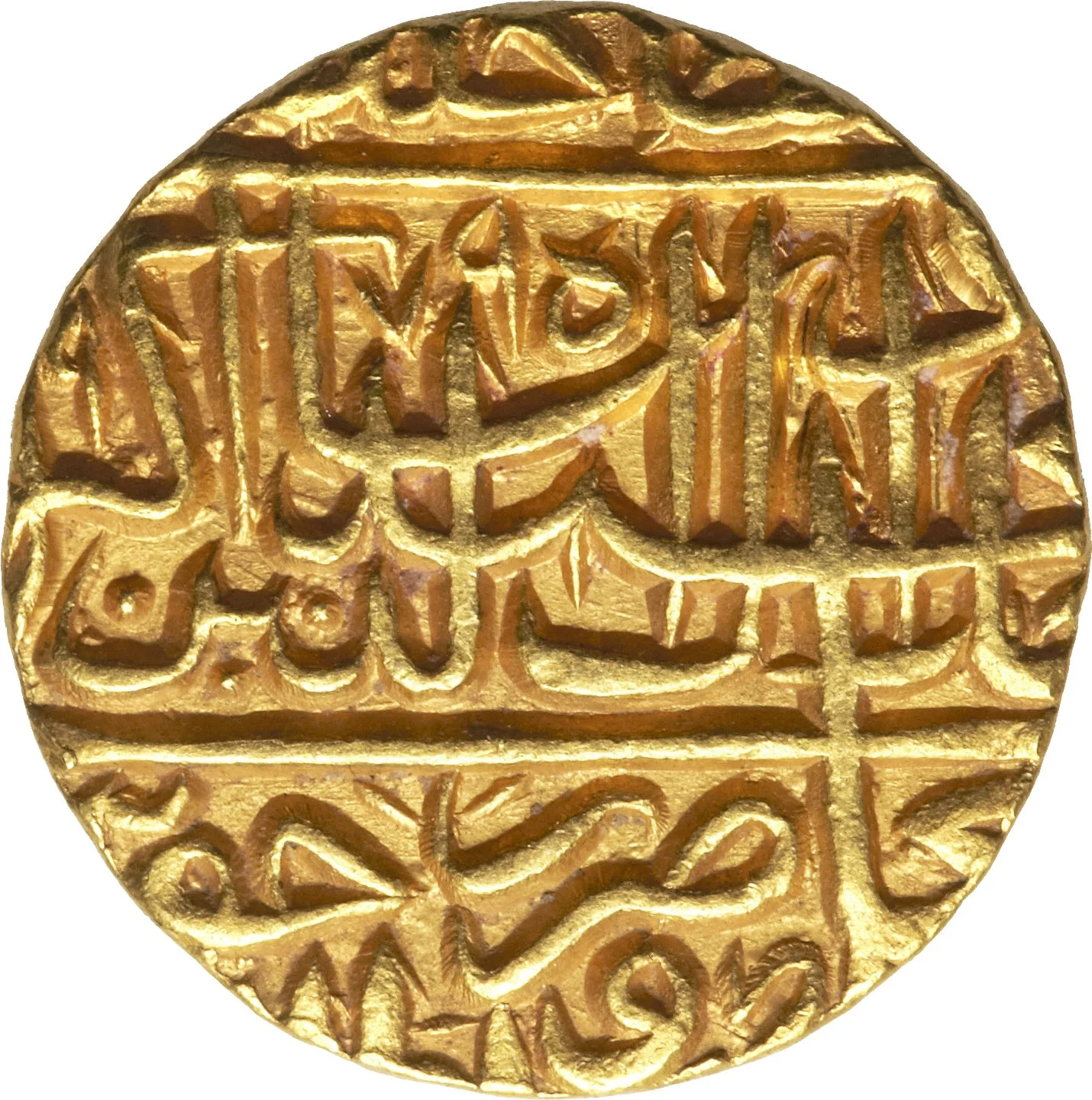
1 Mohur – Mughal Empire
India
Context
Years: 1567–1573
Country: India 
Issuer: Mughal Empire
Ruler: Akbar
Currency:
(1540—1842)
Demonetized: Yes
Material
Diameter: 22 mm
Weight: 10.86 g
Gold weight: 10.86 g
Shape: Irregular round
Composition: Gold
Magnetic: No
References
KM: #Click to copy to clipboard105.4
Numista: #50466
Value
Bullion value: $1811.43
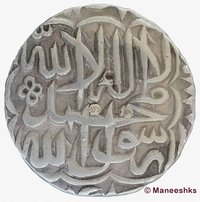
Obverse
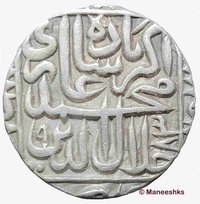
Reverse
Edge
Mintings
| Year | Mint Mark | Mintage | Quality | Collection |
|---|---|---|---|---|
| 1567 | — | — | ||
| 1568 | — | — | ||
| 1569 | — | — | ||
| 1570 | — | — | ||
| 1571 | — | — | ||
| 1572 | — | — | ||
| 1573 | — | — |
Historical background
In 1567, the Mughal Empire's currency system was in a formative yet robust state, having been significantly standardized by Emperor Akbar (r. 1556–1605). The foundation was the silver rupiya, a high-purity coin that would become the empire's principal monetary unit for centuries. Alongside it circulated the gold mohur, used for high-value transactions and state treasuries, and a variety of copper dams, which served as the everyday small change for the vast majority of the population. This trimetallic system was managed through a network of imperial mints (dar al-zarb), which ensured consistent weight and fineness, a key factor in the currency's wide acceptance.
The year 1567 falls within a period of intense military expansion and administrative consolidation for Akbar. Major campaigns, like the ongoing siege of Chittor (1567-1568), required enormous financial resources to pay armies and fund logistics. This placed a critical demand on the currency system to produce reliable coinage to facilitate state expenditure and economic integration of newly conquered territories. The efficient flow of silver, much of it sourced from trade with the New World via the Ottoman Empire and maritime routes, was vital for minting the rupiyas that funded these imperial ambitions.
Despite the centralizing efforts, the monetary landscape was not entirely uniform. Older regional coinages from pre-Mughal Sultanates and concurrent neighbouring kingdoms still circulated in some areas. Furthermore, the system's efficiency was underpinned by a sophisticated bureaucratic apparatus for assay and minting that was still being perfected. Thus, in 1567, the Mughal currency was a dynamic and powerful tool of imperial policy, successfully supporting Akbar's expansion, but it would reach its peak of uniformity and complexity only later with further administrative reforms and the full integration of the subcontinent's economy.
The year 1567 falls within a period of intense military expansion and administrative consolidation for Akbar. Major campaigns, like the ongoing siege of Chittor (1567-1568), required enormous financial resources to pay armies and fund logistics. This placed a critical demand on the currency system to produce reliable coinage to facilitate state expenditure and economic integration of newly conquered territories. The efficient flow of silver, much of it sourced from trade with the New World via the Ottoman Empire and maritime routes, was vital for minting the rupiyas that funded these imperial ambitions.
Despite the centralizing efforts, the monetary landscape was not entirely uniform. Older regional coinages from pre-Mughal Sultanates and concurrent neighbouring kingdoms still circulated in some areas. Furthermore, the system's efficiency was underpinned by a sophisticated bureaucratic apparatus for assay and minting that was still being perfected. Thus, in 1567, the Mughal currency was a dynamic and powerful tool of imperial policy, successfully supporting Akbar's expansion, but it would reach its peak of uniformity and complexity only later with further administrative reforms and the full integration of the subcontinent's economy.
✨ Legendary