

1½ Thaler – Brunswick-Lüneburg-Celle
Germany
Context
Year: 1661
Country: Germany 
Issuer: Brunswick-Lüneburg-Celle
Ruler: Christian Louis
Currency:
Demonetized: Yes
References
KM: #Click to copy to clipboard251.2
Numista: #301383
Obverse
Description:
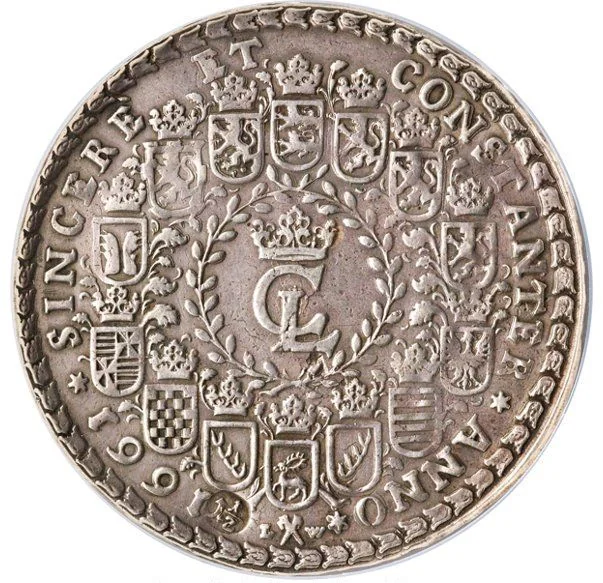
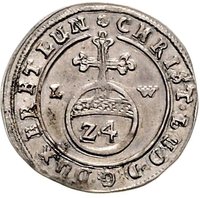
Monogram & coat of arms.
Inscription:
SINCERE ET CONSTANTER ANNO 1661
CL
1 1/2
LW
CL
1 1/2
LW
Reverse
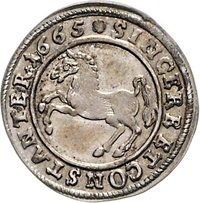
Description:
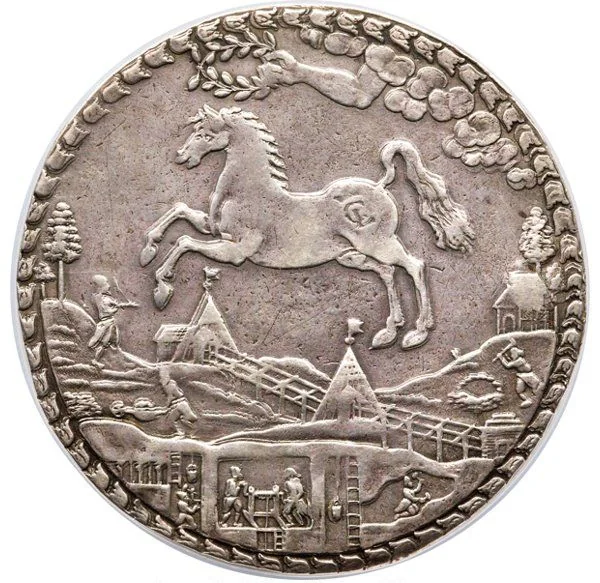
Horse leaping left over a mine.
Inscription:
CL
Edge
Mints
| Name | Mark |
|---|---|
| Clausthal | — |
Mintings
| Year | Mint Mark | Mintage | Quality | Collection |
|---|---|---|---|---|
| 1661 | — | — |
Historical background
In 1661, the Duchy of Brunswick-Lüneburg, specifically the Principality of Celle under Duke Christian Louis, was entangled in the complex and debilitating monetary fragmentation that characterized the Holy Roman Empire. The region operated within a web of competing coinage systems, where multiple state mints (notably those of Brunswick, Lüneburg, and the city of Hanover) issued their own coins, often with varying silver content and value. This lack of a unified currency created chronic instability, facilitating practices like coin clipping and the circulation of debased foreign coins, which eroded public trust and hampered commerce.
The situation was further aggravated by the economic aftermath of the Thirty Years' War (1618-1648), which had left the German states financially exhausted. Princes frequently resorted to Kipper- und Wipperzeit tactics—deliberately debasing coinage to generate short-term revenue from seigniorage, only to later recall and re-mint coins at a higher standard. This cycle created inflationary spikes and deflationary hardship. In Celle, while the worst excesses of that period were past, the underlying structural problem remained: a patchwork of currencies that made trade across even small distances within the duchy itself a matter of difficult calculation and exchange.
Consequently, 1661 fell within a period of ongoing, but slow and often regional, attempts at monetary reform. Duke Christian Louis and his counterparts in the other Brunswick-Lüneburg territories were under pressure to stabilize trade by agreeing on common minting standards, often guided by the imperial framework of the Reichstaler. However, progress was piecemeal, as each ruler guarded his minting rights (Münzregal) as a key sovereign privilege and source of income. Thus, the currency situation in Brunswick-Lüneburg-Celle in 1661 was one of fragile and contested transition, marked by the lingering chaos of past debasements and the hesitant, negotiated movement toward greater monetary order.
The situation was further aggravated by the economic aftermath of the Thirty Years' War (1618-1648), which had left the German states financially exhausted. Princes frequently resorted to Kipper- und Wipperzeit tactics—deliberately debasing coinage to generate short-term revenue from seigniorage, only to later recall and re-mint coins at a higher standard. This cycle created inflationary spikes and deflationary hardship. In Celle, while the worst excesses of that period were past, the underlying structural problem remained: a patchwork of currencies that made trade across even small distances within the duchy itself a matter of difficult calculation and exchange.
Consequently, 1661 fell within a period of ongoing, but slow and often regional, attempts at monetary reform. Duke Christian Louis and his counterparts in the other Brunswick-Lüneburg territories were under pressure to stabilize trade by agreeing on common minting standards, often guided by the imperial framework of the Reichstaler. However, progress was piecemeal, as each ruler guarded his minting rights (Münzregal) as a key sovereign privilege and source of income. Thus, the currency situation in Brunswick-Lüneburg-Celle in 1661 was one of fragile and contested transition, marked by the lingering chaos of past debasements and the hesitant, negotiated movement toward greater monetary order.
✨ Legendary