

6 Thalers – Brunswick-Lüneburg-Celle
Germany
Context
Year: 1648
Country: Germany 
Issuer: Brunswick-Lüneburg-Celle
Ruler: Christian Louis
Currency:
Demonetized: Yes
References
KM: #Click to copy to clipboard199
Numista: #295302
Value
Bullion value: $499.52
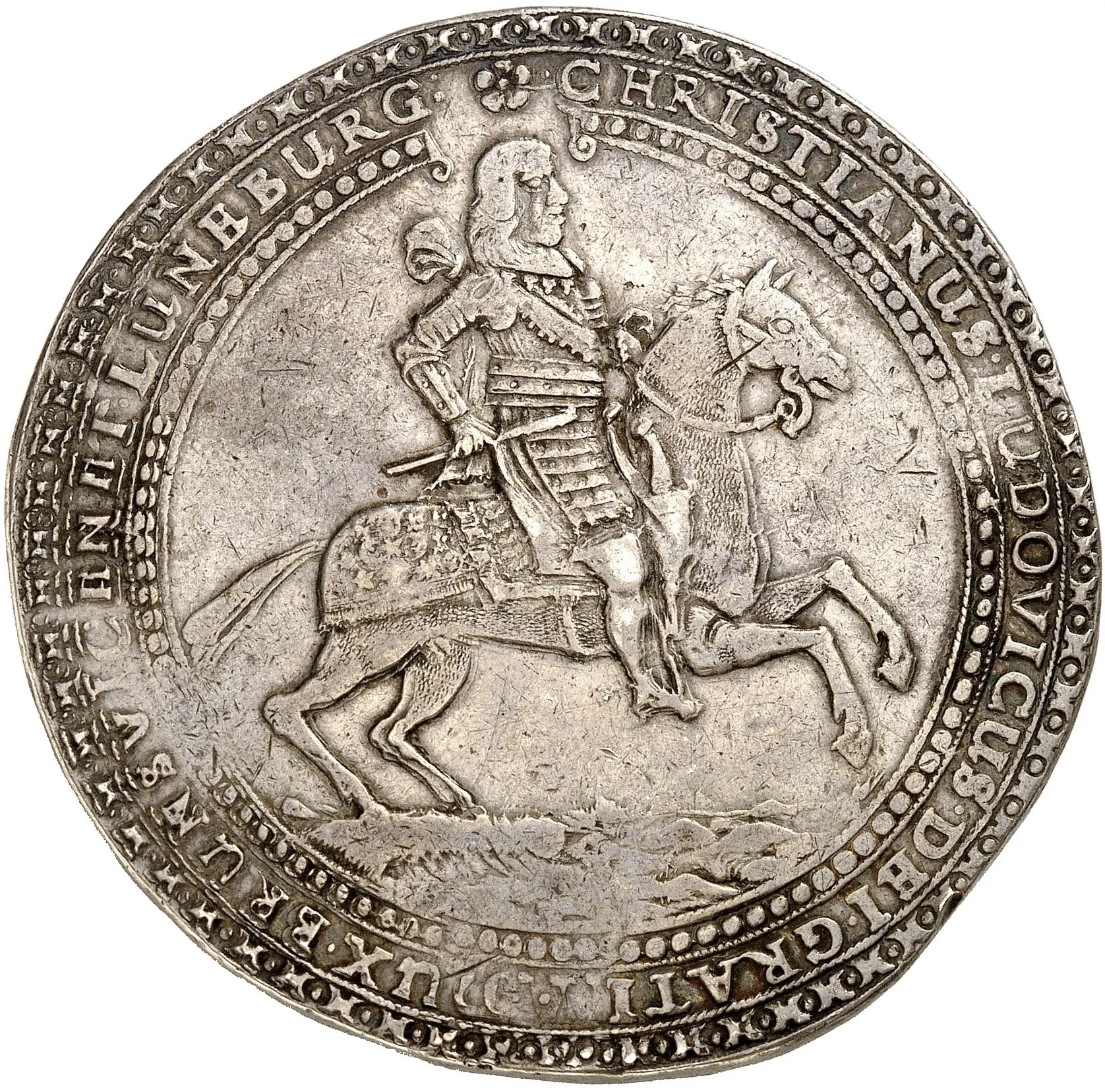
Obverse
Description:
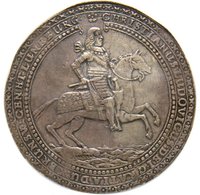
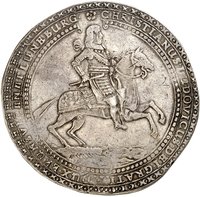
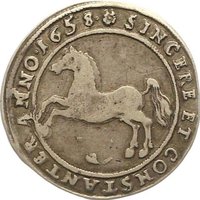
Duke on rearing horse.
Script: Latin
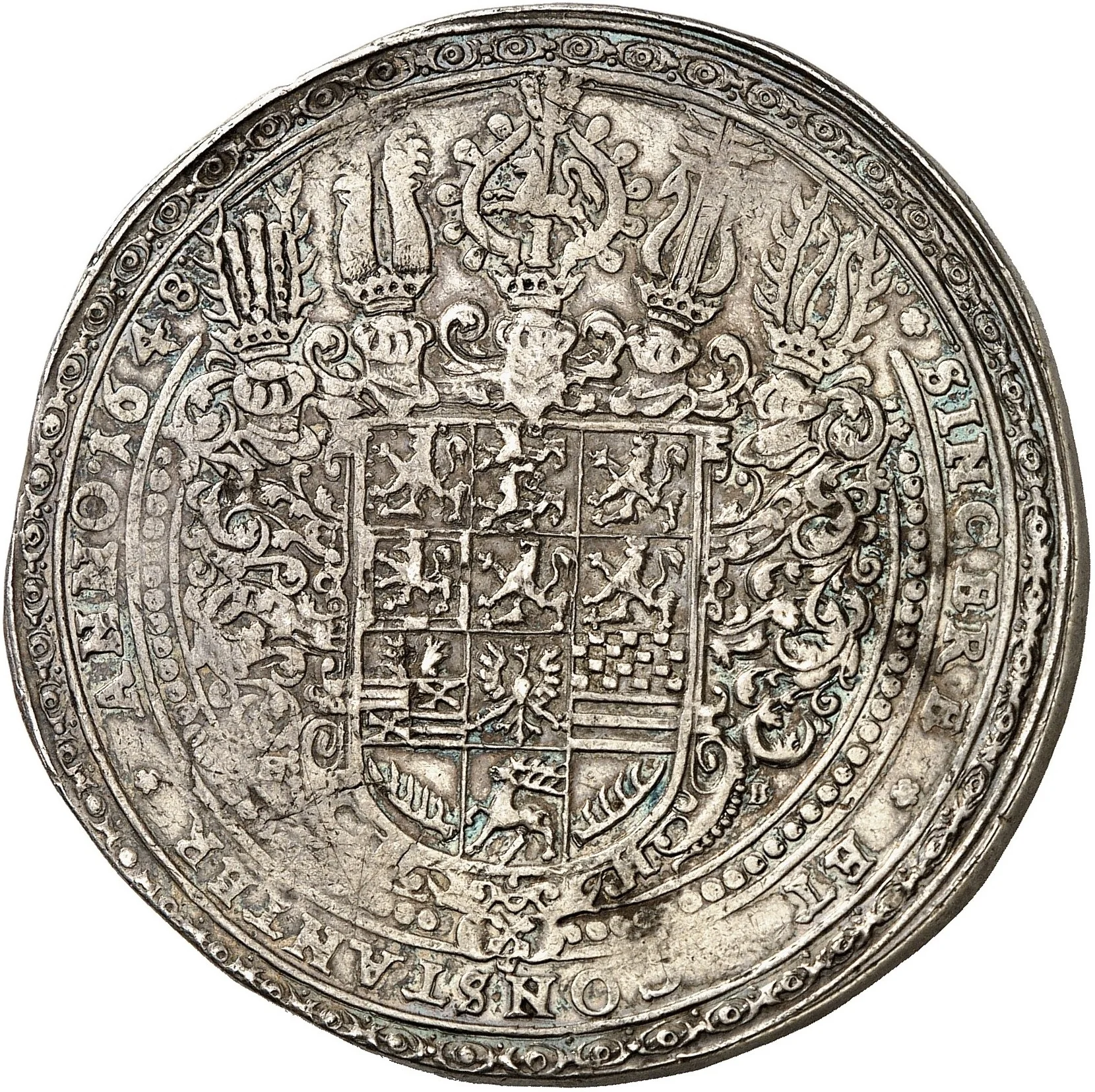
Reverse
Description:
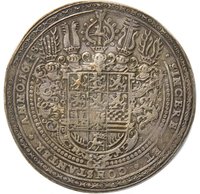
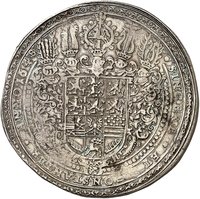
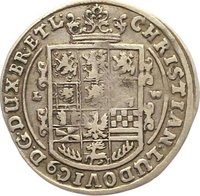
Helmeted arms, 12-fold, dated legend.
Script: Latin
Edge
Mints
| Name | Mark |
|---|---|
| Zellerfeld | — |
Mintings
| Year | Mint Mark | Mintage | Quality | Collection |
|---|---|---|---|---|
| 1648 | — | — |
Historical background
In 1648, the Duchy of Brunswick-Lüneburg, specifically the Principality of Lüneburg-Celle under Duke Christian Louis, was emerging from the profound devastation of the Thirty Years' War. The war had crippled the regional economy, disrupted trade, and placed immense fiscal strain on the ducal treasury. Like most German territories, the principality faced a chaotic currency landscape characterized by a proliferation of debased coins from various mints, both within the broader Brunswick-Lüneburg lands and from neighboring states. This "Kipper und Wipper" crisis of earlier decades had severely eroded public trust in coinage, complicating recovery.
The monetary situation was inherently fragmented due to the complex inheritance laws of the Welf dynasty. While the Lüneburg-Celle line was administratively separate, it remained part of a larger network of Brunswick-Lüneburg territories, each with its own minting rights and monetary policies. This created a circulation of multiple coin types with varying values and metallic content. The primary units were the Thaler (for larger transactions) and the Mariengroschen and Pfennig for daily use, but their actual worth was unstable. The Peace of Westphalia in 1648 did not directly address these internal monetary issues, leaving the task of stabilization to the individual princes.
Consequently, Duke Christian Louis's immediate post-war challenge was to restore monetary order as a foundation for economic revival. This required efforts to standardize coinage within his own domain, control minting outputs, and negotiate with his Welf relatives to achieve some regional consistency. The goal was to suppress inferior coins, re-establish a reliable silver standard, and secure seigniorage income for the state—a difficult balancing act between fiscal necessity and restoring the confidence essential for commerce in a war-ravaged territory.
The monetary situation was inherently fragmented due to the complex inheritance laws of the Welf dynasty. While the Lüneburg-Celle line was administratively separate, it remained part of a larger network of Brunswick-Lüneburg territories, each with its own minting rights and monetary policies. This created a circulation of multiple coin types with varying values and metallic content. The primary units were the Thaler (for larger transactions) and the Mariengroschen and Pfennig for daily use, but their actual worth was unstable. The Peace of Westphalia in 1648 did not directly address these internal monetary issues, leaving the task of stabilization to the individual princes.
Consequently, Duke Christian Louis's immediate post-war challenge was to restore monetary order as a foundation for economic revival. This required efforts to standardize coinage within his own domain, control minting outputs, and negotiate with his Welf relatives to achieve some regional consistency. The goal was to suppress inferior coins, re-establish a reliable silver standard, and secure seigniorage income for the state—a difficult balancing act between fiscal necessity and restoring the confidence essential for commerce in a war-ravaged territory.
✨ Legendary