

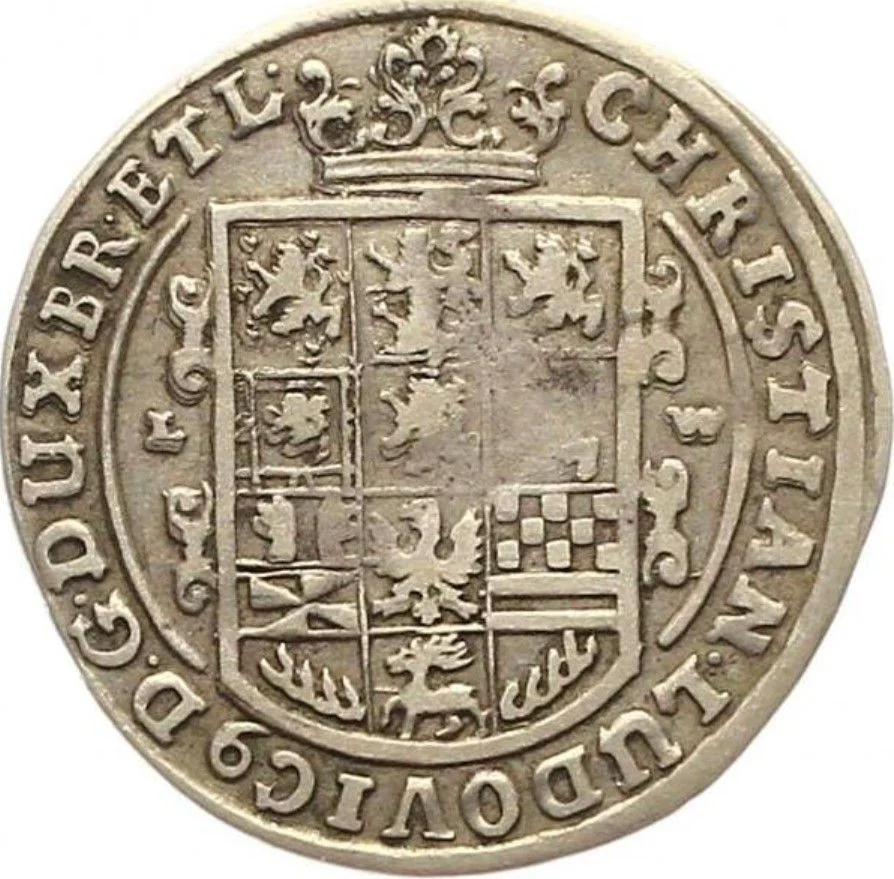
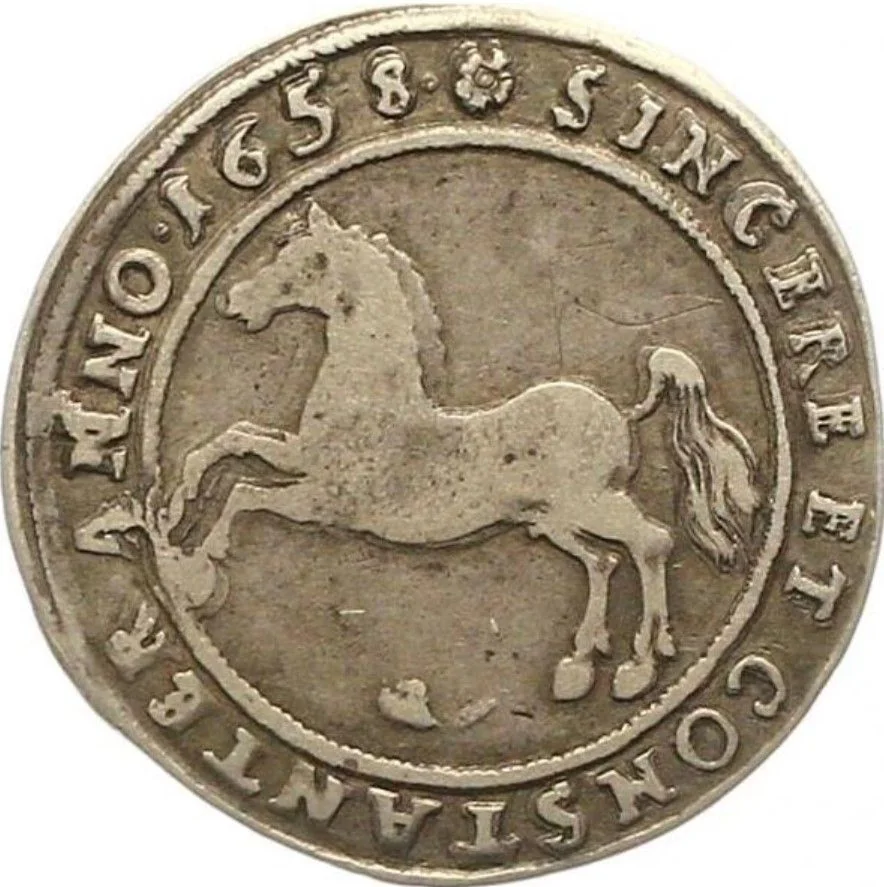
¼ Thaler – Brunswick-Lüneburg-Celle
Germany
Context
Years: 1649–1665
Country: Germany 
Issuer: Brunswick-Lüneburg-Celle
Ruler: Christian Louis
Currency:
Demonetized: Yes
Material
References
KM: #Click to copy to clipboard206
Numista: #451261
Mints
| Name | Mark |
|---|---|
| Clausthal | — |
Mintings
| Year | Mint Mark | Mintage | Quality | Collection |
|---|---|---|---|---|
| 1649 | — | — | ||
| 1650 | — | — | ||
| 1653 | — | — | ||
| 1654 | — | — | ||
| 1656 | — | — | ||
| 1658 | — | — | ||
| 1659 | — | — | ||
| 1661 | — | — | ||
| 1662 | — | — | ||
| 1664 | — | — | ||
| 1665 | — | — |
Historical background
In 1649, the Duchy of Brunswick-Lüneburg, with its administrative centre in Celle, was navigating the severe economic disarray left by the Thirty Years' War (1618-1648). The conflict had devastated the region's economy, disrupted trade, and placed immense fiscal strain on Duke Christian Louis's government. Like many German territories, the duchy faced a chronic shortage of precious metals, leading to a proliferation of debased coinage from various internal and external mints, which eroded public trust in the currency system.
The monetary landscape was characterized by extreme fragmentation and complexity. Alongside official issues from the ducal mint in Celle, numerous cities, bishoprics, and even neighbouring states circulated their own coins within the duchy's borders. This created a chaotic environment where the value of money was unstable and uncertain, hampering economic recovery. The situation was exacerbated by the widespread circulation of Kippermünzen (debased small change), often produced by opportunistic "emergency mints," which further inflated prices and complicated everyday transactions.
Consequently, Duke Christian Louis was under significant pressure to implement monetary reform to stabilize the economy and assert ducal authority. The year 1649 represented a critical point of post-war reckoning, where the need to standardize the coinage, restore its intrinsic value, and suppress illegitimate mints was paramount. These efforts were part of a broader, challenging process of rebuilding state finances and economic order in the aftermath of a devastating war.
The monetary landscape was characterized by extreme fragmentation and complexity. Alongside official issues from the ducal mint in Celle, numerous cities, bishoprics, and even neighbouring states circulated their own coins within the duchy's borders. This created a chaotic environment where the value of money was unstable and uncertain, hampering economic recovery. The situation was exacerbated by the widespread circulation of Kippermünzen (debased small change), often produced by opportunistic "emergency mints," which further inflated prices and complicated everyday transactions.
Consequently, Duke Christian Louis was under significant pressure to implement monetary reform to stabilize the economy and assert ducal authority. The year 1649 represented a critical point of post-war reckoning, where the need to standardize the coinage, restore its intrinsic value, and suppress illegitimate mints was paramount. These efforts were part of a broader, challenging process of rebuilding state finances and economic order in the aftermath of a devastating war.
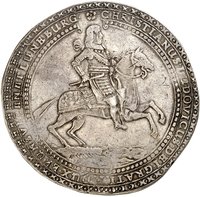
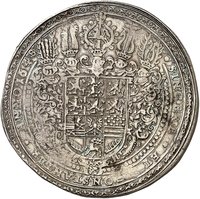
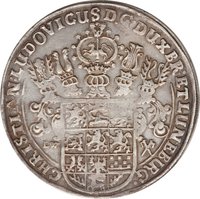
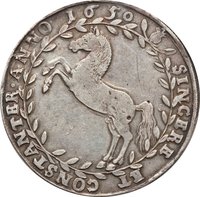
✨ Legendary