

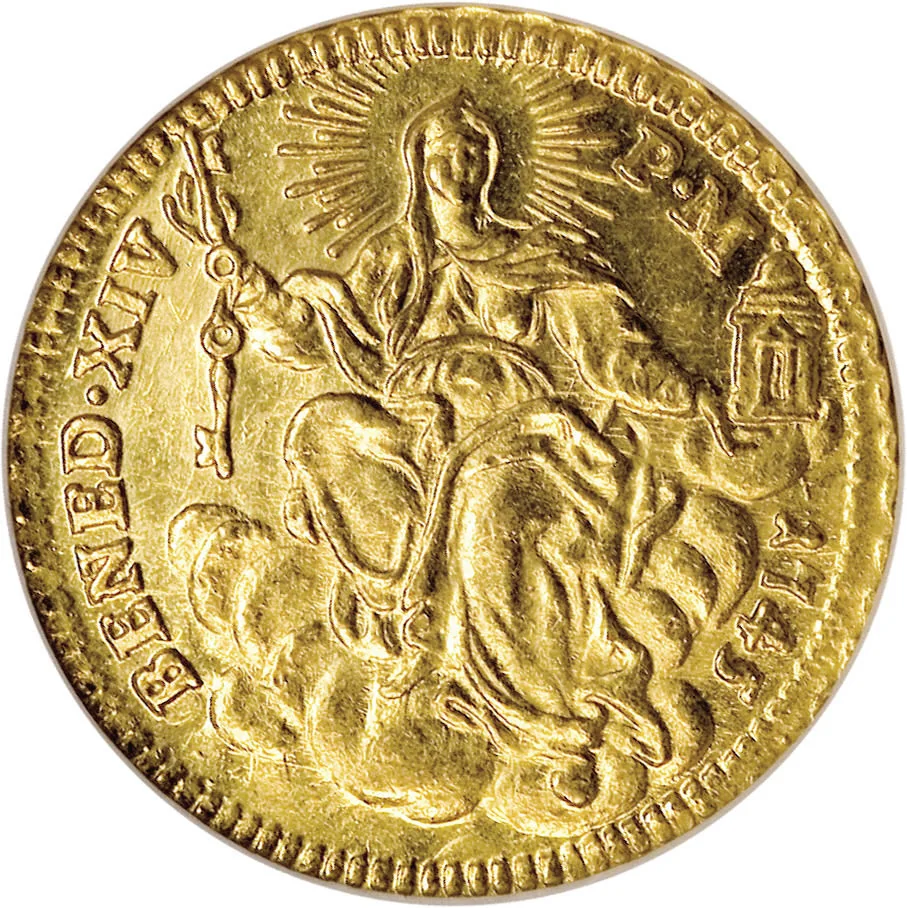
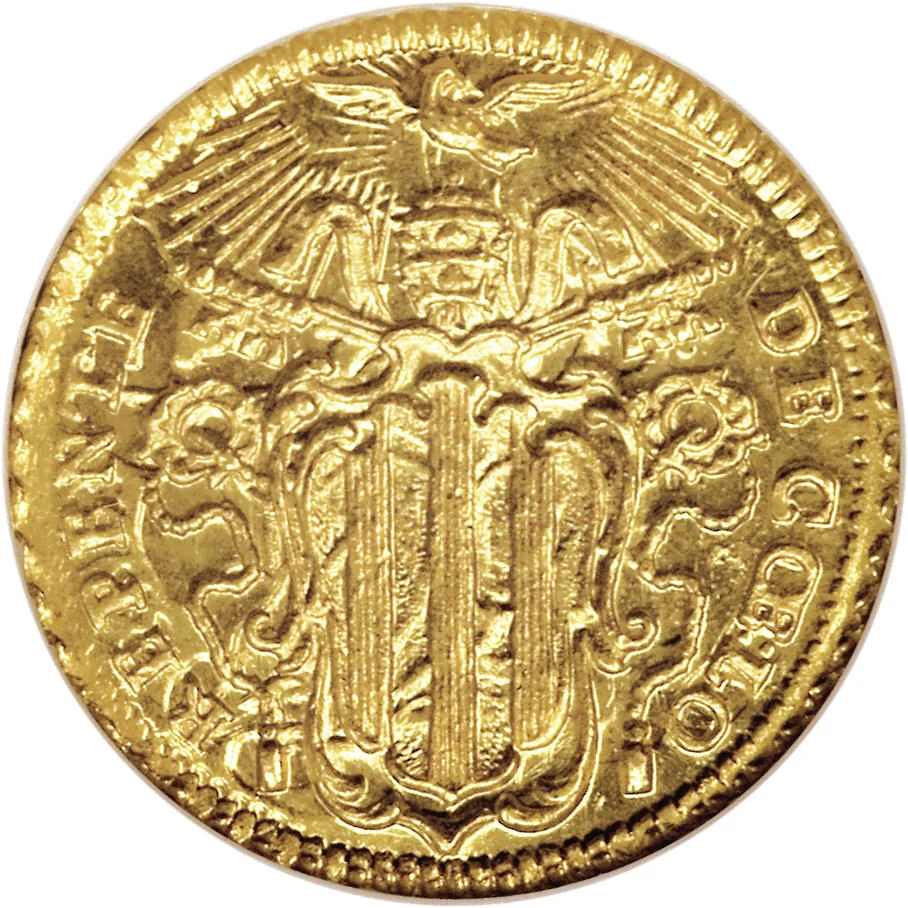
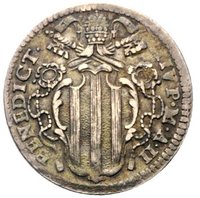
1 Zecchino – Papal States
Vatican City
Context
Years: 1741–1756
Country: Vatican City 
Issuer: Papal States
Ruler: Benedict XIV
Currency:
(1534—1835)
Demonetized: Yes
Material
References
KM: #Click to copy to clipboard943
Numista: #29405
Value
Bullion value: $571.06
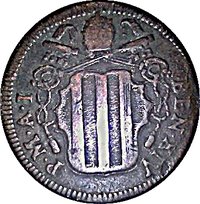
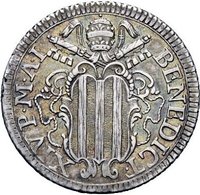
Obverse
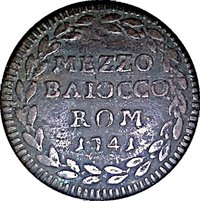
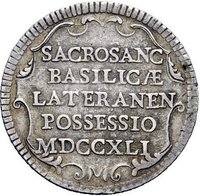
Reverse
Edge
Cordoned
Mints
| Name | Mark |
|---|---|
| Rome | — |
Mintings
| Year | Mint Mark | Mintage | Quality | Collection |
|---|---|---|---|---|
| 1741 | — | — | ||
| 1742 | — | — | ||
| 1743 | — | — | ||
| 1744 | — | — | ||
| 1745 | — | — | ||
| 1746 | — | — | ||
| 1747 | — | — | ||
| 1748 | — | — | ||
| 1749 | — | — | ||
| 1751 | — | — | ||
| 1752 | — | — | ||
| 1753 | — | — | ||
| 1754 | — | — | ||
| — | — | — | ||
| 1755 | — | — | ||
| 1756 | — | — |
Historical background
In 1741, the Papal States, a mosaic of central Italian territories under the sovereign temporal rule of the Pope, operated within a complex and often chaotic monetary system. The state lacked a unified, modern currency; instead, its economy relied on a bewildering array of coins from various Italian and European mints that circulated simultaneously. The primary official unit of account was the scudo (plural: scudi), divided into 100 baiochi, each worth 5 quattrini. However, alongside Papal-issued scudi, coins from neighbouring states like Tuscany, Naples, and Venice, as well as Spanish silver pieces, were all in common use, their values fluctuating based on metallic content and market trust.
This multiplicity created significant practical problems for trade and administration. The intrinsic value of a coin (its weight in silver or gold) often differed from its official face value, leading to frequent episodes of clipping, counterfeiting, and the hoarding of "good" full-weight coins. Furthermore, the Papal government itself periodically engaged in debasement—reducing the precious metal content in newly minted coins while demanding the same face value—as a short-term fiscal measure to cover budgetary deficits, particularly to finance infrastructure projects and the lavish papal court. This practice, while providing immediate revenue, eroded public confidence and spurred inflation over time.
The monetary situation in 1741 was therefore one of fragile stability, managed through constant edicts and tariffs (bando) issued by the Camera Apostolica (the papal treasury) that attempted to fix exchange rates between the myriad circulating coins. These decrees were often reactive and difficult to enforce, leading to a thriving business for money-changers (banchieri) who navigated the daily complexities. The system reflected the broader administrative challenges of the Papal States: it was fragmented, traditional, and struggled to adapt to the more centralized financial models emerging in contemporary European nation-states.
This multiplicity created significant practical problems for trade and administration. The intrinsic value of a coin (its weight in silver or gold) often differed from its official face value, leading to frequent episodes of clipping, counterfeiting, and the hoarding of "good" full-weight coins. Furthermore, the Papal government itself periodically engaged in debasement—reducing the precious metal content in newly minted coins while demanding the same face value—as a short-term fiscal measure to cover budgetary deficits, particularly to finance infrastructure projects and the lavish papal court. This practice, while providing immediate revenue, eroded public confidence and spurred inflation over time.
The monetary situation in 1741 was therefore one of fragile stability, managed through constant edicts and tariffs (bando) issued by the Camera Apostolica (the papal treasury) that attempted to fix exchange rates between the myriad circulating coins. These decrees were often reactive and difficult to enforce, leading to a thriving business for money-changers (banchieri) who navigated the daily complexities. The system reflected the broader administrative challenges of the Papal States: it was fragmented, traditional, and struggled to adapt to the more centralized financial models emerging in contemporary European nation-states.

✨ Legendary