

1 Piastra – Papal States
Vatican City
Context
Years: 1692–1693
Country: Vatican City 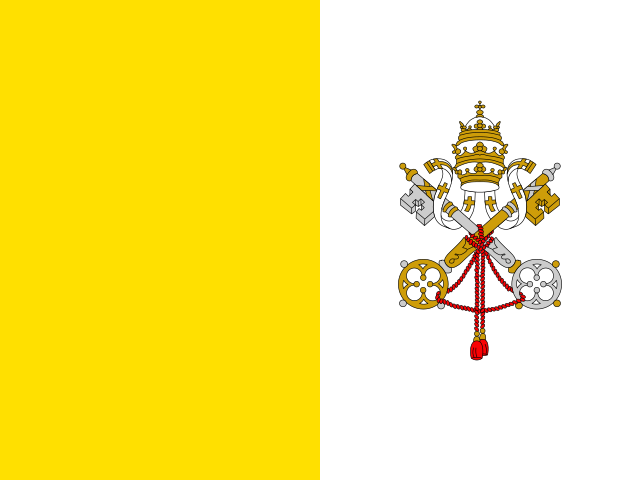
Issuer: Papal States
Ruler: Innocent XII
Currency:
(1534—1835)
Demonetized: Yes
Material
References
KM: #Click to copy to clipboard557
Numista: #29338
Value
Bullion value: $82.75
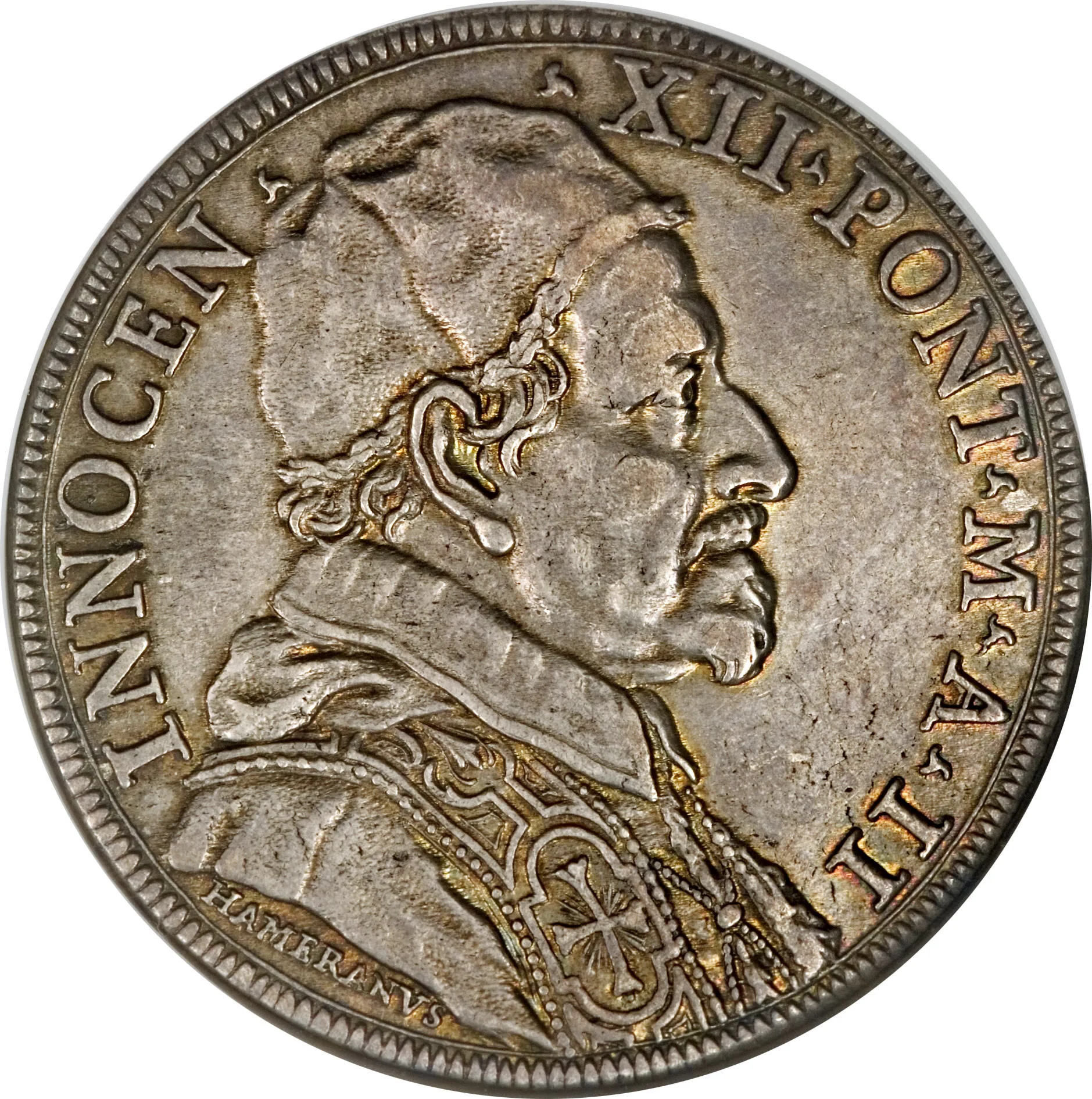
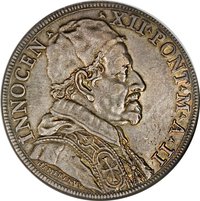
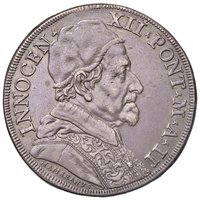
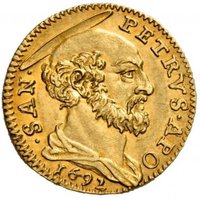
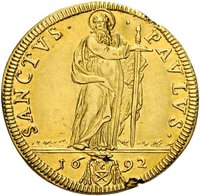
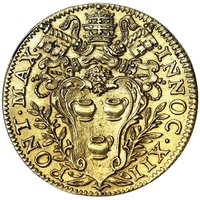
Obverse
Description:
Capped bust facing right.
Inscription:
INNOCEN XII PONT M A II
HAMERANVS
HAMERANVS
Script: Latin
Engraver: Giovanni Hamerani
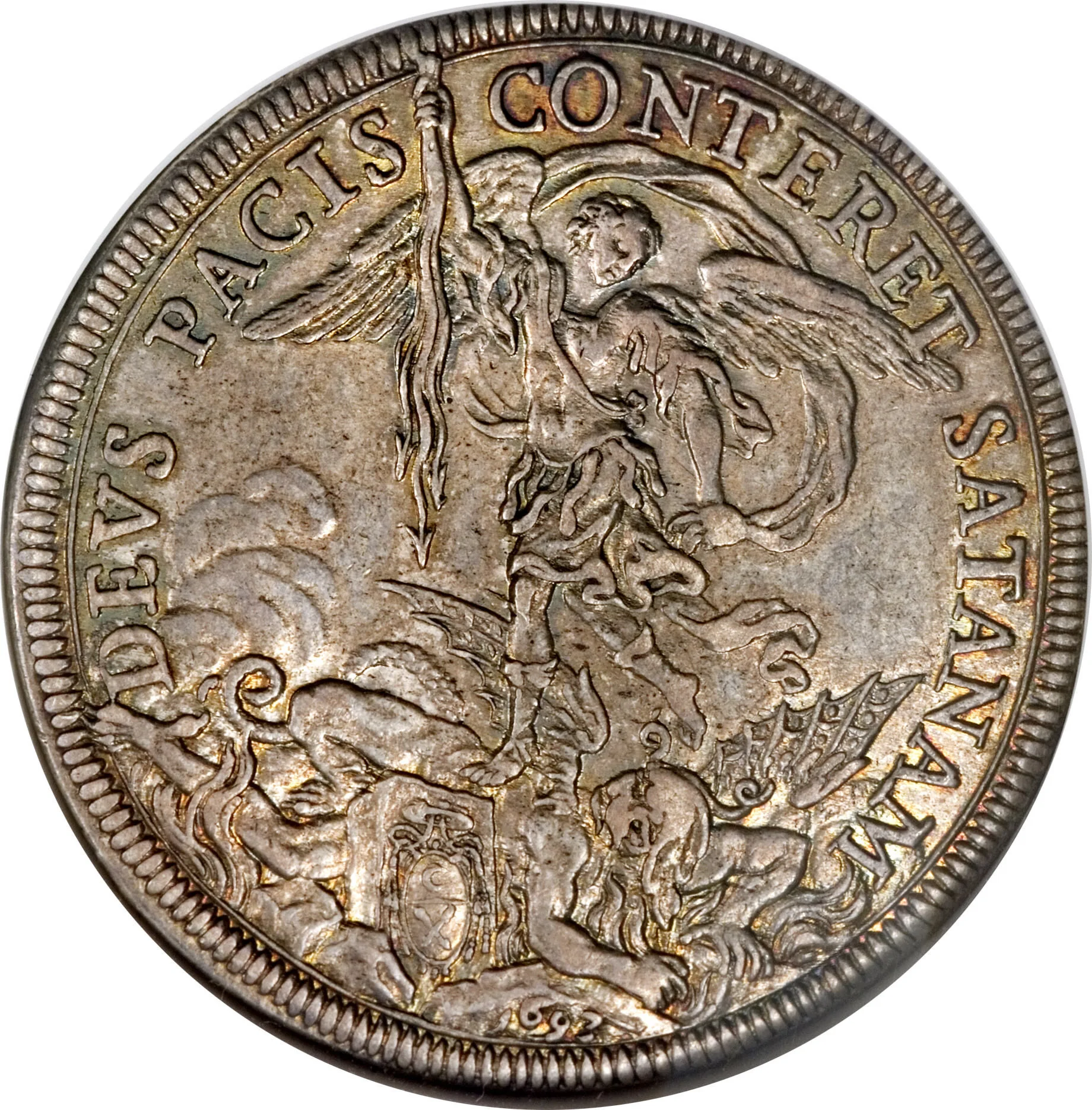
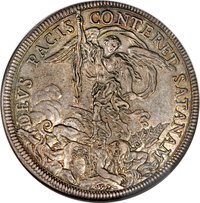
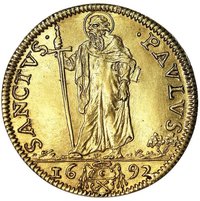
Reverse
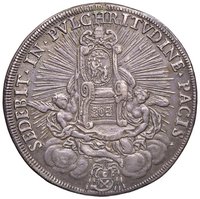
Description:
St. Michael vanquishing the Devil.
Inscription:
DEVS PACIS CONTERET SATANAM
Script: Latin
Edge
Mintings
| Year | Mint Mark | Mintage | Quality | Collection |
|---|---|---|---|---|
| 1692 | — | — | ||
| 1693 | — | — |
Historical background
In 1692, the Papal States, like much of Italy, operated within a complex and fragmented monetary system. The primary unit of account was the scudo (specifically the scudo romano), a silver coin that served as the benchmark for larger transactions and state finances. However, the circulating medium was a chaotic mix of physical coins from various Italian and foreign states, including gold doppie (double scudi), silver giuli and grossi, and low-value copper baiocchi and quattrini. This proliferation of coins, each with fluctuating intrinsic metal values, created constant challenges for trade and taxation.
The period was marked by significant monetary instability and deliberate debasement. Pope Innocent XI (r. 1676-1689) had pursued a policy of sound money, but his successor, Pope Alexander VIII (r. 1689-1691), had resorted to issuing heavily debased copper coinage to finance deficits, a practice that continued into the pontificate of Innocent XII (elected in 1691). The mint in Rome frequently altered the alloy and weight of coins, especially the copper issues, to generate seigniorage revenue for the papal treasury. This led to inflation, a loss of public confidence, and the phenomenon of "good" full-weight coins being hoarded or exported while "bad" debased coins flooded the market.
Consequently, everyday economic life in 1692 was characterized by confusion and calculation. Prices were often set in scudi and giuli, but actual payment involved intricate negotiations over the mix and acceptability of the physical coins presented, with money changers (banchieri) playing an essential role. The monetary chaos reflected the broader fiscal pressures of the Papal States, which struggled to fund its administrative and ceremonial functions, as well as its political engagements within the Italian peninsula, without a modern financial system. This situation would eventually lead to more systematic, though only partially successful, reforms later in Innocent XII's reign.
The period was marked by significant monetary instability and deliberate debasement. Pope Innocent XI (r. 1676-1689) had pursued a policy of sound money, but his successor, Pope Alexander VIII (r. 1689-1691), had resorted to issuing heavily debased copper coinage to finance deficits, a practice that continued into the pontificate of Innocent XII (elected in 1691). The mint in Rome frequently altered the alloy and weight of coins, especially the copper issues, to generate seigniorage revenue for the papal treasury. This led to inflation, a loss of public confidence, and the phenomenon of "good" full-weight coins being hoarded or exported while "bad" debased coins flooded the market.
Consequently, everyday economic life in 1692 was characterized by confusion and calculation. Prices were often set in scudi and giuli, but actual payment involved intricate negotiations over the mix and acceptability of the physical coins presented, with money changers (banchieri) playing an essential role. The monetary chaos reflected the broader fiscal pressures of the Papal States, which struggled to fund its administrative and ceremonial functions, as well as its political engagements within the Italian peninsula, without a modern financial system. This situation would eventually lead to more systematic, though only partially successful, reforms later in Innocent XII's reign.
✨ Legendary