

Iran
Context
Year: 1795
Islamic (Hijri) Year: 1209
Issuer: Iran 
Ruler: Agha Mohammad Khan
Currency:
(1501—1798)
Demonetized: Yes
Material
References
KM: #Click to copy to clipboard617
Numista: #29109
Value
Bullion value: $2735.96
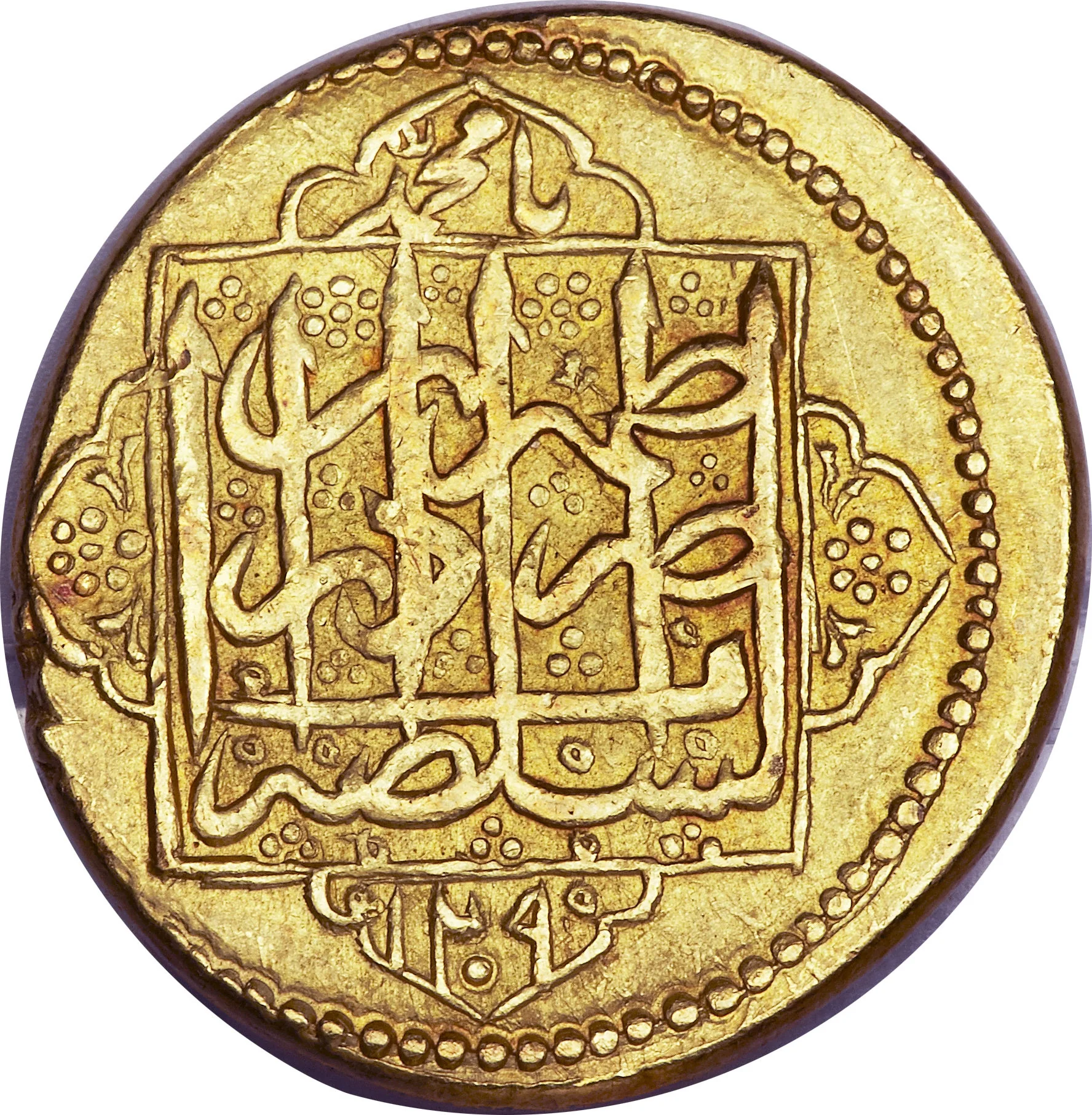
Obverse
Description:
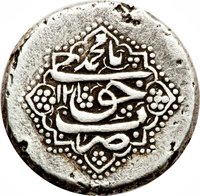
Mohammad Shah, struck in Tehran, Dar al-Saltanah.
Inscription:
يا محمّد
ضرب دارالسلطنه طهران
۱۲۰۹
ضرب دارالسلطنه طهران
۱۲۰۹
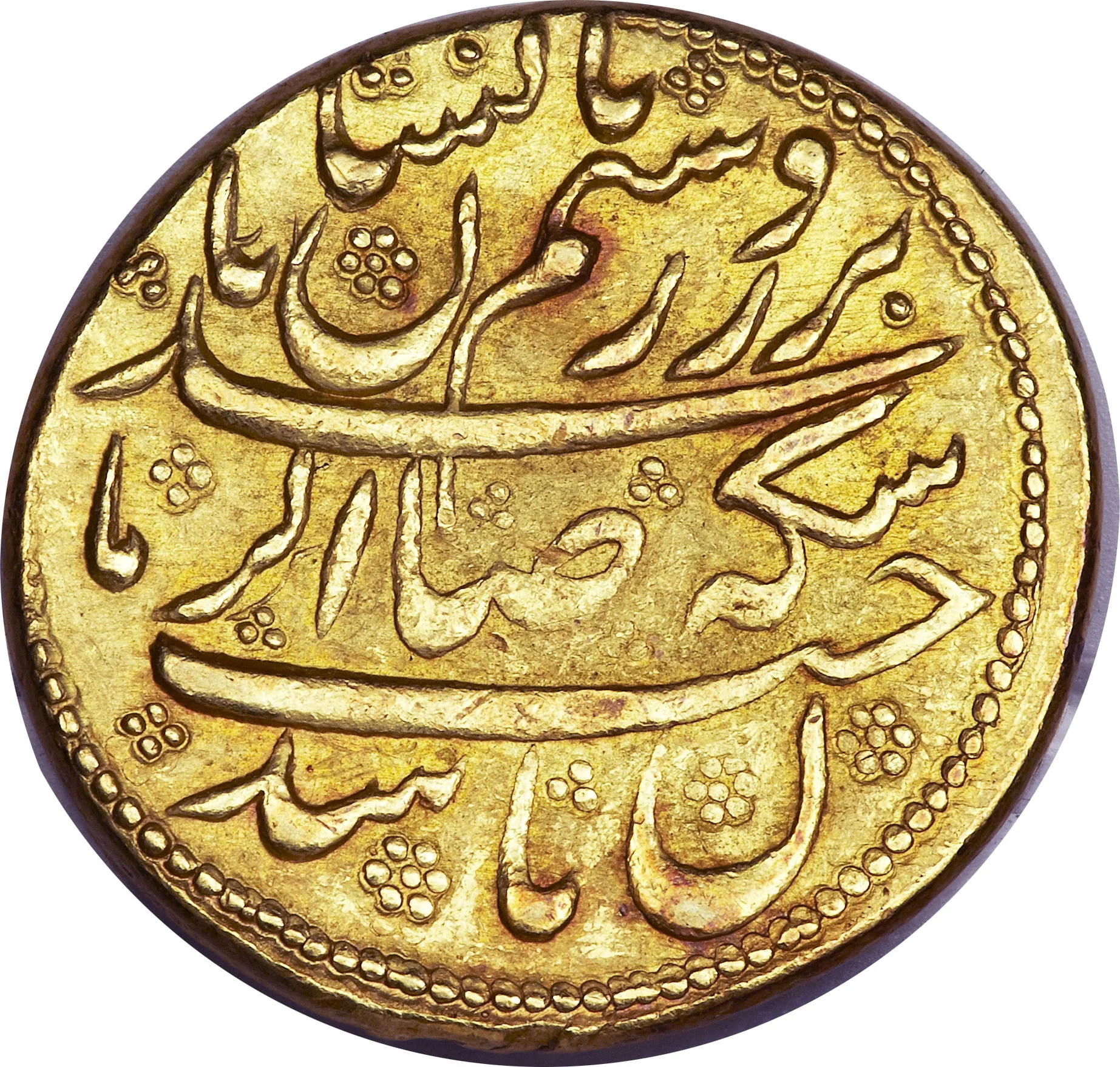
Reverse
Description:
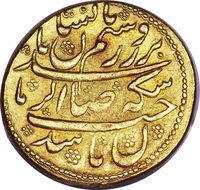
On gold and silver, be the coin of Sahib Az-Zaman (the Twelfth Imam).
Inscription:
بر زر و سیم تا نشان باشد سکه صاحب الزمان باشد
Edge
Mints
| Name | Mark |
|---|---|
| Tehran | — |
Mintings
| Year | Mint Mark | Mintage | Quality | Collection |
|---|---|---|---|---|
| 1795 | — | — |
Historical background
In 1795, Iran was under the rule of the Qajar dynasty, founded by Agha Mohammad Khan, who had recently consolidated power after decades of civil war following the collapse of the Safavid Empire. The monetary system inherited by the Qajars was profoundly decentralized and chaotic. The country lacked a unified national currency, leading to a circulation of a bewildering variety of coins. These included older, worn Safavid and Afsharid silver tomans and rials, as well as a multitude of provincial and foreign coins minted by local khans, tribal leaders, and neighboring states. This fragmentation mirrored the political disunity that Agha Mohammad Khan had just brutally subdued.
The primary unit of account was the silver toman (worth 10 rials), but its physical representation was inconsistent. Coinage was primarily silver, with copper coins for minor transactions. A significant problem was the severe debasement of the currency; the silver content of coins bearing the same face value could vary dramatically depending on where and when they were minted. Furthermore, counterfeiting was rampant, and the widespread practice of "clipping" (shaving precious metal from the edges of coins) further eroded public trust in the money supply. This environment created immense difficulties for taxation, long-distance trade, and the basic functioning of the economy.
Agha Mohammad Khan’s focus in 1795 was overwhelmingly on military conquest and political consolidation, notably his campaign against Georgia which culminated in the sack of Tbilisi. Consequently, comprehensive monetary reform was not yet a priority for the new state. The currency situation remained a legacy of instability, awaiting the attention of his successors. It would be decades later, under Fath-Ali Shah and particularly Naser al-Din Shah, that serious attempts to standardize the coinage and establish a more modern monetary system would begin, highlighting that in 1795, Iran's currency was a reflection of its fractured and recovering political landscape.
The primary unit of account was the silver toman (worth 10 rials), but its physical representation was inconsistent. Coinage was primarily silver, with copper coins for minor transactions. A significant problem was the severe debasement of the currency; the silver content of coins bearing the same face value could vary dramatically depending on where and when they were minted. Furthermore, counterfeiting was rampant, and the widespread practice of "clipping" (shaving precious metal from the edges of coins) further eroded public trust in the money supply. This environment created immense difficulties for taxation, long-distance trade, and the basic functioning of the economy.
Agha Mohammad Khan’s focus in 1795 was overwhelmingly on military conquest and political consolidation, notably his campaign against Georgia which culminated in the sack of Tbilisi. Consequently, comprehensive monetary reform was not yet a priority for the new state. The currency situation remained a legacy of instability, awaiting the attention of his successors. It would be decades later, under Fath-Ali Shah and particularly Naser al-Din Shah, that serious attempts to standardize the coinage and establish a more modern monetary system would begin, highlighting that in 1795, Iran's currency was a reflection of its fractured and recovering political landscape.
✨ Legendary