

2 Souverains – Austrian Netherlands
Belgium
Context
Years: 1781–1789
Country: Belgium 
Issuer: Austrian Netherlands
Ruler: Joseph II
Currency:
(1744—1798)
Demonetized: Yes
Total mintage: 82,727
Material
References
KM: #Click to copy to clipboard33
Numista: #28571
Value
Bullion value: $1694.70
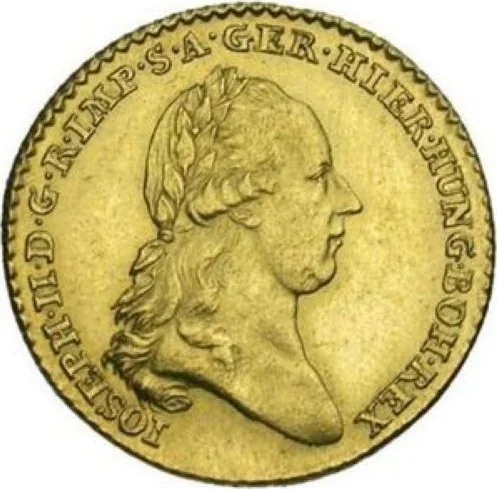
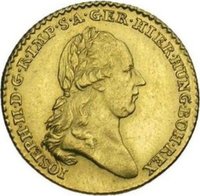
Obverse
Description:
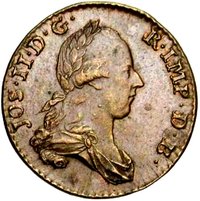
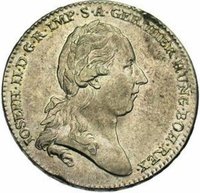
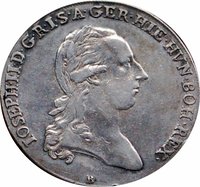
Laureate head right.
Inscription:
IOSEPH · II · D · G · R · IMP · S · A · GER · HIER · HUNG · BOH · REX
Script: Latin
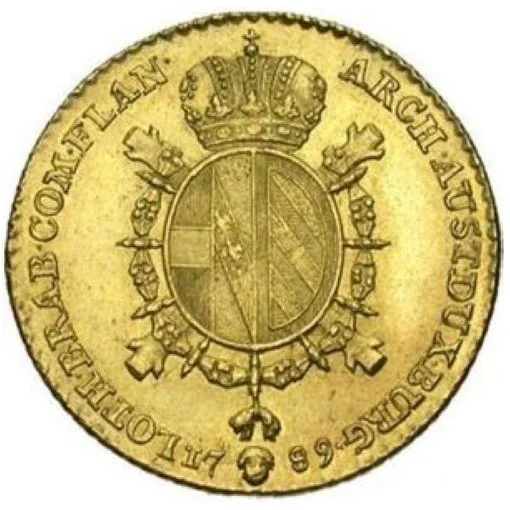
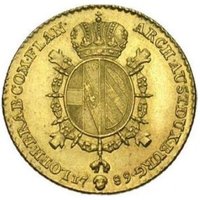
Reverse
Description:
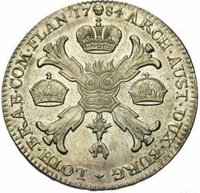
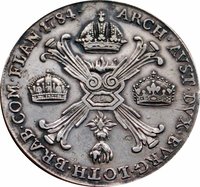
Shield with Austria-Lorraine-Burgundy arms, crowned and encircled by the Golden Fleece collar. Date splits legend and mint mark (angel face).
Inscription:
ARCH · AUST · DUX · BURG · LOTH · BRAB · COM · FLAN ·
Script: Latin
Edge
Mints
| Name | Mark |
|---|---|
| Royal Mint of Belgium | — |
Mintings
| Year | Mint Mark | Mintage | Quality | Collection |
|---|---|---|---|---|
| 1781 | — | 4,338 | ||
| 1782 | — | 3,012 | ||
| 1783 | — | 5,309 | ||
| 1784 | — | 5,944 | ||
| 1785 | — | 3,949 | ||
| 1786 | — | 16,071 | ||
| 1788 | — | 8,632 | ||
| 1789 | — | 35,472 |
Historical background
In 1781, the Austrian Netherlands found itself in a precarious monetary crisis, a direct consequence of the wider economic turmoil of the Kipper- und Wipperzeit. This period, triggered by the costly involvement in the American Revolutionary War (1775-1783), saw the Habsburg monarchy under Empress Maria Theresa and her co-regent Joseph II desperately debasing the coinage to finance military expenditures. The government drastically reduced the silver content in new coins, particularly the kreuzer, while older, full-value coins of the same face value remained in circulation. This created a destructive two-tier system where "good" money was hoarded or exported, and "bad" money flooded the local economy, leading to rapid inflation and a severe loss of public confidence.
The situation was exacerbated by the region's complex political and economic position. As a territory under Austrian rule but geographically and commercially oriented towards the North Sea and the dynamic economies of the Dutch Republic and Britain, the Austrian Netherlands was highly vulnerable to currency arbitrage. Speculators and merchants systematically exchanged the new, debased Austrian coins for full-weight foreign currency or bullion, draining the province of sound money. This led to crippling shortages of reliable coin for everyday transactions, disrupting commerce and causing widespread resentment among the merchant class and the general population.
Ultimately, the 1781 currency crisis was more than an economic failure; it was a profound political miscalculation. The attempt to solve imperial fiscal problems at the direct expense of the province's stability highlighted the disconnect between Vienna and its distant possession. The debasement eroded trust not only in the currency but also in Habsburg governance, fueling existing tensions and contributing to the growing discontent that would later erupt in the Brabant Revolution of 1789-1790. The episode underscored the fundamental impossibility of maintaining a prosperous economy without a stable and trustworthy monetary system.
The situation was exacerbated by the region's complex political and economic position. As a territory under Austrian rule but geographically and commercially oriented towards the North Sea and the dynamic economies of the Dutch Republic and Britain, the Austrian Netherlands was highly vulnerable to currency arbitrage. Speculators and merchants systematically exchanged the new, debased Austrian coins for full-weight foreign currency or bullion, draining the province of sound money. This led to crippling shortages of reliable coin for everyday transactions, disrupting commerce and causing widespread resentment among the merchant class and the general population.
Ultimately, the 1781 currency crisis was more than an economic failure; it was a profound political miscalculation. The attempt to solve imperial fiscal problems at the direct expense of the province's stability highlighted the disconnect between Vienna and its distant possession. The debasement eroded trust not only in the currency but also in Habsburg governance, fueling existing tensions and contributing to the growing discontent that would later erupt in the Brabant Revolution of 1789-1790. The episode underscored the fundamental impossibility of maintaining a prosperous economy without a stable and trustworthy monetary system.
✨ Legendary