

1 Kronenthaler – Austrian Netherlands
Belgium
Context
Years: 1783–1790
Country: Belgium 
Issuer: Austrian Netherlands
Ruler: Joseph II
Currency:
(1744—1798)
Demonetized: Yes
Total mintage: 1,197,000
Material
References
KM: #Click to copy to clipboard32
Numista: #24791
Value
Bullion value: $71.60
Obverse
Description:
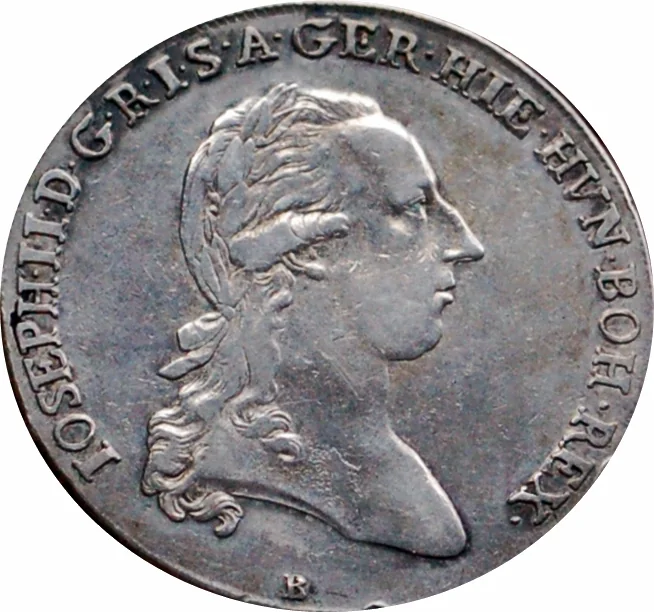
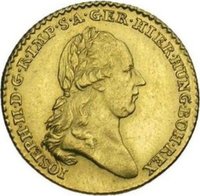
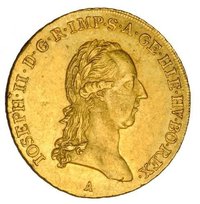
Bust right, mintmark beneath.
Inscription:
IOSEPH · II · D · G · R · I · S · A · GER · HIE · HVN · BOH · REX ·
Script: Latin
Engraver: Théodore van Berckel
Reverse
Description:
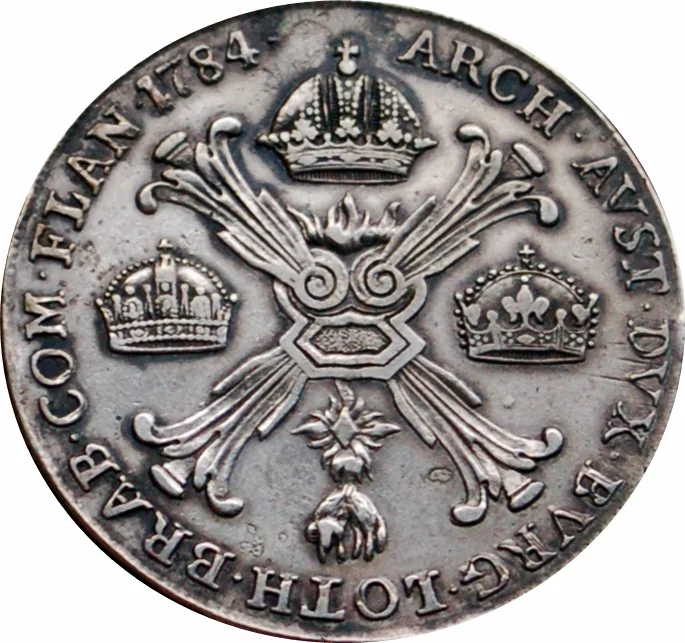
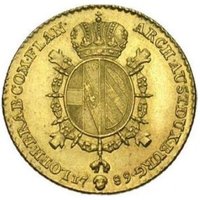
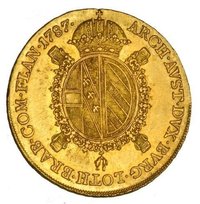
Floriated Burgundy cross with three crowns in its upper angles.
Inscription:
ARCH · AVST · DVX · BVRG LOTH · BRAB · COM · FLAN ·
1784·
1784·
Script: Latin
Engraver: Théodore van Berckel
Edge
Smooth with pattern and lettering
Legend:
VIRTUTE ET EXEMPLO
Mints
| Name | Mark |
|---|---|
| Münze Österreich | A |
| Kremnica | B |
| Milan | M |
Mintings
Historical background
By 1783, the currency situation in the Austrian Netherlands (approximately modern-day Belgium and Luxembourg) was one of profound complexity and instability, a legacy of its history as a crossroads of European trade and successive foreign rulers. The monetary system was not unified but a chaotic patchwork of over 800 different coins, both domestic and foreign, in circulation. These included Austrian kronenthalers, Dutch guilders, French louis d'or, and Spanish pistoles, each with fluctuating values that varied from city to city. This bewildering diversity, a result of historical treaties and commercial necessity, crippled everyday commerce and facilitated widespread fraud.
The core of the problem lay in the government's inability to enforce a standard. While official exchange rates for these myriad coins were periodically published in "tariffs," market reality diverged sharply, with actual values dictated by merchants and money-changers. This created a two-tier economy: one for large-scale international finance, which functioned adequately in major centers like Antwerp, and another for the common populace, who suffered from uncertainty and devaluation in daily transactions. The provincial estates, guarding their traditional privileges, also resisted centralizing reforms from Vienna, further hampering coherent policy.
Emperor Joseph II, pursuing his centralizing Enlightenment agenda, was determined to resolve this monetary anarchy. In the very year of 1783, his government began serious preparations for a radical solution: the introduction of a new, unified decimal currency. This plan, which would culminate in the 1786 patent, aimed to replace the chaotic mosaic with a single system based on the kronenthaler divided into 100 kruysen. While rational in theory, this top-down reform would soon ignite fierce opposition from the provinces and merchants, becoming one of the many grievances that fueled the Brabant Revolution against Austrian rule later in the decade. Thus, the currency chaos of 1783 was not just an economic issue, but a catalyst for political upheaval.
The core of the problem lay in the government's inability to enforce a standard. While official exchange rates for these myriad coins were periodically published in "tariffs," market reality diverged sharply, with actual values dictated by merchants and money-changers. This created a two-tier economy: one for large-scale international finance, which functioned adequately in major centers like Antwerp, and another for the common populace, who suffered from uncertainty and devaluation in daily transactions. The provincial estates, guarding their traditional privileges, also resisted centralizing reforms from Vienna, further hampering coherent policy.
Emperor Joseph II, pursuing his centralizing Enlightenment agenda, was determined to resolve this monetary anarchy. In the very year of 1783, his government began serious preparations for a radical solution: the introduction of a new, unified decimal currency. This plan, which would culminate in the 1786 patent, aimed to replace the chaotic mosaic with a single system based on the kronenthaler divided into 100 kruysen. While rational in theory, this top-down reform would soon ignite fierce opposition from the provinces and merchants, becoming one of the many grievances that fueled the Brabant Revolution against Austrian rule later in the decade. Thus, the currency chaos of 1783 was not just an economic issue, but a catalyst for political upheaval.
⭐ Somewhat Rare