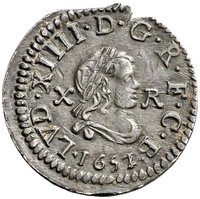
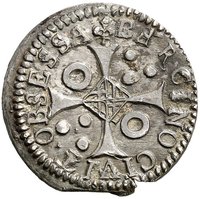
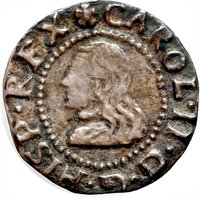
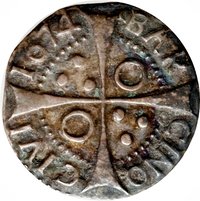
In 1653, the Principality of Catalonia was in a state of profound economic and monetary instability, a direct legacy of the Reapers' War (Guerra dels Segadors, 1640-1659). Following the Catalan revolt against the Habsburg monarchy of Philip IV, the region had placed itself under the sovereignty of the French king, Louis XIII. This political shift severed Catalonia from the traditional monetary systems of the Spanish Crown and integrated it, albeit incompletely and chaotically, into the French monetary orbit. The result was a confused circulation of both old Spanish coinage (like the silver
reial and the ubiquitous
ducat) and new French issues, leading to chronic uncertainty over values and exchange rates.
The ongoing conflict placed an enormous fiscal strain on the Catalan government, the
Generalitat, which resorted to repeated debasements of the coinage to finance military operations. This practice, particularly with the copper
croats (croatos), eroded public trust in the currency and fueled rampant inflation. Prices for essential goods soared, while the intrinsic metal value of the coins in circulation often fell below their nominal face value. This situation was exacerbated by the physical devastation of the countryside from years of warfare, which crippled agricultural and commercial production, further undermining the real economy that supported the monetary system.
Consequently, by 1653, Catalonia suffered from a severe shortage of reliable, high-value specie. Transactions were hampered by a complex and untrustworthy mix of coins, leading to commercial paralysis and social hardship. The monetary chaos was a microcosm of the broader crisis: a war-torn region caught between two empires, with its institutions struggling to maintain basic economic order. This instability would persist until the end of the war in 1659, when the Treaty of the Pyrenees returned Catalonia to Spanish sovereignty and began a long, slow process of monetary reintegration.