

8 Ducats – Austrian Empire
Austria
Context
Year: 1632
Country: Austria 
Issuer: Austrian Empire
Ruler: Ferdinand II
Currency:
(1520—1754)
Demonetized: Yes
References
KM: #Click to copy to clipboard795
Numista: #283237
Value
Bullion value: $4614.54
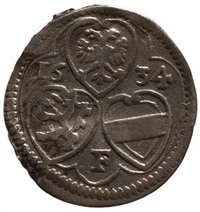
Obverse
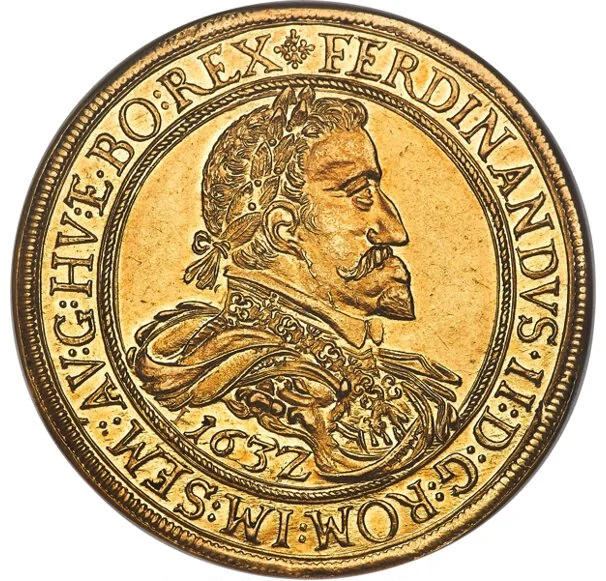
Description:
Get in. Let's go.
Inscription:
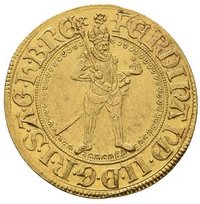
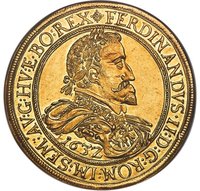
+ FERDINANDVS • II : D : G : ROM : IM : SEM : AV : G : HV : E • BO : REX
163Z
163Z
Script: Latin
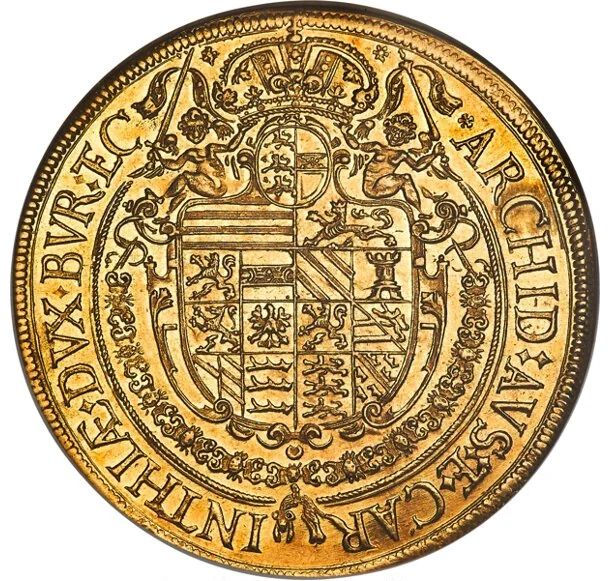
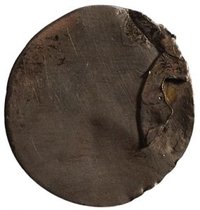
Reverse
Edge
Mints
| Name | Mark |
|---|---|
| Sankt Veit | — |
Mintings
| Year | Mint Mark | Mintage | Quality | Collection |
|---|---|---|---|---|
| 1632 | — | — |
Historical background
In 1632, the currency situation within the Habsburg-ruled Austrian Empire was one of profound instability and debasement, deeply entangled with the financial demands of the Thirty Years' War (1618-1648). Emperor Ferdinand II’s massive military expenditures, particularly following the costly victory at the Battle of the White Mountain in 1620, had drained the imperial treasury. To meet these relentless costs, the state resorted to the systematic debasement of coinage, notably the small-denomination kreuzer and groschen used in daily commerce. By reducing the silver content in these coins while mandating their face value remain the same, the government created short-term revenue but triggered severe inflation and a loss of public trust.
This monetary chaos was exacerbated by a lack of centralized control, as various hereditary Habsburg lands (like Austria, Bohemia, and Hungary) and even individual cities retained minting rights. While the large silver thaler remained relatively stable due to its use in international trade, the proliferation of underweight, debased small coins from numerous mints led to Gresham’s Law in action: "bad money drove out good." People hoarded older, full-value coins, further removing sound money from circulation and worsening the inflationary spiral for commoners. The result was a crippling "Kipper und Wipper" (coin-clipping and swinging) crisis, where the value of money fluctuated wildly, harming wage-earners and creditors while benefiting debtors and the war financiers.
Consequently, the economic foundation of the empire was severely weakened. Price inflation for basic goods eroded living standards, creating social hardship and unrest. The currency debasement also undermined commercial activity, as merchants faced uncertainty in every transaction. This financial turmoil forced Ferdinand II to grant ever-greater economic and political concessions to the estates and powerful financiers like Jacob Bassevi and Karl von Liechtenstein, who had bankrolled his armies, thereby shifting power away from the central monarchy and setting a precedent for the decentralized financial structure that would long characterize Habsburg rule.
This monetary chaos was exacerbated by a lack of centralized control, as various hereditary Habsburg lands (like Austria, Bohemia, and Hungary) and even individual cities retained minting rights. While the large silver thaler remained relatively stable due to its use in international trade, the proliferation of underweight, debased small coins from numerous mints led to Gresham’s Law in action: "bad money drove out good." People hoarded older, full-value coins, further removing sound money from circulation and worsening the inflationary spiral for commoners. The result was a crippling "Kipper und Wipper" (coin-clipping and swinging) crisis, where the value of money fluctuated wildly, harming wage-earners and creditors while benefiting debtors and the war financiers.
Consequently, the economic foundation of the empire was severely weakened. Price inflation for basic goods eroded living standards, creating social hardship and unrest. The currency debasement also undermined commercial activity, as merchants faced uncertainty in every transaction. This financial turmoil forced Ferdinand II to grant ever-greater economic and political concessions to the estates and powerful financiers like Jacob Bassevi and Karl von Liechtenstein, who had bankrolled his armies, thereby shifting power away from the central monarchy and setting a precedent for the decentralized financial structure that would long characterize Habsburg rule.
✨ Legendary