

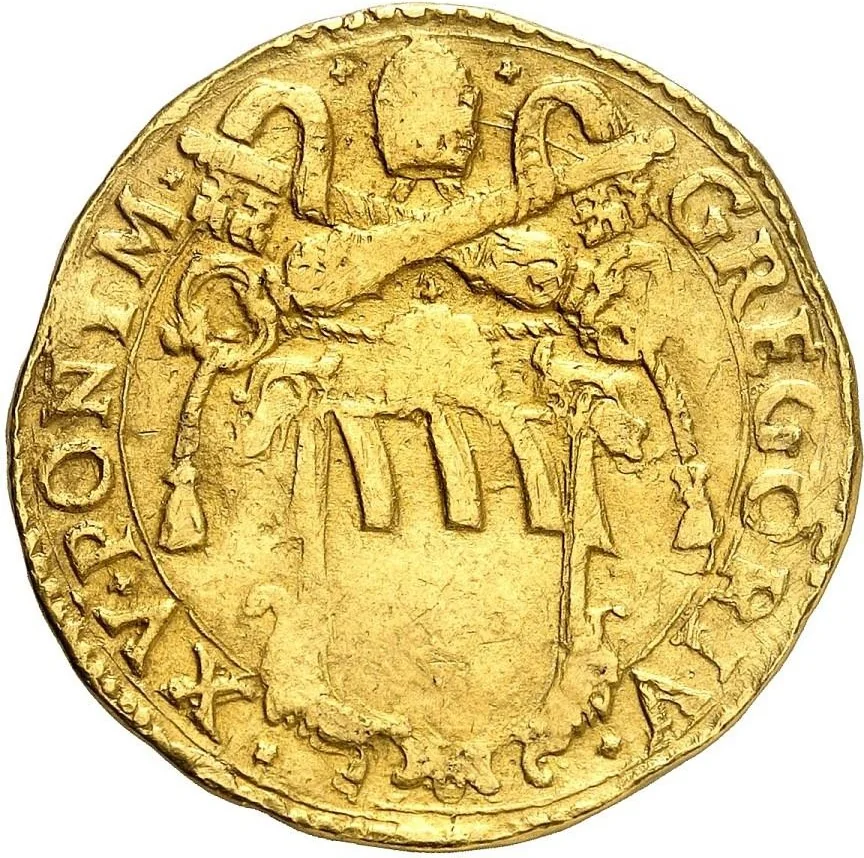
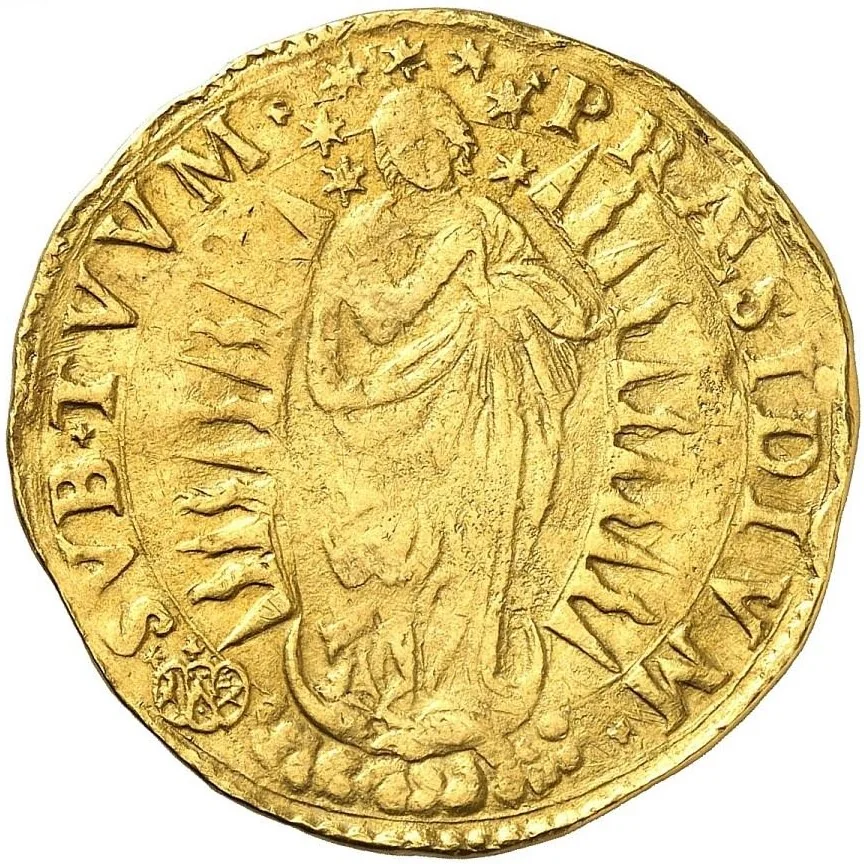
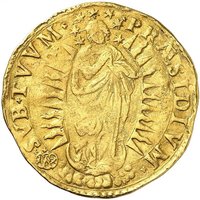
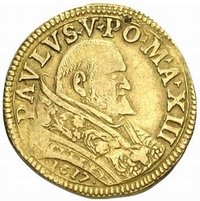
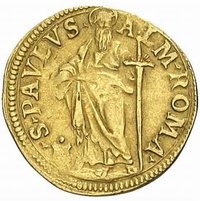
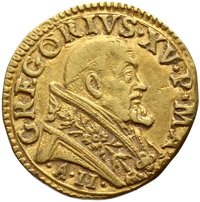
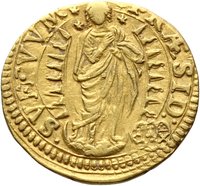
1 Quadrupla – Papal States
Vatican City
Context
Years: 1621–1623
Country: Vatican City 
Issuer: Papal States
Ruler: Gregory XV
Currency:
(1534—1835)
Demonetized: Yes
Material
References
KM: #Click to copy to clipboard83
Numista: #278905
Value
Bullion value: $2305.14
Obverse
Reverse
Edge
Mintings
| Year | Mint Mark | Mintage | Quality | Collection |
|---|---|---|---|---|
| — | — | — |
Historical background
In 1621, the Papal States under Pope Gregory XV faced a significant monetary crisis rooted in the long-term debasement of its coinage. For decades, the Papal treasury, grappling with the immense costs of administration, artistic patronage, and military needs, had systematically reduced the silver content in its primary silver coin, the giulio. This practice, which began in the late 16th century, created a dual-currency system: "old" coins with higher silver content were hoarded or exported, while the newly minted, inferior coins flooded the local economy, driving inflation and public distrust.
The situation was exacerbated by the broader European context of the Kipper- und Wipperzeit, a period of chaotic currency manipulation and debasement affecting the Holy Roman Empire and beyond. As neighboring states degraded their own currencies, clipped and counterfeit papal coins further circulated, confusing commerce. The Papal States' economy, heavily reliant on imports like grain, suffered as foreign merchants demanded payment in "good money" or raised prices to compensate for the weak currency, straining the populace and the public coffers alike.
Pope Gregory XV, who reigned for only two years (1621-1623), was acutely aware of the problem but his brief pontificate limited decisive action. His administration recognized that restoring monetary stability was essential for both economic health and papal prestige, yet comprehensive reform would fall to his successor, Urban VIII. Thus, 1621 represents a pivotal moment of acknowledged crisis within a prolonged deterioration, setting the stage for the more famous, though ultimately unsuccessful, monetary reforms of the Barberini pope in the subsequent decades.
The situation was exacerbated by the broader European context of the Kipper- und Wipperzeit, a period of chaotic currency manipulation and debasement affecting the Holy Roman Empire and beyond. As neighboring states degraded their own currencies, clipped and counterfeit papal coins further circulated, confusing commerce. The Papal States' economy, heavily reliant on imports like grain, suffered as foreign merchants demanded payment in "good money" or raised prices to compensate for the weak currency, straining the populace and the public coffers alike.
Pope Gregory XV, who reigned for only two years (1621-1623), was acutely aware of the problem but his brief pontificate limited decisive action. His administration recognized that restoring monetary stability was essential for both economic health and papal prestige, yet comprehensive reform would fall to his successor, Urban VIII. Thus, 1621 represents a pivotal moment of acknowledged crisis within a prolonged deterioration, setting the stage for the more famous, though ultimately unsuccessful, monetary reforms of the Barberini pope in the subsequent decades.
✨ Legendary