

1 Scudo – Papal States
Vatican City
Context
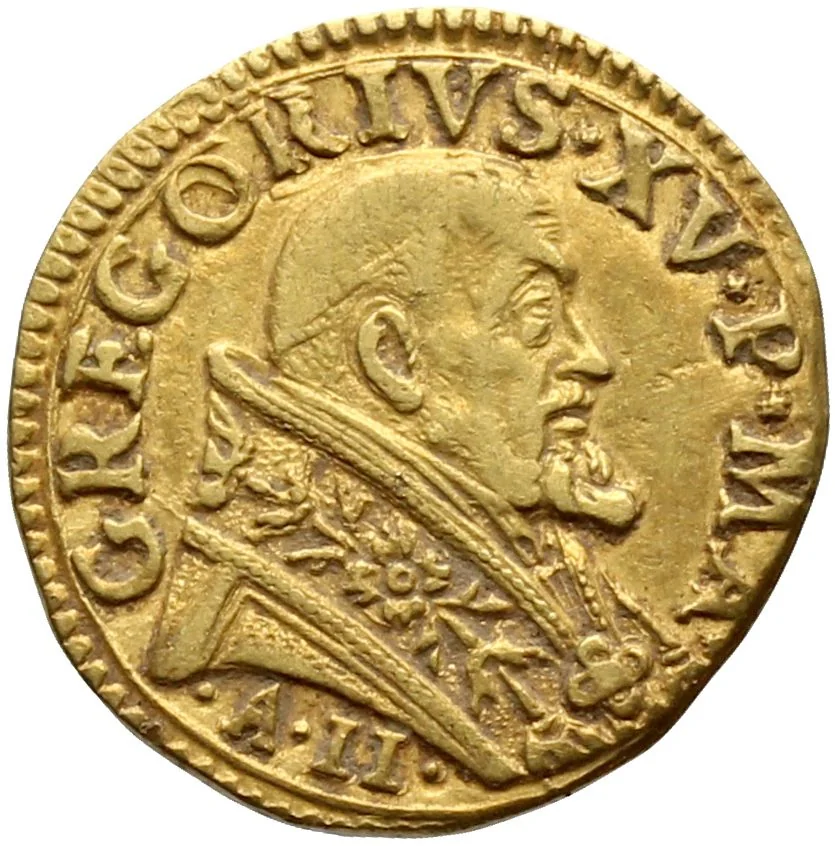
Year: 1622
Country: Vatican City 
Issuer: Papal States
Ruler: Gregory XV
Currency:
(1534—1835)
Demonetized: Yes
Material
References
KM: #Click to copy to clipboard104
Numista: #367545
Value
Bullion value: $510.06
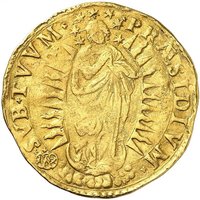
Obverse
Reverse
Description:
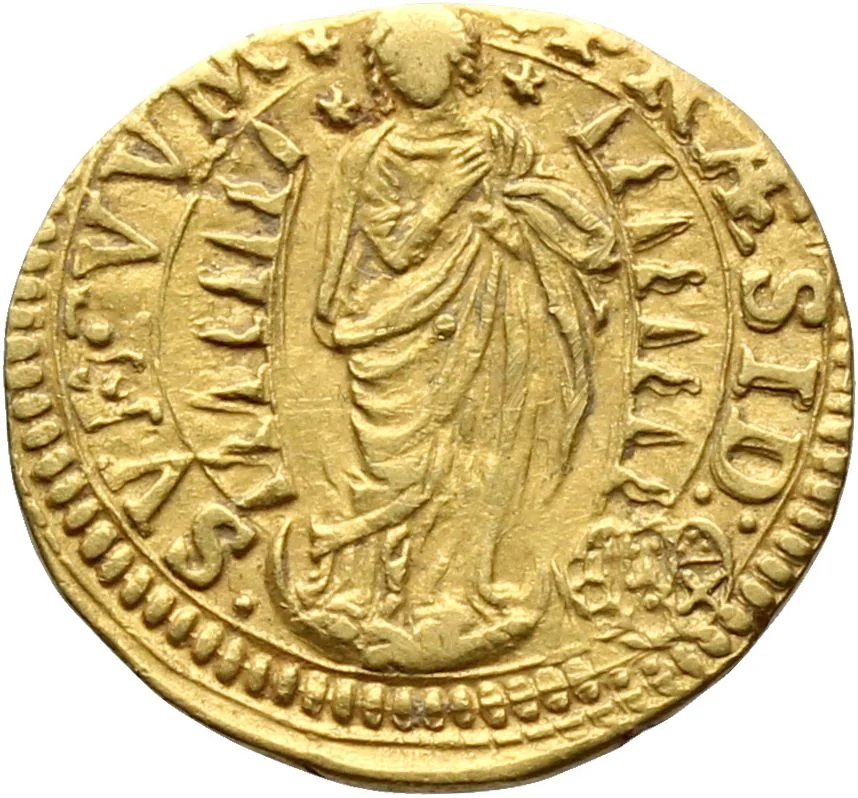
Radiant Madonna standing. Mint master's mark at legend's end.
Inscription:
SVB٠TVVM٠PRAESID:
Script: Latin
Edge
Mints
| Name | Mark |
|---|---|
| Rome | — |
Mintings
| Year | Mint Mark | Mintage | Quality | Collection |
|---|---|---|---|---|
| 1622 | — | — |
Historical background
In 1622, the Papal States, a mosaic of territories in central Italy under the direct temporal rule of the Pope, operated within a complex and often chaotic monetary system. The situation was characterized by a duality: the official papal coinage, minted in Rome, and a vast array of circulating foreign and regional coins. The primary papal silver coin was the giulio, alongside the grosso and the gold scudo. However, due to persistent budget deficits from lavish court expenditures and military costs, the papacy frequently engaged in debasement—reducing the precious metal content in its coins to generate seigniorage revenue. This practice, while filling short-term fiscal needs, eroded public trust in the official currency.
Alongside these debased papal issues, a plethora of other currencies circulated freely, particularly Spanish silver reales and gold escudos, which were dominant due to Spain's political and economic influence in Italy. Furthermore, coins from other Italian states like the Florentine florin or Venetian ducat were also common in commerce. This multiplicity created a constant need for money-changers (banchi) and published exchange manuals (tariffe) to navigate the fluctuating values between hundreds of different coin types, each with its own weight and fineness. The system was inherently unstable, prone to speculation and arbitrage.
The monetary confusion of this period, under Pope Gregory XV (1621-1623), was symptomatic of broader European trends of the "Price Revolution" and the influx of New World bullion. While the Papal Mint attempted reforms, its efforts were consistently undermined by fiscal pressure. The result was an environment where the intrinsic value of a coin's metal often mattered more than its face value, hindering efficient trade and taxation. This instability would persist until more forceful, but still only partially successful, reforms were undertaken later in the 17th century.
Alongside these debased papal issues, a plethora of other currencies circulated freely, particularly Spanish silver reales and gold escudos, which were dominant due to Spain's political and economic influence in Italy. Furthermore, coins from other Italian states like the Florentine florin or Venetian ducat were also common in commerce. This multiplicity created a constant need for money-changers (banchi) and published exchange manuals (tariffe) to navigate the fluctuating values between hundreds of different coin types, each with its own weight and fineness. The system was inherently unstable, prone to speculation and arbitrage.
The monetary confusion of this period, under Pope Gregory XV (1621-1623), was symptomatic of broader European trends of the "Price Revolution" and the influx of New World bullion. While the Papal Mint attempted reforms, its efforts were consistently undermined by fiscal pressure. The result was an environment where the intrinsic value of a coin's metal often mattered more than its face value, hindering efficient trade and taxation. This instability would persist until more forceful, but still only partially successful, reforms were undertaken later in the 17th century.
✨ Legendary