

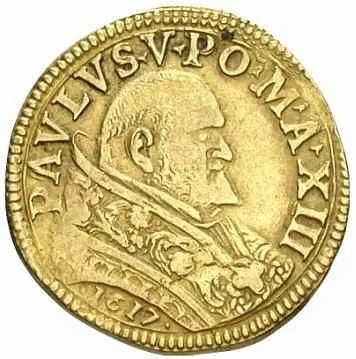
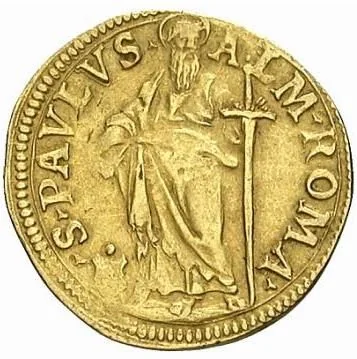
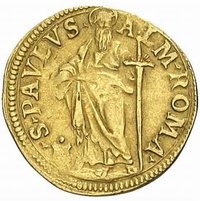
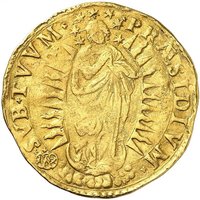
1 Scudo – Papal States
Vatican City
Context
Year: 1617
Country: Vatican City 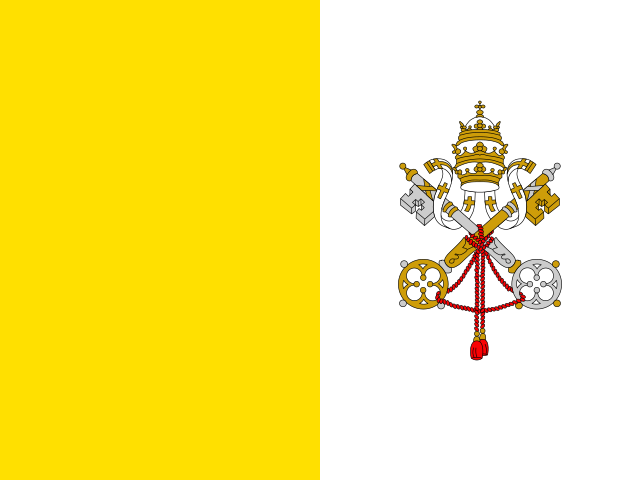
Issuer: Papal States
Ruler: Paul V
Currency:
(1534—1835)
Demonetized: Yes
Material
References
KM: #Click to copy to clipboard80
Numista: #381112
Value
Bullion value: $512.96
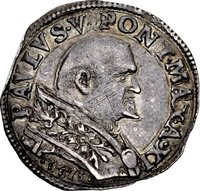
Obverse
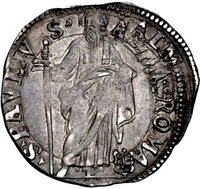
Reverse
Edge
Mints
| Name | Mark |
|---|---|
| Rome | — |
Mintings
| Year | Mint Mark | Mintage | Quality | Collection |
|---|---|---|---|---|
| 1617 | — | — |
Historical background
In 1617, the Papal States, under Pope Paul V, were grappling with a complex and deteriorating currency situation typical of many European states in the early 17th century. The core problem was a severe debasement of the circulating copper and silver coinage, particularly the low-denomination baiocco and giulio coins used in daily transactions. Years of issuing coins with reduced precious metal content to finance state expenditures, including monumental building projects and administrative costs, had led to a classic "bad money drives out good" scenario (Gresham's Law). Older, purer coins were hoarded or melted down, leaving the economy flooded with unstable and untrusted currency.
This debasement triggered rampant price inflation, social unrest, and economic confusion, especially among the poor who relied on small coinage. The value of copper coins fluctuated wildly, and exchange rates between papal coins and those of neighboring states like Tuscany became chaotic, disrupting trade. Furthermore, the Papal Mint itself was a source of scandal and inefficiency, often accused of corruption and producing inconsistent coinage. The situation was exacerbated by a fragmented monetary system where various Italian cities within the Papal States sometimes issued their own coinage, adding another layer of complexity.
Recognizing the crisis, Pope Paul V initiated a significant monetary reform in 1617, which would be a central policy of his later years. The reform aimed to stabilize the currency by recalling the debased coins and issuing new ones with standardized and restored metal content. While a necessary step, the process was economically painful, involving forced exchanges at rates unfavorable to the public and temporary disruptions. This reform highlighted the perennial challenge for the Papal States: balancing its spiritual sovereignty with the practical and often precarious financial demands of governing a central Italian territory.
This debasement triggered rampant price inflation, social unrest, and economic confusion, especially among the poor who relied on small coinage. The value of copper coins fluctuated wildly, and exchange rates between papal coins and those of neighboring states like Tuscany became chaotic, disrupting trade. Furthermore, the Papal Mint itself was a source of scandal and inefficiency, often accused of corruption and producing inconsistent coinage. The situation was exacerbated by a fragmented monetary system where various Italian cities within the Papal States sometimes issued their own coinage, adding another layer of complexity.
Recognizing the crisis, Pope Paul V initiated a significant monetary reform in 1617, which would be a central policy of his later years. The reform aimed to stabilize the currency by recalling the debased coins and issuing new ones with standardized and restored metal content. While a necessary step, the process was economically painful, involving forced exchanges at rates unfavorable to the public and temporary disruptions. This reform highlighted the perennial challenge for the Papal States: balancing its spiritual sovereignty with the practical and often precarious financial demands of governing a central Italian territory.
✨ Legendary