

1 thaler – Brunswick-Lüneburg-Calenberg-Hannover
Add to wishlist
Germany
Context
References
KM: #
Numista: #423107
Obverse
Description:
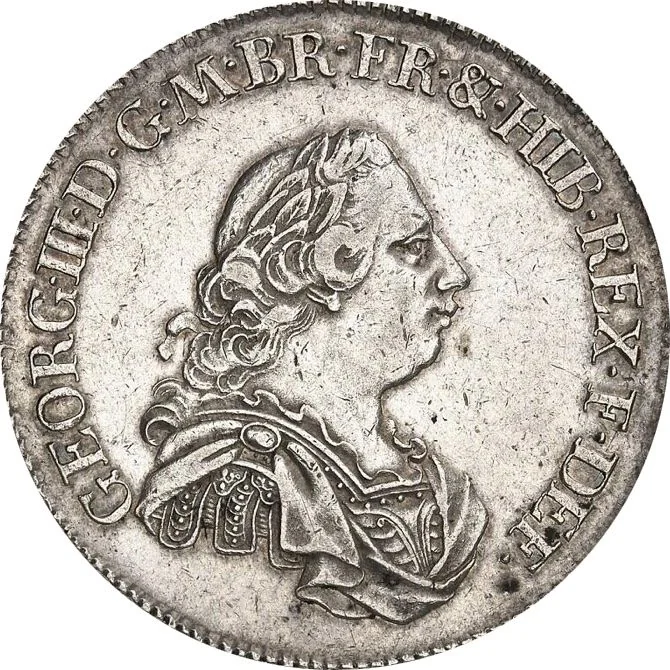
Armored bust right within inscription.
Inscription:
GEORG•III•D•G•M•BR•FR•&•HIB • REX • F • D •
Script: Latin
Reverse
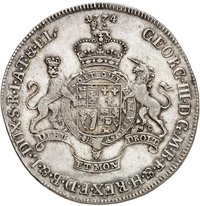
Description:
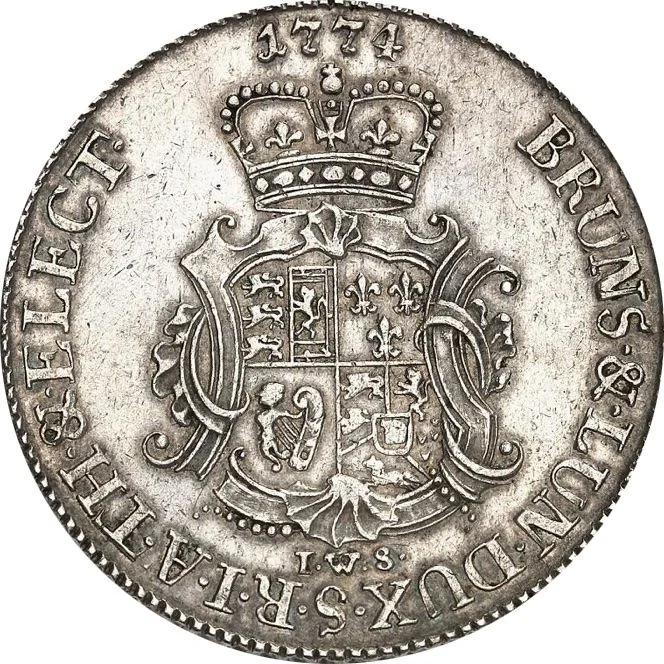
Quartered arms on a shield, date above, initials below, encircled by a legend.
Inscription:
1774
BRUNS•&•LUN•DUX•S•R•I•A•TH•&• ELECT
I.W.S.
BRUNS•&•LUN•DUX•S•R•I•A•TH•&• ELECT
I.W.S.
Script: Latin
Edge
Mintings
| Year | Mint Mark | Mintage | Quality | Collection |
|---|---|---|---|---|
| 1773 | — | — | ||
| 1774 | — | — | ||
| 1776 | — | — | ||
| 1779 | — | — | ||
| 1780 | — | — | ||
| 1782 | — | — | ||
| 1784 | — | — | ||
| 1786 | — | — | ||
| 1791 | C | — | ||
| 1792 | PLM | — | ||
| 1794 | PLM | — | ||
| 1797 | PLM | — |
Historical background
In 1773, the currency situation in the Duchy of Brunswick-Lüneburg, specifically the Principality of Calenberg (with its capital in Hanover), was characterized by significant complexity and fragmentation. The territory was part of the Holy Roman Empire and was governed in personal union with Great Britain since 1714, creating a financial landscape influenced by both German and international trade. The monetary system was not unified, operating on the Conventionsfuß standard used across much of northern Germany, where a Reichsthaler was divided into 24 Gutegroschen, each of 12 Pfennige. However, numerous other coins from neighboring states and older local issues circulated simultaneously, leading to chronic confusion in daily commerce.
This monetary disorder was exacerbated by the Seven Years' War (1756-1763), which had ended just a decade prior. The war had forced the Hanoverian government, like many others, to issue vast quantities of debased coinage to finance military expenditures, leading to inflation and a loss of public trust in the currency. By 1773, the authorities were still grappling with the aftermath: a mixture of overvalued and undervalued coins in circulation, widespread counterfeiting, and the practical difficulties for merchants and peasants alike in determining real values. The state faced the persistent challenge of recalling and reminting this unstable money.
Consequently, the year 1773 fell within a period of ongoing, but slow, monetary reform. The government in Hanover sought to stabilize and standardize the coinage, aiming to restore the Conventionsthaler to its proper silver content and reduce the plethora of small circulating coins. These efforts were part of a broader trend among German states to create more orderly fiscal systems, yet progress was hampered by the costs of reminting and the entrenched interests of various estates. Thus, while the legal framework aimed for consistency, the everyday reality for residents of Calenberg-Hannover remained one of navigating a cumbersome and often unreliable multi-currency environment.
This monetary disorder was exacerbated by the Seven Years' War (1756-1763), which had ended just a decade prior. The war had forced the Hanoverian government, like many others, to issue vast quantities of debased coinage to finance military expenditures, leading to inflation and a loss of public trust in the currency. By 1773, the authorities were still grappling with the aftermath: a mixture of overvalued and undervalued coins in circulation, widespread counterfeiting, and the practical difficulties for merchants and peasants alike in determining real values. The state faced the persistent challenge of recalling and reminting this unstable money.
Consequently, the year 1773 fell within a period of ongoing, but slow, monetary reform. The government in Hanover sought to stabilize and standardize the coinage, aiming to restore the Conventionsthaler to its proper silver content and reduce the plethora of small circulating coins. These efforts were part of a broader trend among German states to create more orderly fiscal systems, yet progress was hampered by the costs of reminting and the entrenched interests of various estates. Thus, while the legal framework aimed for consistency, the everyday reality for residents of Calenberg-Hannover remained one of navigating a cumbersome and often unreliable multi-currency environment.
✨ Legendary