

2 Pfennigs – Landgraviate of Hesse-Cassel
Context
Year: 1680
Issuer: Landgraviate of Hesse-Cassel
Ruler: Charles I
Currency:
Demonetized: Yes
Total mintage: 36,096
Material
References
KM: #Click to copy to clipboard29
Numista: #278246
Value
Bullion value: $1.58
Obverse
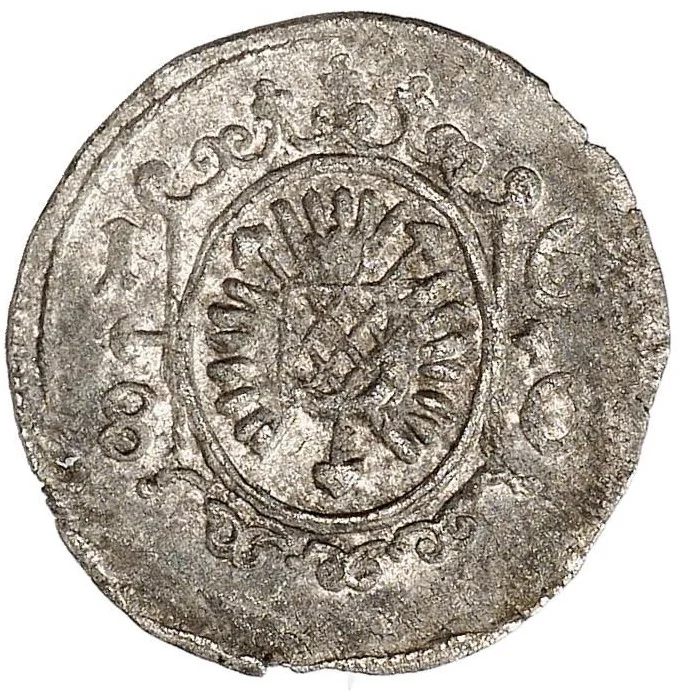
Description:
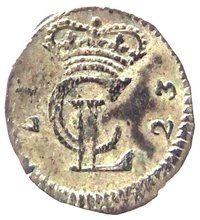
Schaumburg arms in baroque frame, date split at four points.
Inscription:
1680
Reverse
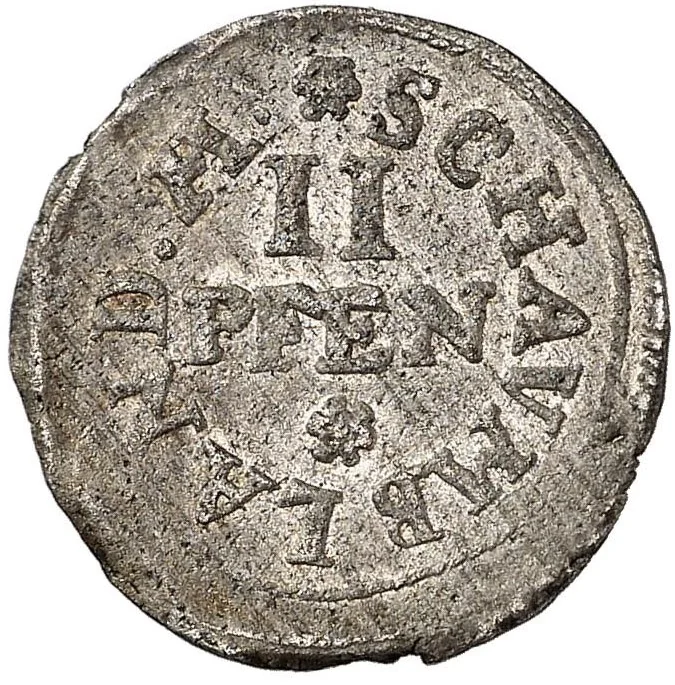
Description:
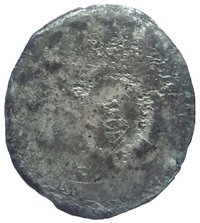
Two-line inscription.
Inscription:
SCHAVMB. LAND. M.
II
PFEN
II
PFEN
Edge
Mintings
| Year | Mint Mark | Mintage | Quality | Collection |
|---|---|---|---|---|
| 1680 | — | 36,096 |
Historical background
In 1680, the Landgraviate of Hesse-Cassel was navigating a complex and challenging currency situation typical of the Holy Roman Empire's fragmented monetary landscape. The landgraviate did not have a fully sovereign coinage; its monetary system was integrated within the framework of the Upper Saxon Circle, a regional administrative body that attempted to standardize currency among its member states. The official currency was based on the Reichsthaler, a large silver coin defined by imperial decree, but daily transactions relied on a confusing plethora of smaller denominations like Groschen, Kreuzer, and Pfennige, whose values and silver content were unstable.
This period was marked by significant monetary debasement and inflation. The financial strain of maintaining a modern standing army and the lavish court of Landgrave Karl, coupled with the economic aftermath of the Thirty Years' War, created constant pressure on the treasury. To raise funds, the minting authority (Münzherr) often reduced the precious metal content in locally minted coins, a practice known as Kipper- und Wipperzeit, which had caused a major crisis earlier in the century. While the worst excesses were over, the temptation to generate seigniorage profit through slight debasement remained, undermining public trust in the coinage.
Consequently, the monetary reality in Hesse-Cassel was one of uncertainty and calculation. Foreign coins, especially those from neighboring states with stronger reputations, circulated widely alongside local issues. Merchants and money changers had to constantly assess the actual silver value of coins, leading to a dual system of "current money" for daily trade and "specie money" (coin based on intrinsic metal value) for large transactions and savings. This chaotic environment hindered commerce and state finance, setting the stage for future attempts at reform under Landgrave Karl and his successors, who sought greater control over minting to stabilize the economy and increase fiscal power.
This period was marked by significant monetary debasement and inflation. The financial strain of maintaining a modern standing army and the lavish court of Landgrave Karl, coupled with the economic aftermath of the Thirty Years' War, created constant pressure on the treasury. To raise funds, the minting authority (Münzherr) often reduced the precious metal content in locally minted coins, a practice known as Kipper- und Wipperzeit, which had caused a major crisis earlier in the century. While the worst excesses were over, the temptation to generate seigniorage profit through slight debasement remained, undermining public trust in the coinage.
Consequently, the monetary reality in Hesse-Cassel was one of uncertainty and calculation. Foreign coins, especially those from neighboring states with stronger reputations, circulated widely alongside local issues. Merchants and money changers had to constantly assess the actual silver value of coins, leading to a dual system of "current money" for daily trade and "specie money" (coin based on intrinsic metal value) for large transactions and savings. This chaotic environment hindered commerce and state finance, setting the stage for future attempts at reform under Landgrave Karl and his successors, who sought greater control over minting to stabilize the economy and increase fiscal power.
✨ Legendary