

2 Goldgulden – Landgraviate of Hesse-Cassel
Context
Material
References
KM: #Click to copy to clipboard299
Numista: #268246
Value
Bullion value: $1060.38
Obverse
Description:
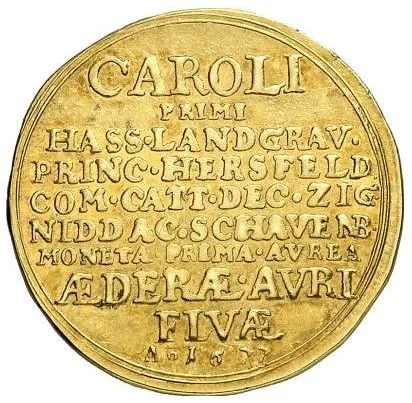
10 lines, dated with numbers.
Inscription:
CAROLI / PRIMI / HASS • LANDGRAV • / PRINC • HERSFELD . / COM • CATT • DEC • ZIG • / NIDDAC . SCHAVE NB • / MONETA • PRIMA • AVREA / ÆDERÆ • AVRI / FLVÆ / Ao 1677
Script: Latin
Reverse
Description:
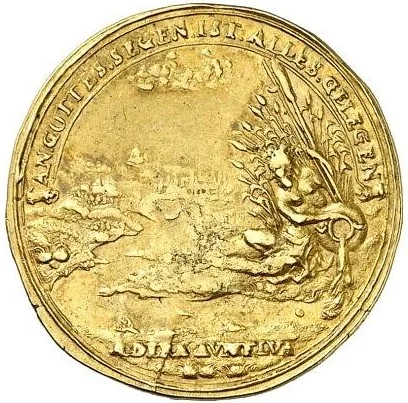
Eder River landscape view.
Inscription:
AN • GOTTES • SEGEN • IST • ALLES • GELEGEN
ÆDERA AVRIFLVA
ÆDERA AVRIFLVA
Script: Latin
Edge
Mintings
| Year | Mint Mark | Mintage | Quality | Collection |
|---|---|---|---|---|
| 1677 | — | — |
Historical background
In 1677, the currency situation in the Landgraviate of Hesse-Cassel was one of profound instability and complexity, a legacy of the Thirty Years' War and subsequent regional conflicts. The monetary system was characterized by a chaotic multiplicity of coins, both domestic and foreign, circulating simultaneously. The landgraves minted their own Taler and smaller denominations, but these competed with a flood of debased coins from neighboring states and countless older issues, leading to widespread confusion, frequent revaluation of coins, and a severe erosion of public trust in the currency.
This instability was exacerbated by the financial policies of Landgrave Karl, who ruled from 1670 to 1730. To fund his lavish court and significant military expenditures—most notably the maintenance of a large standing army for hire—Karl frequently engaged in monetary manipulation. This included the practice of Kippermünze, or the deliberate issuance of lightweight, debased coinage to generate seigniorage profit for the state treasury. While profitable in the short term, this practice further destabilized the economy, distorted prices, and harmed creditors and those on fixed incomes, creating significant social tension.
Consequently, by 1677, Hesse-Cassel was caught in a cycle of monetary debasement and attempted reforms. Efforts to standardize and stabilize the currency were repeatedly undermined by the pressing need for state revenue. The situation hindered both domestic commerce and the landgraviate's critical role in international trade and finance, including its famous Soldatenhandel (renting out regiments). The currency chaos of this period thus reflected the broader struggle of a mid-sized German principality to assert fiscal sovereignty and stability in a fragmented and competitive imperial landscape.
This instability was exacerbated by the financial policies of Landgrave Karl, who ruled from 1670 to 1730. To fund his lavish court and significant military expenditures—most notably the maintenance of a large standing army for hire—Karl frequently engaged in monetary manipulation. This included the practice of Kippermünze, or the deliberate issuance of lightweight, debased coinage to generate seigniorage profit for the state treasury. While profitable in the short term, this practice further destabilized the economy, distorted prices, and harmed creditors and those on fixed incomes, creating significant social tension.
Consequently, by 1677, Hesse-Cassel was caught in a cycle of monetary debasement and attempted reforms. Efforts to standardize and stabilize the currency were repeatedly undermined by the pressing need for state revenue. The situation hindered both domestic commerce and the landgraviate's critical role in international trade and finance, including its famous Soldatenhandel (renting out regiments). The currency chaos of this period thus reflected the broader struggle of a mid-sized German principality to assert fiscal sovereignty and stability in a fragmented and competitive imperial landscape.
✨ Legendary