In 1713, the County of Lippe-Detmold, like many small German territories within the Holy Roman Empire, faced a complex and challenging currency situation. The county did not possess the right of
Münzregal (the sovereign right to mint coins) independently; this privilege was held collectively by the Westphalian Circle (
Kreis), to which it belonged. Consequently, the monetary system was not dominated by a single, strong Lippe currency but was flooded with a multitude of foreign coins. These included coins from neighboring German states, as well as Dutch, French, and Spanish issues, all circulating with varying values and metal contents, leading to chronic confusion and instability in everyday trade.
The primary currency in practical use was the
Taler, but its value was defined in relation to the local accounting unit, the
Reichstaler, which was worth 24
Gute Groschen or 288
Pfennige. However, the actual physical coins in circulation were often debased or worn, creating a significant gap between the official
Reichstaler (
Kuranttaler) and the lower-value
Umlauftaler (
Speciesreichstaler) used in daily transactions. This disparity, alongside the proliferation of small change like
Mariengroschen and
Pfennige, made financial accounting difficult and facilitated fraud, harming both merchants and the general populace.
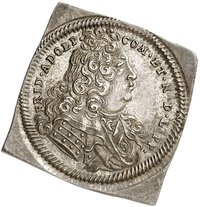
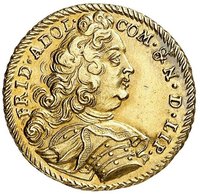
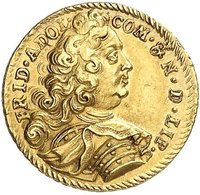
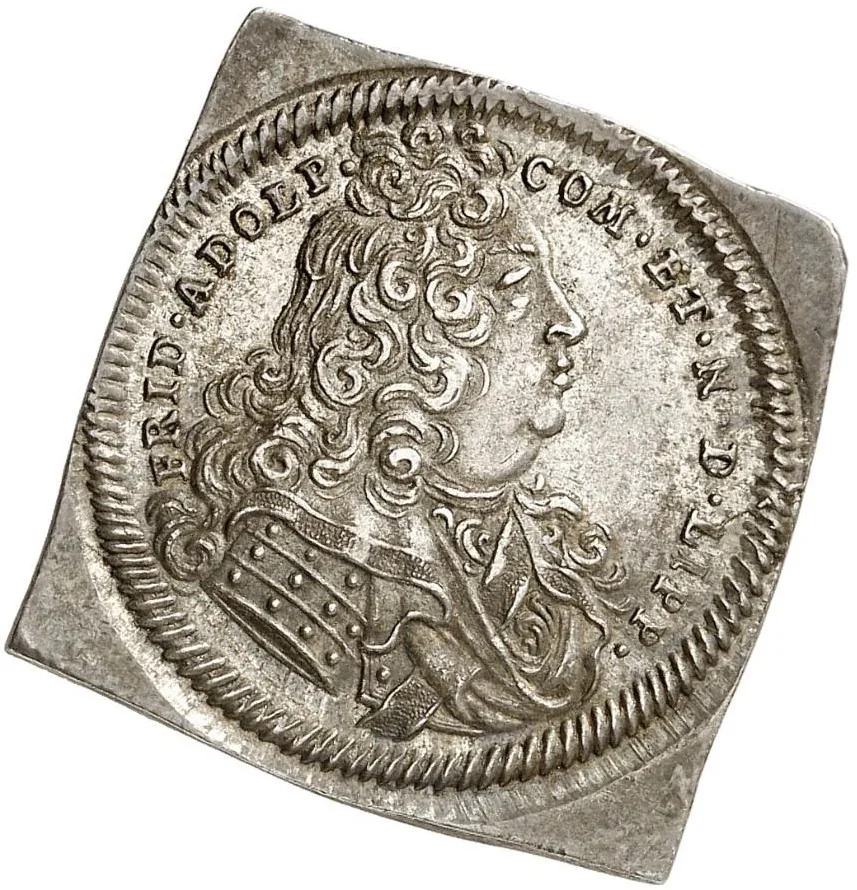
Count Friedrich Adolf (r. 1697–1718) inherited these monetary woes, which were exacerbated by the economic strain of the recent War of the Spanish Succession. While his immediate focus in 1713 was on post-war recovery, the chaotic currency situation hindered economic activity and state revenue. The lack of control over coinage limited the county's fiscal autonomy, forcing it to rely on periodic agreements within the Westphalian Circle to attempt monetary reforms, which often proved temporary and ineffective against the tide of disparate coinage flowing across its borders.