

10 Thalers – Brunswick-Lüneburg-Celle
Germany
Context
Year: 1625
Country: Germany 
Issuer: Brunswick-Lüneburg-Celle
Ruler: Christian
Currency:
Demonetized: Yes
Material
References
KM: #Click to copy to clipboard76
Numista: #275685
Value
Bullion value: $833.73
Obverse
Description:
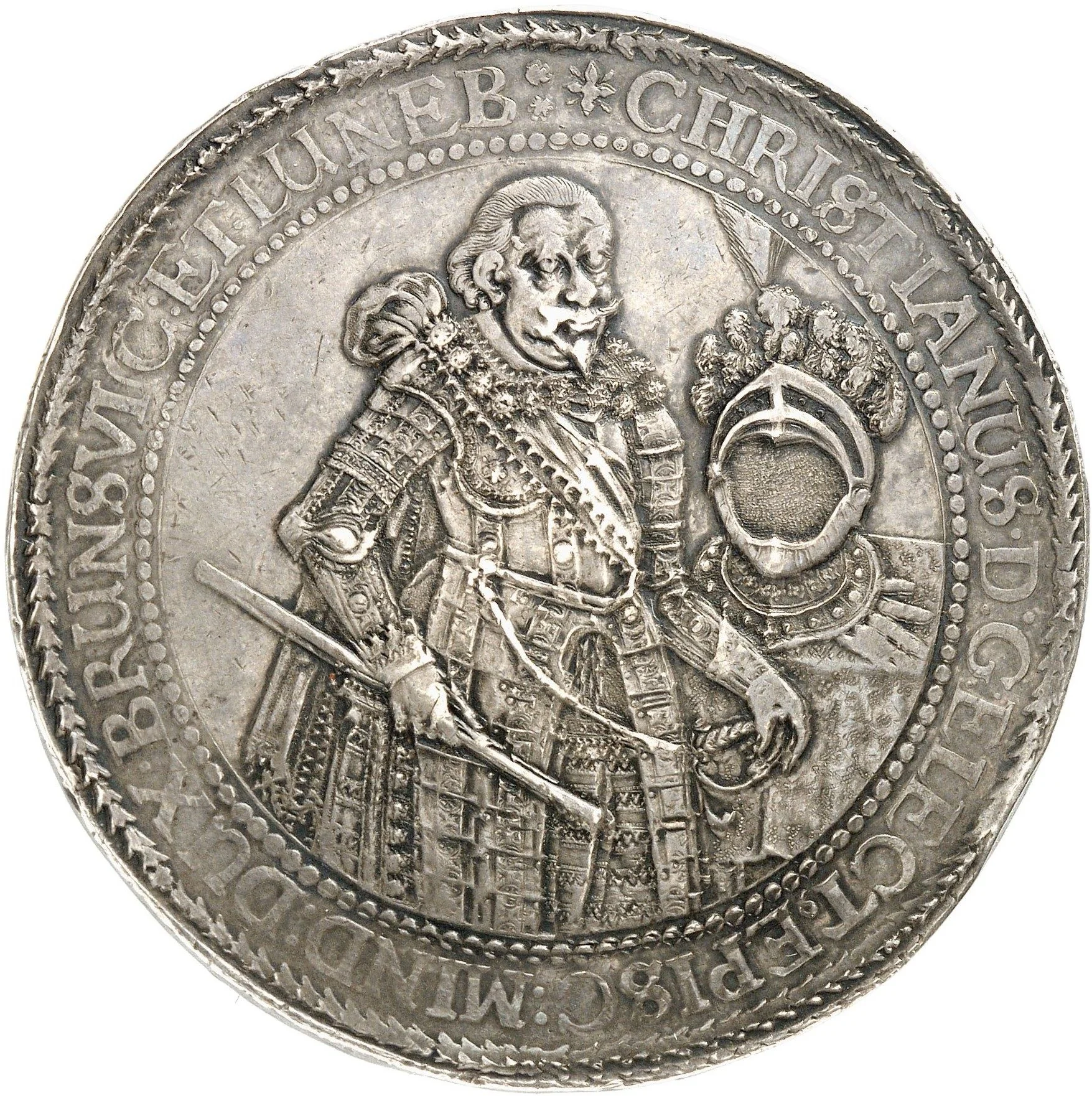
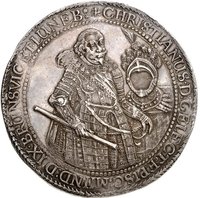
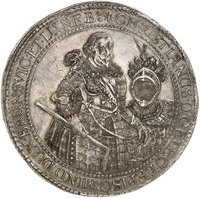
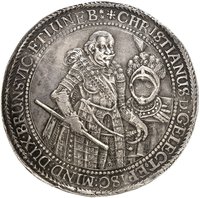
Three-quarter portrait of Duke Christian of Celle in armor, holding a command rod, left hand on his sword. A table with a helmet and gloves is to his right. Legend encircles the image.
Inscription:
CHRISTIANUS • D : G : ELECT, EPISC : MIIND : DUX : BRUNSVIC : ET • LUNEB :
Script: Latin
Reverse
Description:
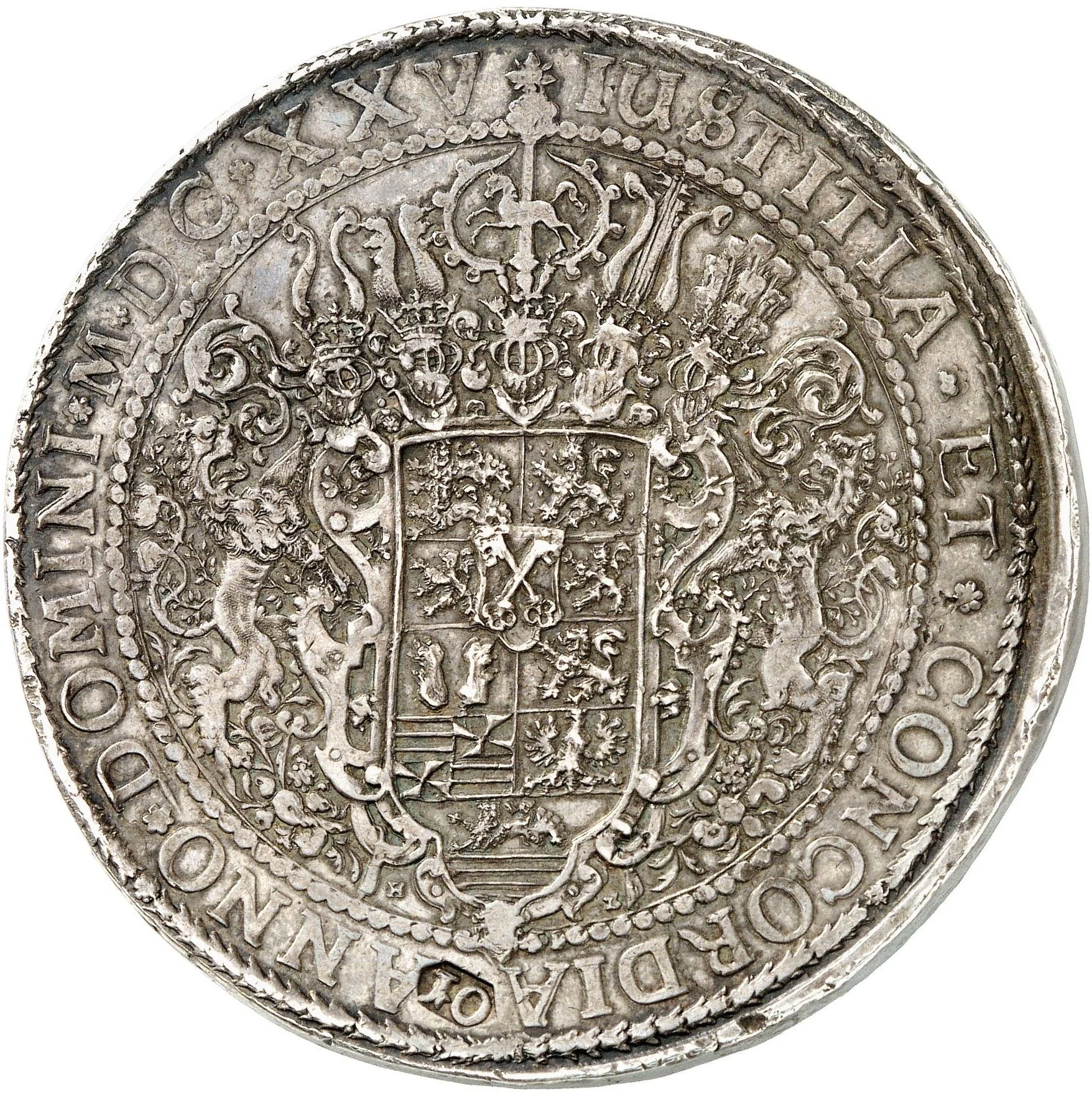
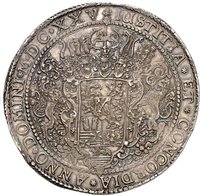
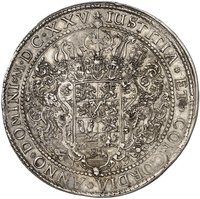
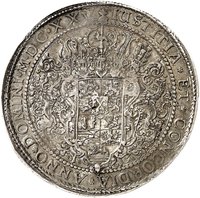
Helmeted arms with Minden shield, Roman numeral date, punched 10.
Inscription:
IUSTITIA ET CONCORDIA ANNO DOMINI MDCXXV
Script: Latin
Edge
Categories
| Object> Armour |
| Symbols> Coat of Arms |
Mintings
| Year | Mint Mark | Mintage | Quality | Collection |
|---|---|---|---|---|
| 1625 | HZ | — |
Historical background
In 1625, the Duchy of Brunswick-Lüneburg, with its administrative center in Celle, operated within the complex and strained monetary system of the Holy Roman Empire. The region was not a unified currency zone; instead, it participated in the Reichsmünzordnung (Imperial Coinage Ordinance) system, which theoretically standardized coinage across the Empire. However, in practice, numerous states, including the various Brunswick-Lüneburg sub-duchies, minted their own coins, leading to a circulation of diverse thalers, groschen, and pfennigs with fluctuating intrinsic values. This fragmentation was exacerbated by the outbreak of the Thirty Years' War in 1618, which placed immense fiscal pressure on all German territories.
Duke Christian the Elder of Brunswick-Lüneburg, ruling from Celle, faced severe financial demands to fund military levies and fortifications as the war encroached on Northern Germany. A common response to such crises was Kipper- und Wipperzeit (the clipping and culling period), a wave of currency debasement that had peaked in the early 1620s. While the worst inflation had subsided by 1625, its aftermath left a legacy of distrust in coinage and disrupted trade. The duke's mint would have been under temptation to generate revenue by issuing lighter or less pure coins, competing with neighboring states and numerous counterfeit pieces that flooded the market.
Consequently, the currency situation in Celle in 1625 was one of instability and uncertainty. Long-distance merchants and local markets alike had to navigate a confusing array of coins, requiring constant evaluation and exchange. The ducal administration struggled to maintain the value of its own currency while meeting wartime expenses, leading to a precarious economic environment where the actual purchasing power of money was volatile and often disconnected from its face value, hindering recovery and commerce in the duchy.
Duke Christian the Elder of Brunswick-Lüneburg, ruling from Celle, faced severe financial demands to fund military levies and fortifications as the war encroached on Northern Germany. A common response to such crises was Kipper- und Wipperzeit (the clipping and culling period), a wave of currency debasement that had peaked in the early 1620s. While the worst inflation had subsided by 1625, its aftermath left a legacy of distrust in coinage and disrupted trade. The duke's mint would have been under temptation to generate revenue by issuing lighter or less pure coins, competing with neighboring states and numerous counterfeit pieces that flooded the market.
Consequently, the currency situation in Celle in 1625 was one of instability and uncertainty. Long-distance merchants and local markets alike had to navigate a confusing array of coins, requiring constant evaluation and exchange. The ducal administration struggled to maintain the value of its own currency while meeting wartime expenses, leading to a precarious economic environment where the actual purchasing power of money was volatile and often disconnected from its face value, hindering recovery and commerce in the duchy.
✨ Legendary