

1 Piastra – Papal States
Vatican City
Context
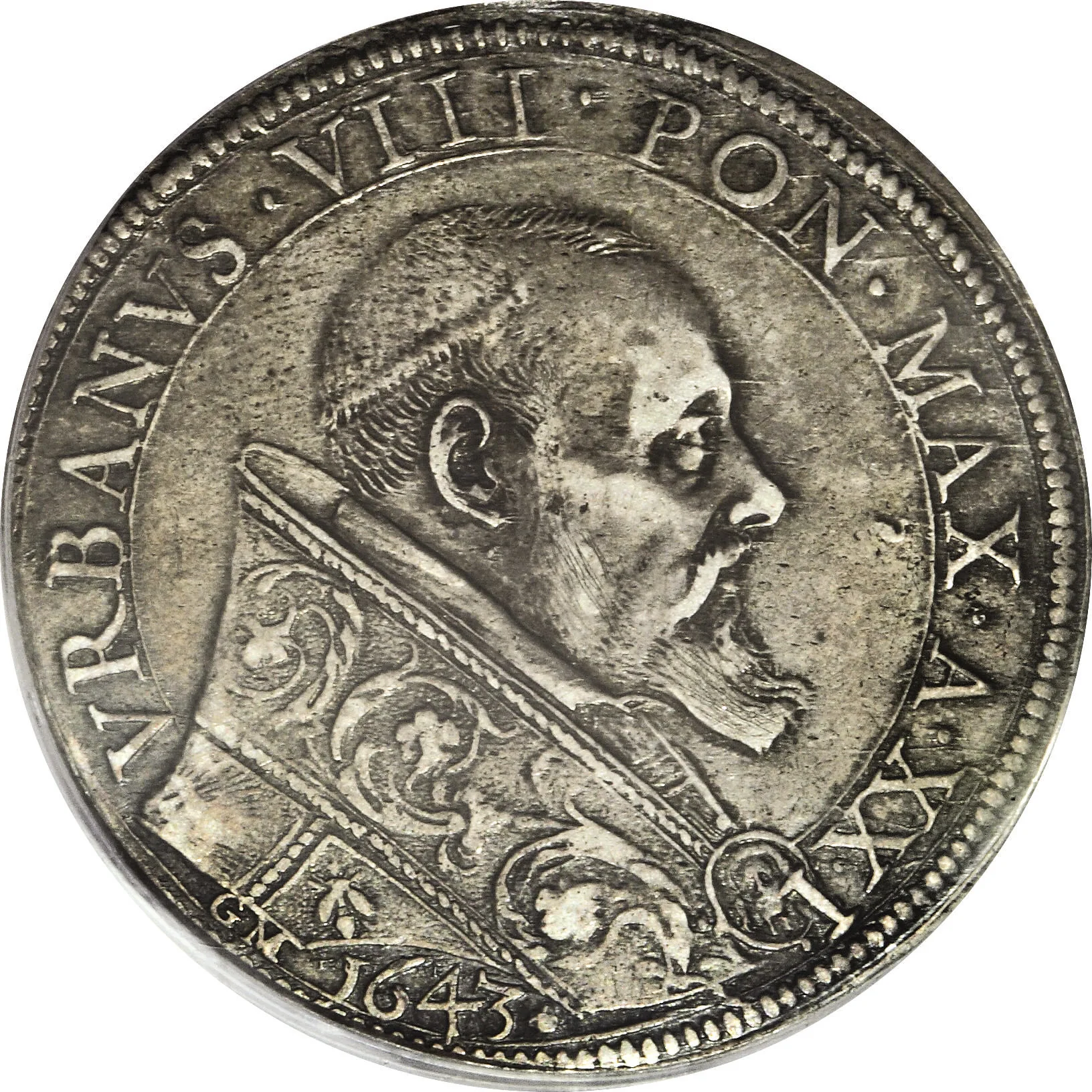
Year: 1643
Country: Vatican City 
Issuer: Papal States
Ruler: Urban VIII
Currency:
(1534—1835)
Demonetized: Yes
References
KM: #Click to copy to clipboard205
Numista: #29283
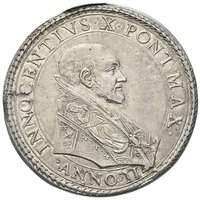
Obverse
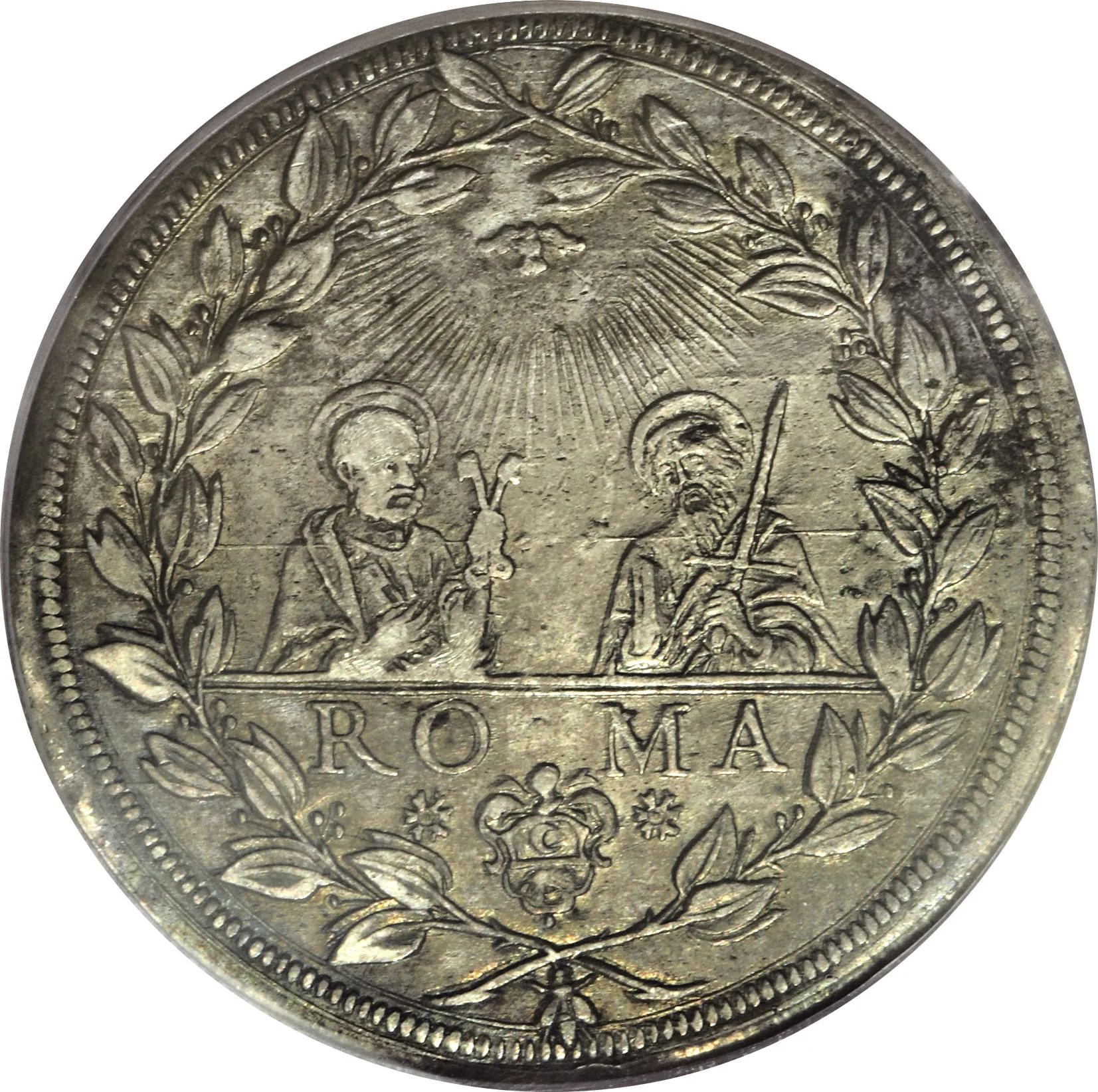
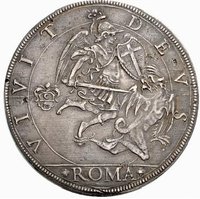
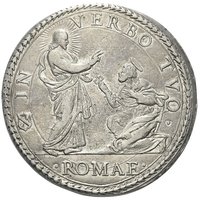
Reverse
Description:
Two seated figures holding keys above arms within a wreath.
Inscription:
RO MA
Script: Latin
Edge
Mintings
| Year | Mint Mark | Mintage | Quality | Collection |
|---|---|---|---|---|
| 1643 | GM | — |
Historical background
In 1643, the Papal States, a mosaic of central Italian territories under the direct temporal rule of the Pope, operated within a complex and strained monetary system. The primary currency was the Papal scudo, a silver coin, which existed alongside a bewildering array of subsidiary coins, including giuli, baiochi, and quattrini. However, the system was plagued by chronic instability. Decades of fiscal pressure from military expenditures, lavish papal court spending, and declining revenues from land and taxes had led successive popes to engage in currency debasement—reducing the precious metal content in coins to create more money from the same silver stock. This practice, while providing short-term liquidity, eroded public trust and caused inflation, as the intrinsic value of coins fell below their face value.
The situation was further complicated by the widespread circulation of foreign currencies, particularly Spanish silver reales and gold scudi from other Italian states like Tuscany. These often more reliable foreign coins competed with the debased papal issues, leading to Gresham's Law in practice: "bad money drives out good." People hoarded older, higher-value papal coins or used foreign currency for significant transactions, leaving the weaker papal currency for daily use. This undermined the economic sovereignty of the Papal States and made fiscal planning exceedingly difficult for the administration of Pope Urban VIII (Barberini), whose costly wars and nepotistic patronage were significant drivers of the very debt that necessitated monetary manipulation.
Consequently, the monetary landscape of 1643 was one of confusion and diminishing prestige. Prices were unstable, trade was hindered by the need for constant exchange and valuation, and the papal government struggled to meet its obligations. The currency crisis was a clear symptom of deeper structural problems: a pre-modern economy overly reliant on agriculture, a tax system that often exempted the nobility and clergy, and the immense financial burdens of maintaining the Papacy's political and military position in Italy. The attempts to solve fiscal deficits through currency debasement ultimately created a vicious cycle of inflation and loss of confidence that would challenge the Papal States for decades to come.
The situation was further complicated by the widespread circulation of foreign currencies, particularly Spanish silver reales and gold scudi from other Italian states like Tuscany. These often more reliable foreign coins competed with the debased papal issues, leading to Gresham's Law in practice: "bad money drives out good." People hoarded older, higher-value papal coins or used foreign currency for significant transactions, leaving the weaker papal currency for daily use. This undermined the economic sovereignty of the Papal States and made fiscal planning exceedingly difficult for the administration of Pope Urban VIII (Barberini), whose costly wars and nepotistic patronage were significant drivers of the very debt that necessitated monetary manipulation.
Consequently, the monetary landscape of 1643 was one of confusion and diminishing prestige. Prices were unstable, trade was hindered by the need for constant exchange and valuation, and the papal government struggled to meet its obligations. The currency crisis was a clear symptom of deeper structural problems: a pre-modern economy overly reliant on agriculture, a tax system that often exempted the nobility and clergy, and the immense financial burdens of maintaining the Papacy's political and military position in Italy. The attempts to solve fiscal deficits through currency debasement ultimately created a vicious cycle of inflation and loss of confidence that would challenge the Papal States for decades to come.
✨ Legendary