

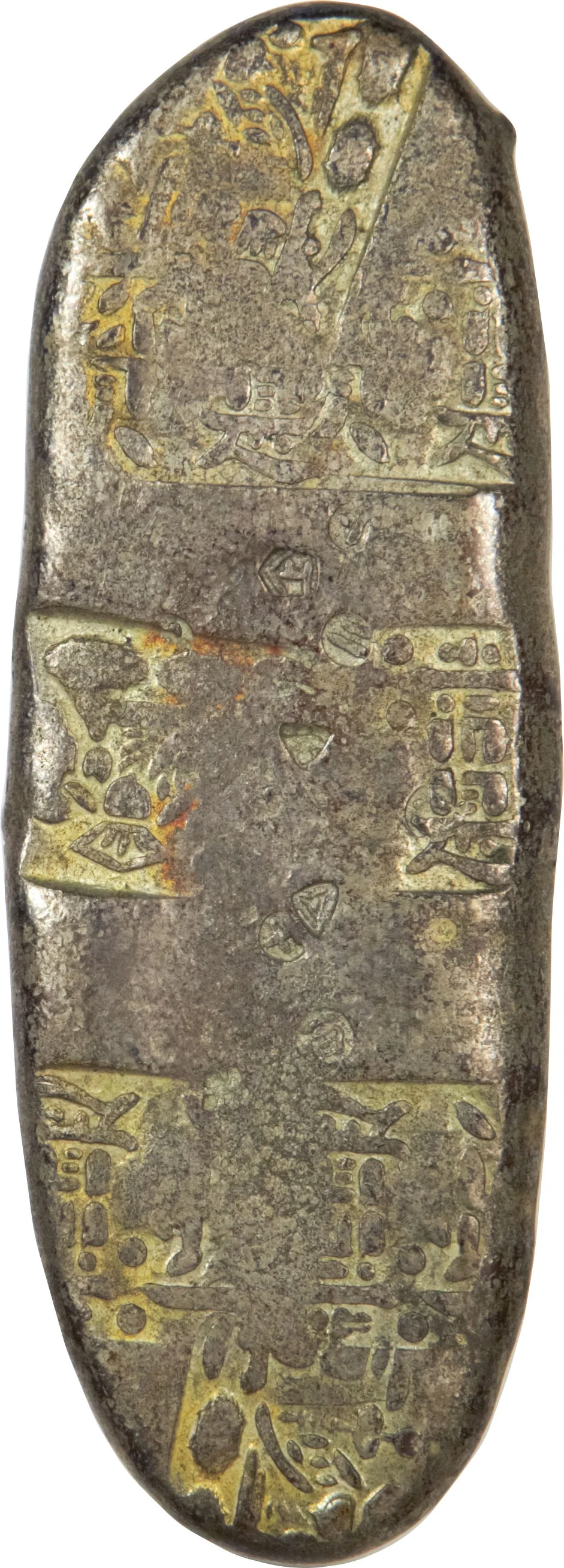

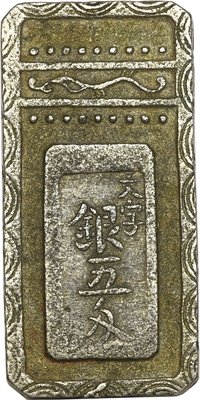
Obverse
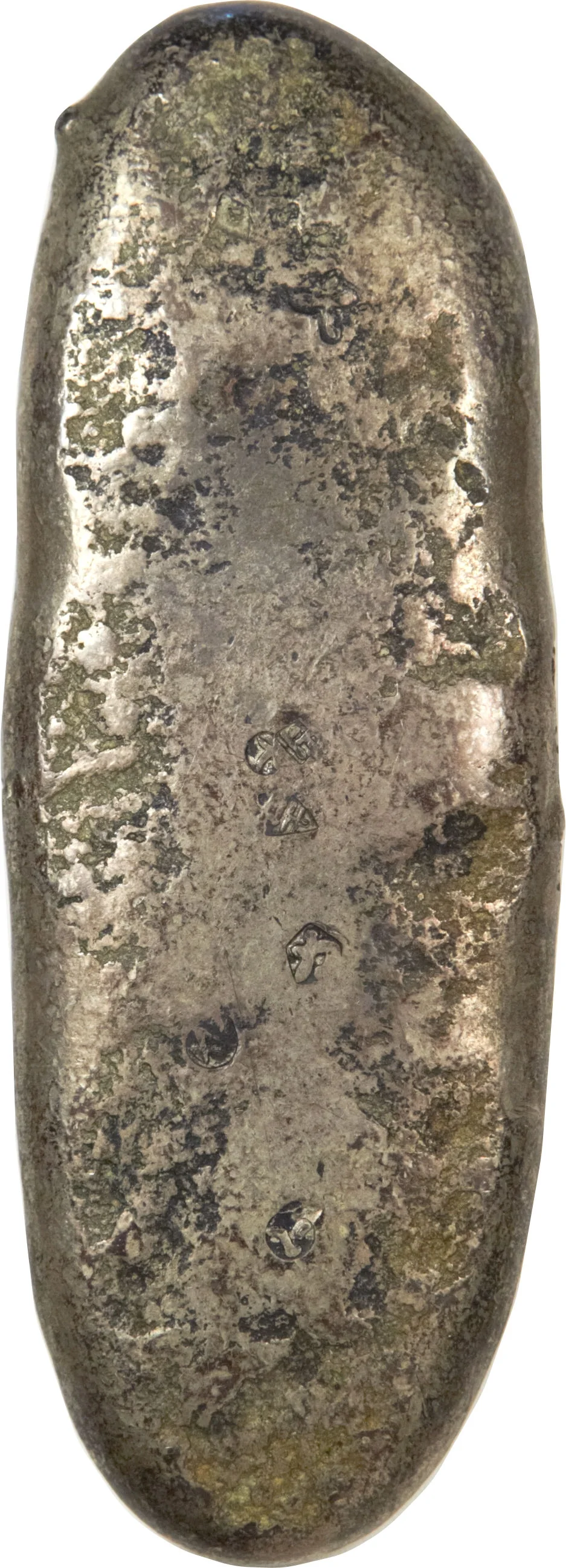
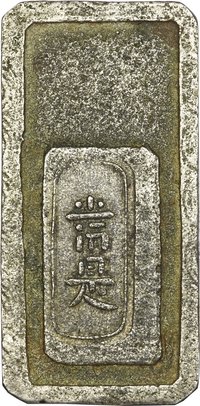
Reverse
Edge
Mintings
| Year | Mint Mark | Mintage | Quality | Collection |
|---|---|---|---|---|
| — | — | — |
Historical background
In 1714, Japan was in the midst of the Kyōhō Reforms, a pivotal period under the eighth Tokugawa shogun, Tokugawa Yoshimune. The currency situation was dire, characterized by severe debasement and economic instability. For decades, the shogunate had engaged in issuing coins with reduced precious metal content—particularly gold and silver—to cover government shortfalls, leading to rampant inflation, a loss of public trust in currency, and economic hardship. The widespread circulation of inferior, privately minted coins further complicated the monetary system, creating confusion in exchange rates between gold, silver, and copper monies.
The core of the problem was a tri-metallic system where the values of gold koban, silver chōgin, and copper zeni were supposed to be fixed but were in reality highly volatile. The debasement had caused the market value of gold to plummet relative to rice prices, eroding the wealth of the samurai class who were paid fixed stipends in rice. This social disruption, combined with merchant hoarding of old, high-quality coins, pushed Yoshimune to initiate a major monetary reform as a cornerstone of his broader Kyōhō policies aimed at restoring solvency and moral governance.
Yoshimune’s response, which began around 1714 and solidified in the coming years, was a decisive move toward re-coinage. He ordered the minting of new, high-quality gold and silver coins—most notably the Kyōhō koban—which restored the precious metal content to levels not seen in nearly a century. This policy, known as aratame, sought to recall old debased coins and stabilize exchange rates. While initially causing deflationary pressure and some discontent, these measures ultimately succeeded in restoring confidence in the shogunate's currency, curbed inflation, and laid a more stable fiscal foundation for the mid-Edo period.
The core of the problem was a tri-metallic system where the values of gold koban, silver chōgin, and copper zeni were supposed to be fixed but were in reality highly volatile. The debasement had caused the market value of gold to plummet relative to rice prices, eroding the wealth of the samurai class who were paid fixed stipends in rice. This social disruption, combined with merchant hoarding of old, high-quality coins, pushed Yoshimune to initiate a major monetary reform as a cornerstone of his broader Kyōhō policies aimed at restoring solvency and moral governance.
Yoshimune’s response, which began around 1714 and solidified in the coming years, was a decisive move toward re-coinage. He ordered the minting of new, high-quality gold and silver coins—most notably the Kyōhō koban—which restored the precious metal content to levels not seen in nearly a century. This policy, known as aratame, sought to recall old debased coins and stabilize exchange rates. While initially causing deflationary pressure and some discontent, these measures ultimately succeeded in restoring confidence in the shogunate's currency, curbed inflation, and laid a more stable fiscal foundation for the mid-Edo period.
✨ Legendary