

20 Kreuzers – Hungary
Hungary
Context

Material
References
KM: #Click to copy to clipboard390
Numista: #27169
Value
Bullion value: $11.15
Obverse
Description:
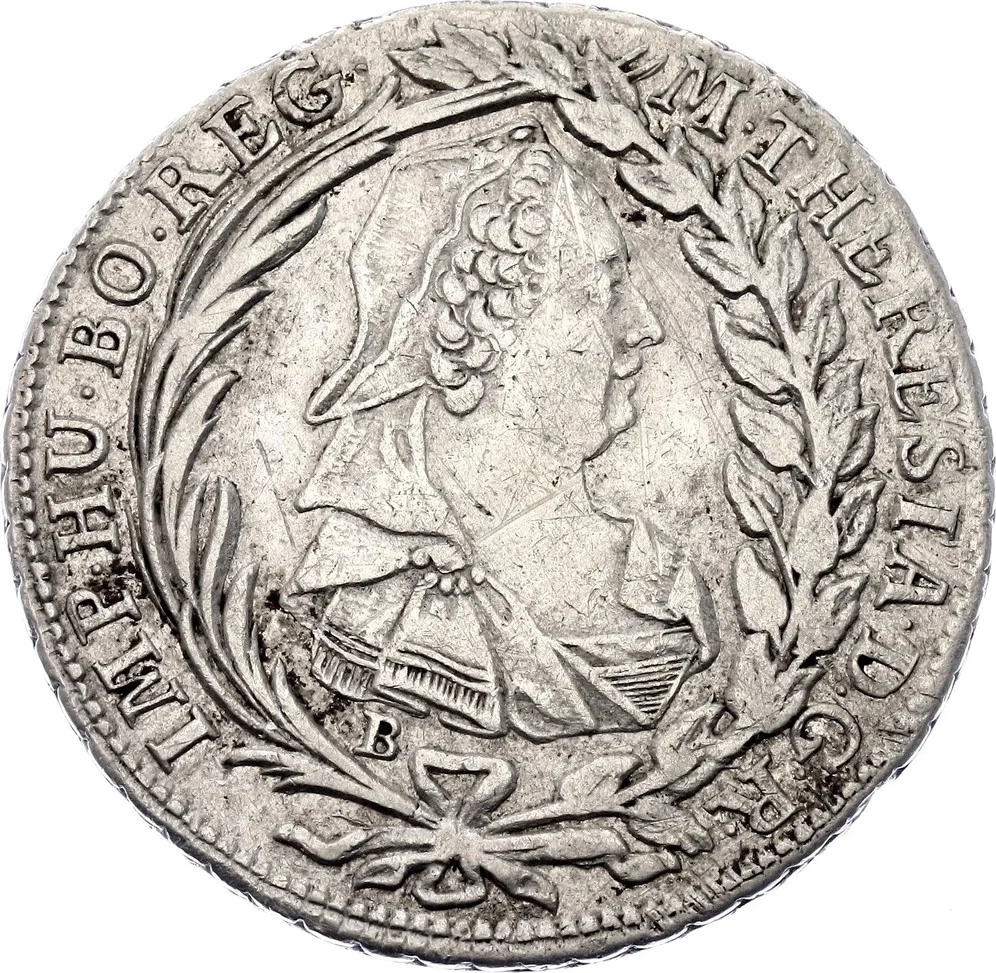
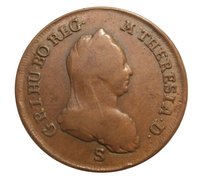
Veiled bust right in laurel wreath; straight veil. Inscription above, mintmark below.
Inscription:
M · THERESIA · D · G · R · IMP · HU · BO · REG ·
B
B
Script: Latin
Engraver: Maximilian König von Paumbshausen Jr
Reverse
Description:
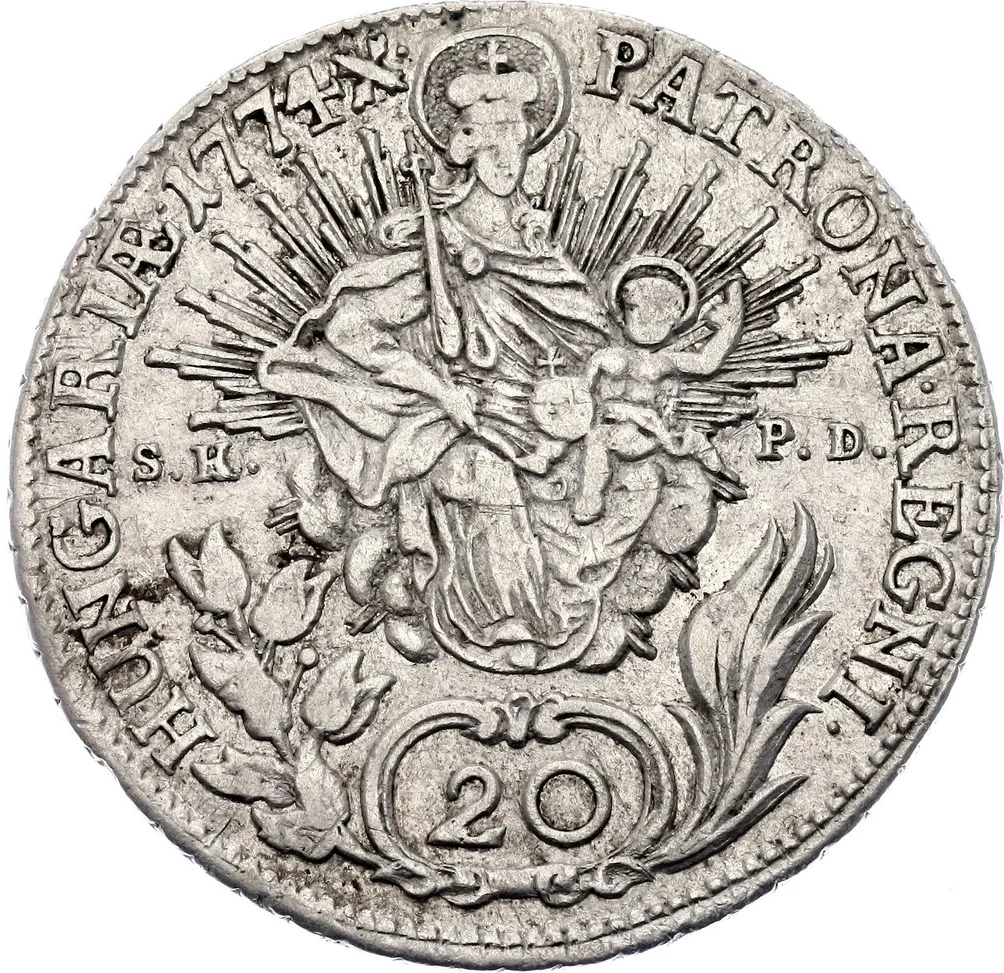
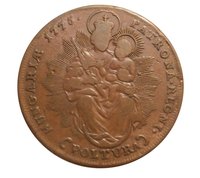
Radiant crowned Madonna and Child seated on a crescent above a value cartouche, flanked by mintmaster marks. Inscription: S.K. (Sigismund Anton Klemmer von Klemmersberg) and P.D. (Pascal Damiani, financial officer).
Inscription:
PATRONA REGNI-HUNGARIÆ.1780 X
S.K. P.D.
20
S.K. P.D.
20
Script: Latin
Engraver: Maximilian König von Paumbshausen Jr
Edge
Milled
Mints
| Name | Mark |
|---|---|
| Kremnica | B |
Mintings
| Year | Mint Mark | Mintage | Quality | Collection |
|---|---|---|---|---|
| 1774 | SK-PD | — | ||
| 1775 | SK-PD | — | ||
| 1776 | SK-PD | — | ||
| 1777 | SK-PD | — | ||
| 1778 | SK-PD | — | ||
| 1779 | SK-PD | — | ||
| 1780 | SK-PD | — |
Historical background
In 1774, the currency situation in the Kingdom of Hungary, then part of the Habsburg Monarchy, was characterized by a complex and unstable bimetallic system. The official currency was the Hungarian forint (or florin), which was pegged to the Conventionsthaler of the Holy Roman Empire, but the monetary landscape was cluttered with a multitude of older, debased coins still in circulation. These included domestic issues like krajcárs and denars, as well as various foreign coins, particularly from the German states and the Netherlands, leading to confusion and frequent disputes over exchange rates in daily commerce. This monetary fragmentation hindered trade and economic planning.
The root of this instability lay in the chronic state deficits of the Habsburg crown, which had historically resorted to coin debasement to finance its military campaigns, most recently the Seven Years' War (1756-1763). While Empress Maria Theresa and her advisors, notably Chancellor Kaunitz, sought to restore monetary order, the process was slow. The pivotal Currency Patent of 1762 had established a new standard based on the Conventionsthaler, aiming to create a stable silver-based currency for the entire monarchy, but its full implementation was still ongoing in 1774. The public's trust in the new coinage was not yet fully secured, and older, inferior coins remained stubbornly in use.
Consequently, the year 1774 represents a point of transition within a longer period of monetary reform. The Habsburg state was actively working to phase out debased coins and enforce the new standard, but the practical reality was one of a dual system. This created significant challenges for merchants, peasants, and the state treasury alike, as transactions required careful calculation between official and market exchange rates. The situation underscored the broader struggle of the centralizing Habsburg state to impose economic uniformity across its diverse lands, a process that would continue for decades.
The root of this instability lay in the chronic state deficits of the Habsburg crown, which had historically resorted to coin debasement to finance its military campaigns, most recently the Seven Years' War (1756-1763). While Empress Maria Theresa and her advisors, notably Chancellor Kaunitz, sought to restore monetary order, the process was slow. The pivotal Currency Patent of 1762 had established a new standard based on the Conventionsthaler, aiming to create a stable silver-based currency for the entire monarchy, but its full implementation was still ongoing in 1774. The public's trust in the new coinage was not yet fully secured, and older, inferior coins remained stubbornly in use.
Consequently, the year 1774 represents a point of transition within a longer period of monetary reform. The Habsburg state was actively working to phase out debased coins and enforce the new standard, but the practical reality was one of a dual system. This created significant challenges for merchants, peasants, and the state treasury alike, as transactions required careful calculation between official and market exchange rates. The situation underscored the broader struggle of the centralizing Habsburg state to impose economic uniformity across its diverse lands, a process that would continue for decades.
⭐ Somewhat Rare