

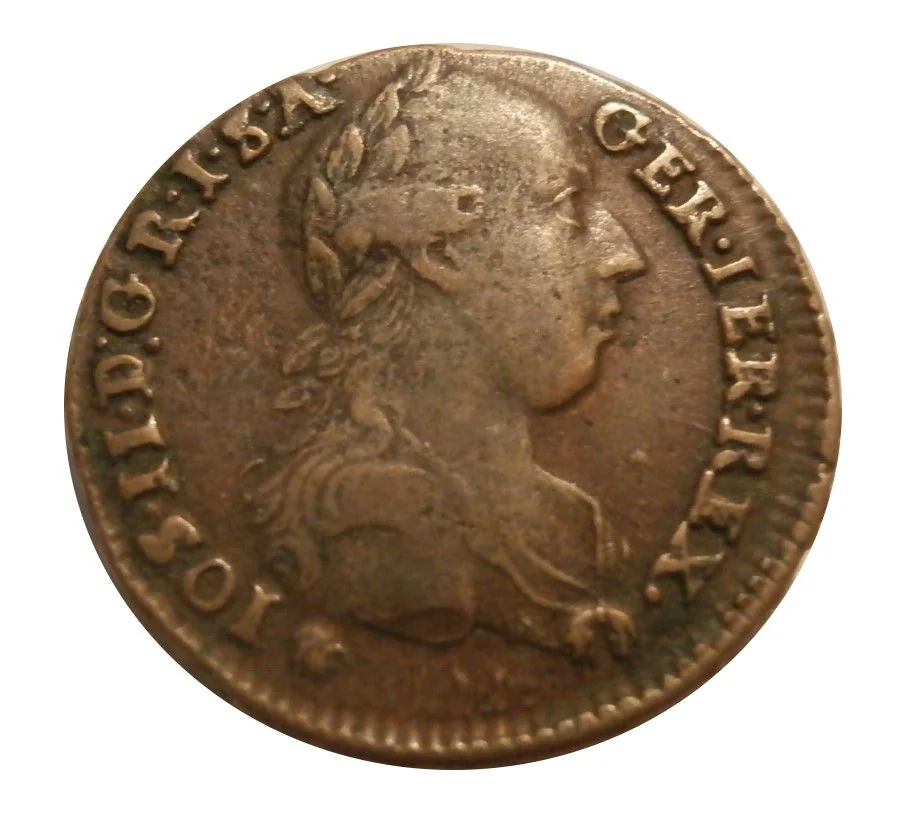
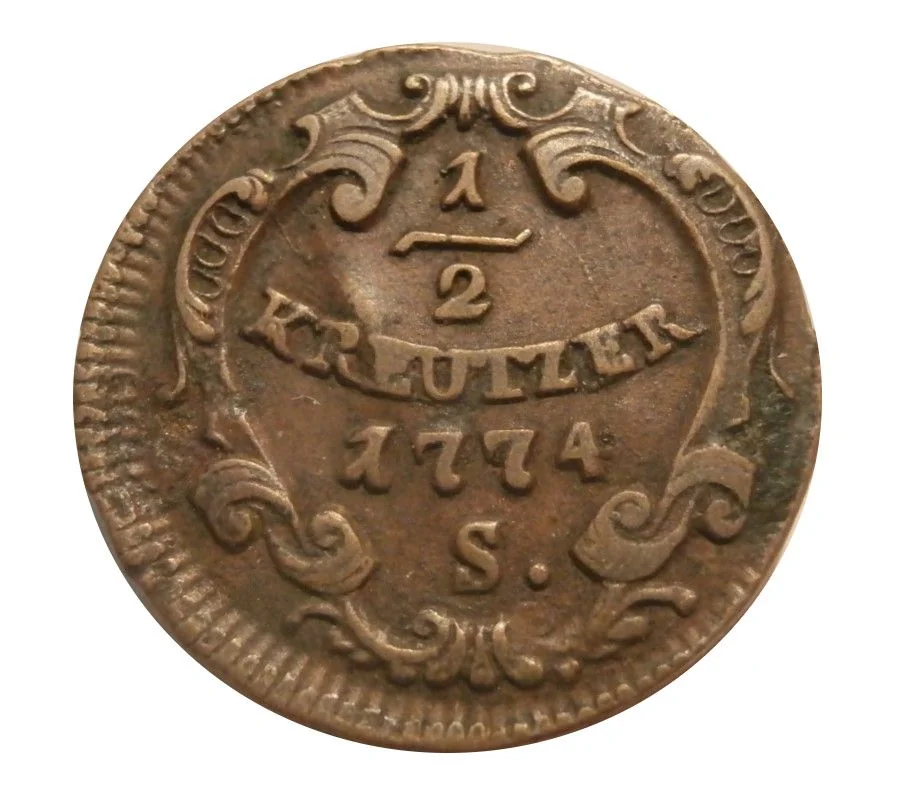

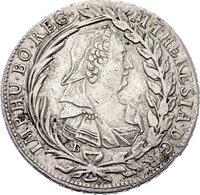
Obverse
Description:
Right-facing portrait, legend encircling from 7 o'clock, divided by head.
Inscription:
IOS · II · D · G · R · I · S · A · GER · IER · REX ·
Script: Latin
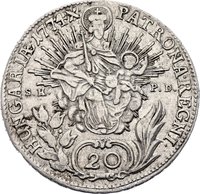
Reverse
Description:
Curved cartouche with vertical value, date, and mintmark.
Inscription:
1/2
KREUTZER
1774
S.
KREUTZER
1774
S.
Script: Latin
Edge
Plain
Mints
| Name | Mark |
|---|---|
| Smolník / Szomolnok / Schmöllnitz | S |
Historical background
In 1773, Hungary’s currency situation was complex and largely dictated by its position within the Habsburg Monarchy. The official currency was the Viennese Conventionsmünze (Convention Coinage), established in 1753, which set a fixed silver standard. This system mandated that one Convention thaler (Konventionstaler) contained a defined amount of fine silver, and the Hungarian gold forint (or florin) and silver tallér were minted to this standard. However, the monarchy’s frequent military engagements, particularly the Seven Years' War (1756-1763), had strained finances, leading to the issuance of debased coinage and significant amounts of paper money.
A critical problem was the widespread circulation of depreciated Bancozettel, or banknotes, issued by the state-run Wiener Stadtbanco. These notes, originally intended as credit instruments, had been over-issued to fund state debts and were not fully convertible to silver, causing them to trade at a discount. Alongside this, older, debased coinage from earlier in the century, such as the Reichsthaler, remained in use, creating a confusing multi-currency environment where the value of money depended heavily on its type and metal content.
For Hungary, this monetary instability had direct economic consequences. It complicated trade and taxation, as the Austrian government often demanded tax payments in high-quality Convention coinage while salaries and local transactions might be conducted in depreciated notes or lesser coins. This disparity placed a burden on the Hungarian population and contributed to economic tension between the Hungarian estates and the central Habsburg administration in Vienna, which controlled monetary policy for the entire realm without particular regard for Hungarian economic conditions.
A critical problem was the widespread circulation of depreciated Bancozettel, or banknotes, issued by the state-run Wiener Stadtbanco. These notes, originally intended as credit instruments, had been over-issued to fund state debts and were not fully convertible to silver, causing them to trade at a discount. Alongside this, older, debased coinage from earlier in the century, such as the Reichsthaler, remained in use, creating a confusing multi-currency environment where the value of money depended heavily on its type and metal content.
For Hungary, this monetary instability had direct economic consequences. It complicated trade and taxation, as the Austrian government often demanded tax payments in high-quality Convention coinage while salaries and local transactions might be conducted in depreciated notes or lesser coins. This disparity placed a burden on the Hungarian population and contributed to economic tension between the Hungarian estates and the central Habsburg administration in Vienna, which controlled monetary policy for the entire realm without particular regard for Hungarian economic conditions.

⭐ Somewhat Rare