

50 pennia – Finland
Add to wishlist
Finland
Context
Year: 1917
Issuer: Finland
Ruler: Nicholas II
Currency:
(1860—1963)
Demonetized: Yes
Total mintage: 570,000
Material
References
KM: #
Numista: #10390
Value
Bullion value: $4.65
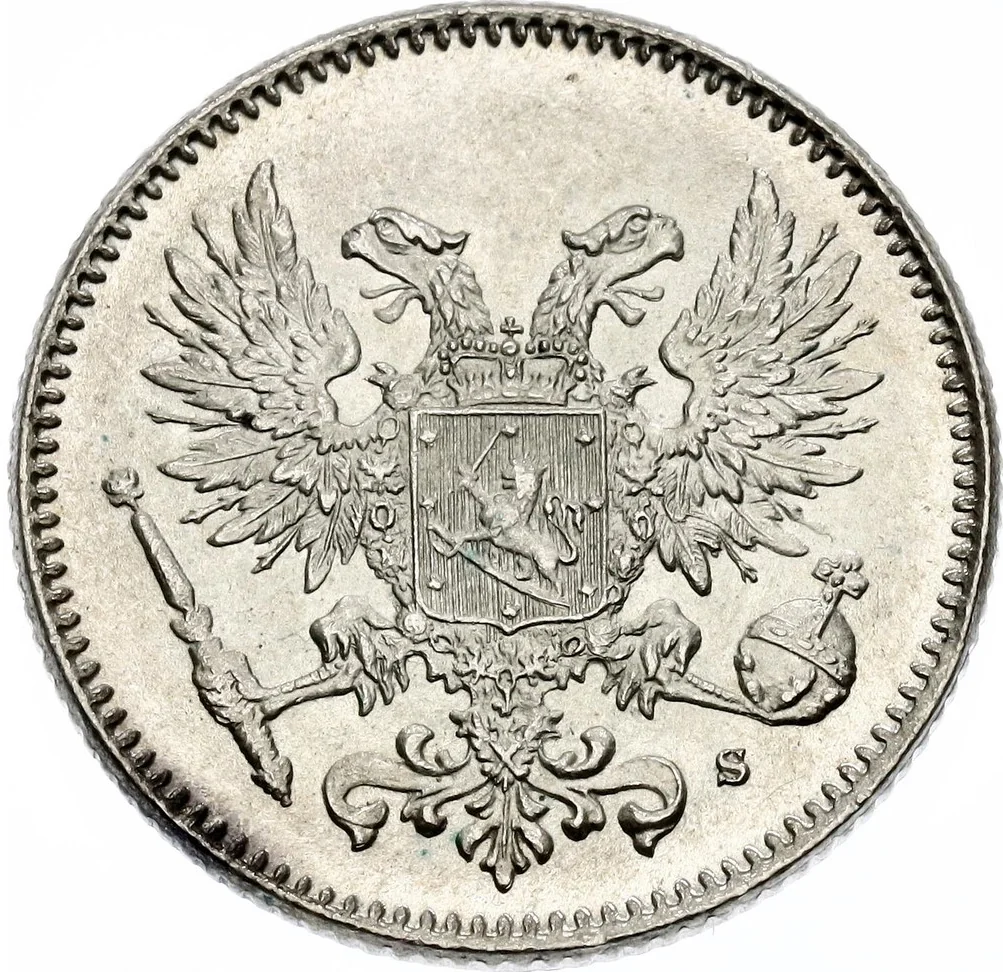
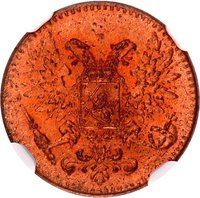
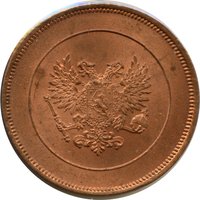
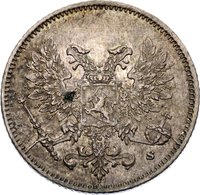
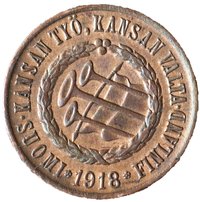
Obverse
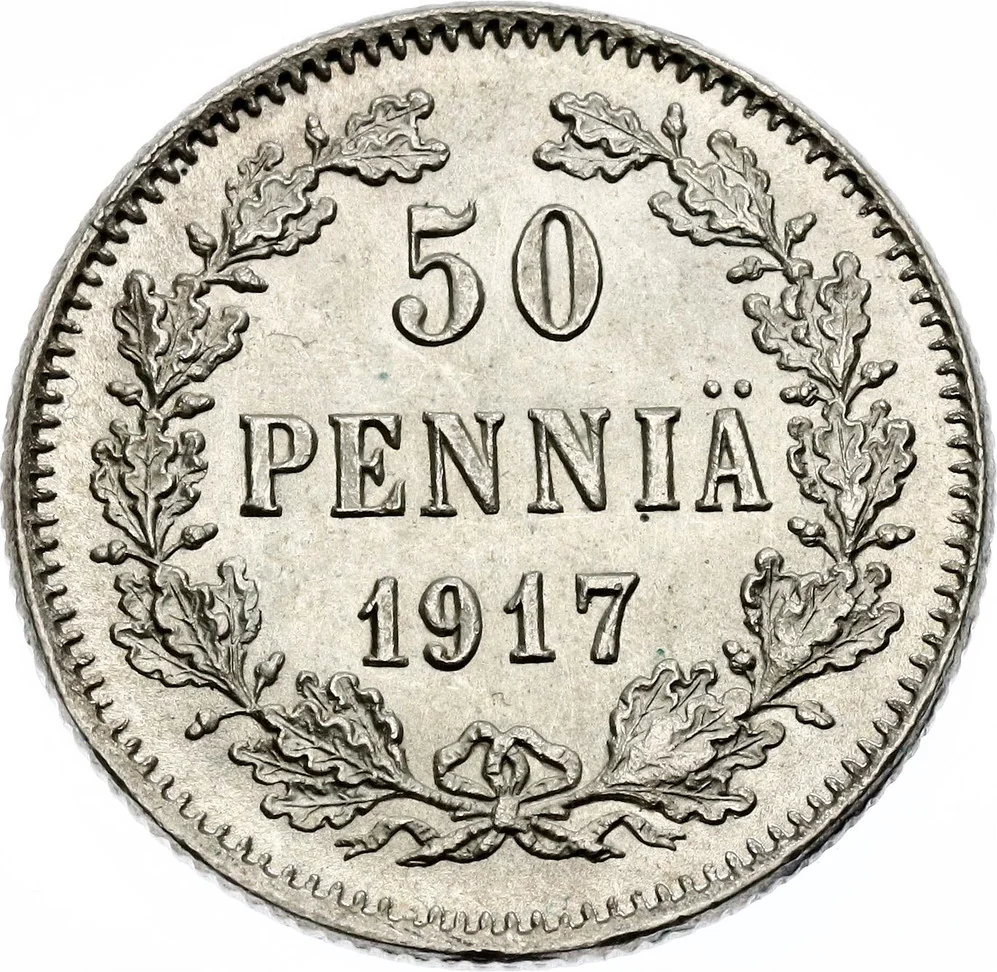
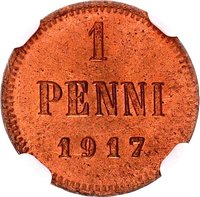
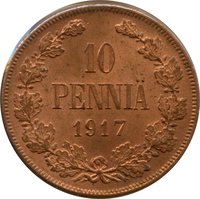
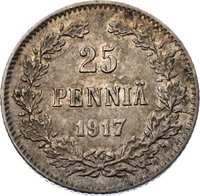
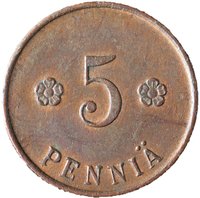
Reverse
Edge
Categories
| Animal> Bird |
| Symbols> Coat of Arms |
| Symbol> Double-headed eagle |
| Object> Globus cruciger |
| Symbol> Wreath |
Mints
| Name | Mark |
|---|---|
| Mint of Finland | — |
Mintings
| Year | Mint Mark | Mintage | Quality | Collection |
|---|---|---|---|---|
| 1917 | — | 570,000 |
Historical background
In 1917, Finland's currency situation was intrinsically linked to its political upheaval. As an autonomous Grand Duchy of the Russian Empire, Finland used its own currency, the Finnish markka (or mark), which was pegged to gold and managed by the Bank of Finland. However, the outbreak of the First World War in 1914 had severed the gold standard link. Russia, needing financial resources, began printing large quantities of ruble notes, and Finland was pressured to follow suit, leading to the issuance of non-convertible paper markka. This resulted in significant inflation and a growing divergence between the Finnish and Russian currencies, despite the formal peg.
The political crisis of 1917—the February and October Revolutions in Russia and Finland's own declaration of independence in December—created monetary chaos. The Russian Provisional Government's "Kerensky notes" flooded into Finland, further destabilizing the currency. The Bank of Finland, seeking to assert financial sovereignty, took steps to separate the monetary system from Russia's collapsing one. A critical move was the withdrawal of the Russian ruble's legal tender status in Finland in November 1917 and an attempt to stabilize the markka by backing it with foreign loans and assets.
By the end of 1917, Finland was independent but faced severe economic instability with an inflated and unstable currency. The markka was no longer tied to gold, its value was volatile, and the country's financial system was burdened by the legacy of wartime finance and the sudden rupture from Russia. This fragile monetary environment set the stage for the bitter Finnish Civil War of early 1918, during which both the White government and the Red authorities would print their own money, exacerbating the crisis and making postwar currency reform an urgent priority for the new nation.
The political crisis of 1917—the February and October Revolutions in Russia and Finland's own declaration of independence in December—created monetary chaos. The Russian Provisional Government's "Kerensky notes" flooded into Finland, further destabilizing the currency. The Bank of Finland, seeking to assert financial sovereignty, took steps to separate the monetary system from Russia's collapsing one. A critical move was the withdrawal of the Russian ruble's legal tender status in Finland in November 1917 and an attempt to stabilize the markka by backing it with foreign loans and assets.
By the end of 1917, Finland was independent but faced severe economic instability with an inflated and unstable currency. The markka was no longer tied to gold, its value was volatile, and the country's financial system was burdened by the legacy of wartime finance and the sudden rupture from Russia. This fragile monetary environment set the stage for the bitter Finnish Civil War of early 1918, during which both the White government and the Red authorities would print their own money, exacerbating the crisis and making postwar currency reform an urgent priority for the new nation.
Series: 1917 Finland circulation coins
🌱 Common