

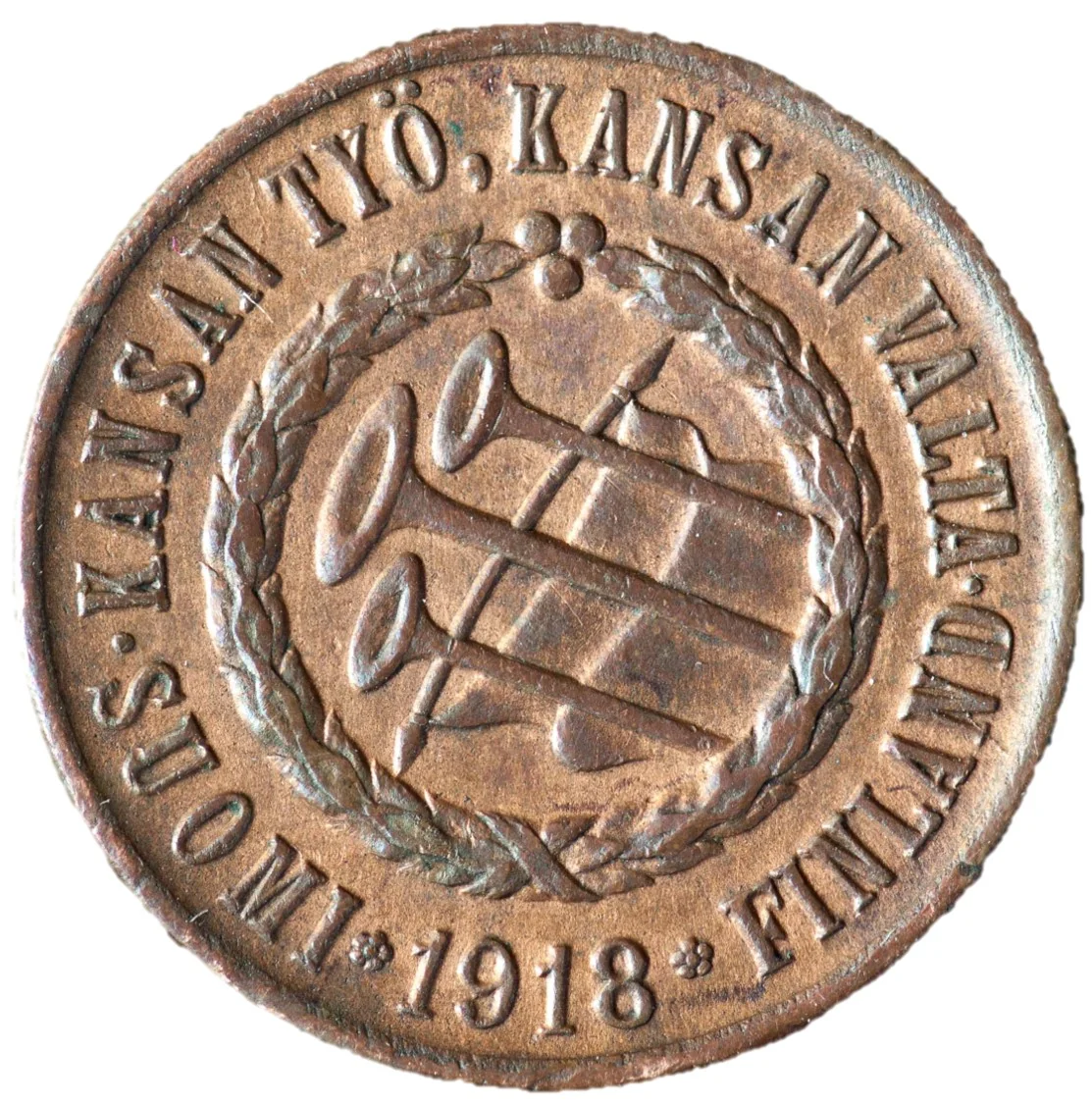
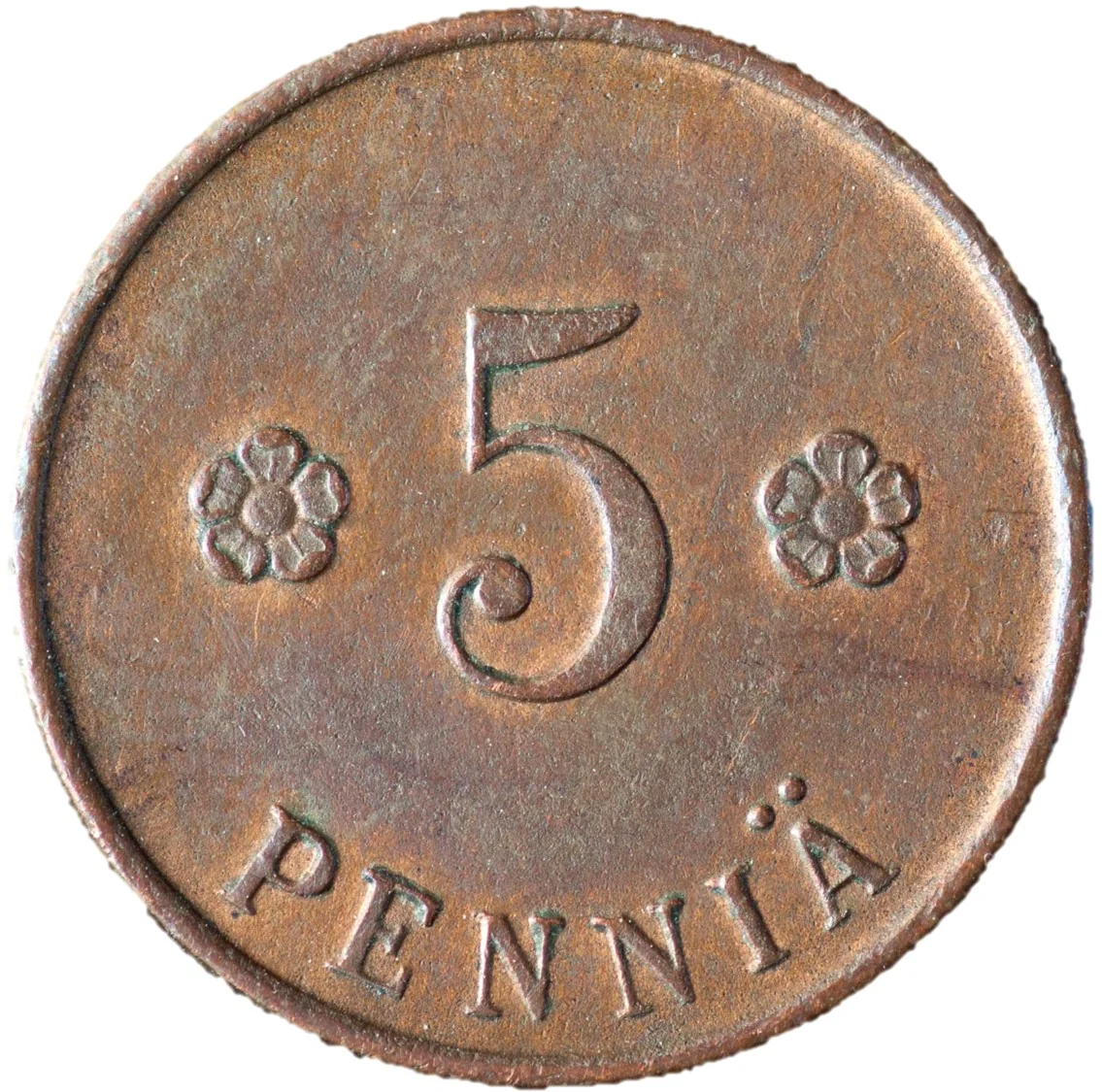
5 pennia – Finland
Add to wishlist
Finland
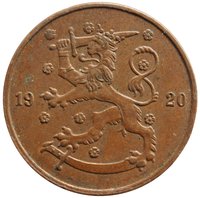
Obverse
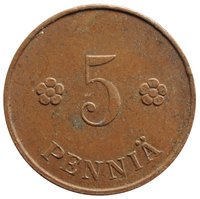
Reverse
Edge
Mints
| Name | Mark |
|---|---|
| Mint of Finland | — |
Mintings
| Year | Mint Mark | Mintage | Quality | Collection |
|---|---|---|---|---|
| 1918 | — | 35,000 |
Historical background
In 1918, Finland’s currency situation was one of profound instability and transition, directly stemming from the nation's recent declaration of independence in December 1917 and the subsequent bitter Civil War (January–May 1918). The country inherited the Russian ruble as its primary circulating medium, a legacy of its time as a Grand Duchy within the Russian Empire. However, the collapse of the imperial ruble due to World War I and the Russian Revolution had already led to severe inflation and a shortage of small change, creating a chaotic monetary environment even before independence.
To address this crisis, the Finnish Senate had taken a crucial step in 1860 by establishing the Markka (Finnish mark) as a separate currency, though it remained pegged to the ruble. As the ruble collapsed, the need for a truly independent and stable currency became urgent. In 1917, the Bank of Finland was granted the exclusive right to issue banknotes, and plans were swiftly made to introduce a new, distinct Finnish markka. The first series of these new banknotes, designed by renowned artist Akseli Gallen-Kallela, were printed and ready for issuance precisely during the tumultuous Civil War period.
Consequently, 1918 was a year of dual circulation and consolidation. The new, nationally symbolic Finnish markka notes began to enter circulation, gradually replacing the old ruble-based notes and various emergency currencies issued by towns and companies. The victorious White government, which won the Civil War, moved decisively to establish monetary order as part of building a sovereign state. By the end of the year, the foundation for a independent Finnish currency was firmly in place, setting the stage for the stabilization and economic reconstruction that would follow in the 1920s.
To address this crisis, the Finnish Senate had taken a crucial step in 1860 by establishing the Markka (Finnish mark) as a separate currency, though it remained pegged to the ruble. As the ruble collapsed, the need for a truly independent and stable currency became urgent. In 1917, the Bank of Finland was granted the exclusive right to issue banknotes, and plans were swiftly made to introduce a new, distinct Finnish markka. The first series of these new banknotes, designed by renowned artist Akseli Gallen-Kallela, were printed and ready for issuance precisely during the tumultuous Civil War period.
Consequently, 1918 was a year of dual circulation and consolidation. The new, nationally symbolic Finnish markka notes began to enter circulation, gradually replacing the old ruble-based notes and various emergency currencies issued by towns and companies. The victorious White government, which won the Civil War, moved decisively to establish monetary order as part of building a sovereign state. By the end of the year, the foundation for a independent Finnish currency was firmly in place, setting the stage for the stabilization and economic reconstruction that would follow in the 1920s.
⭐ Somewhat Rare