

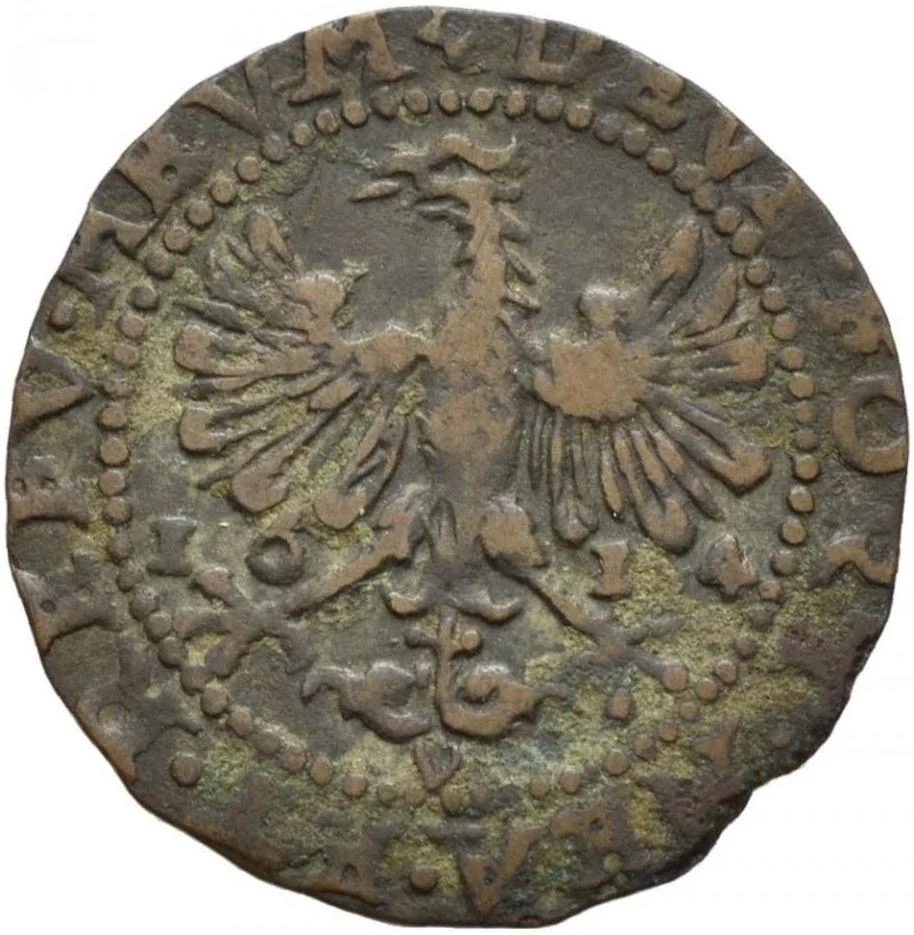
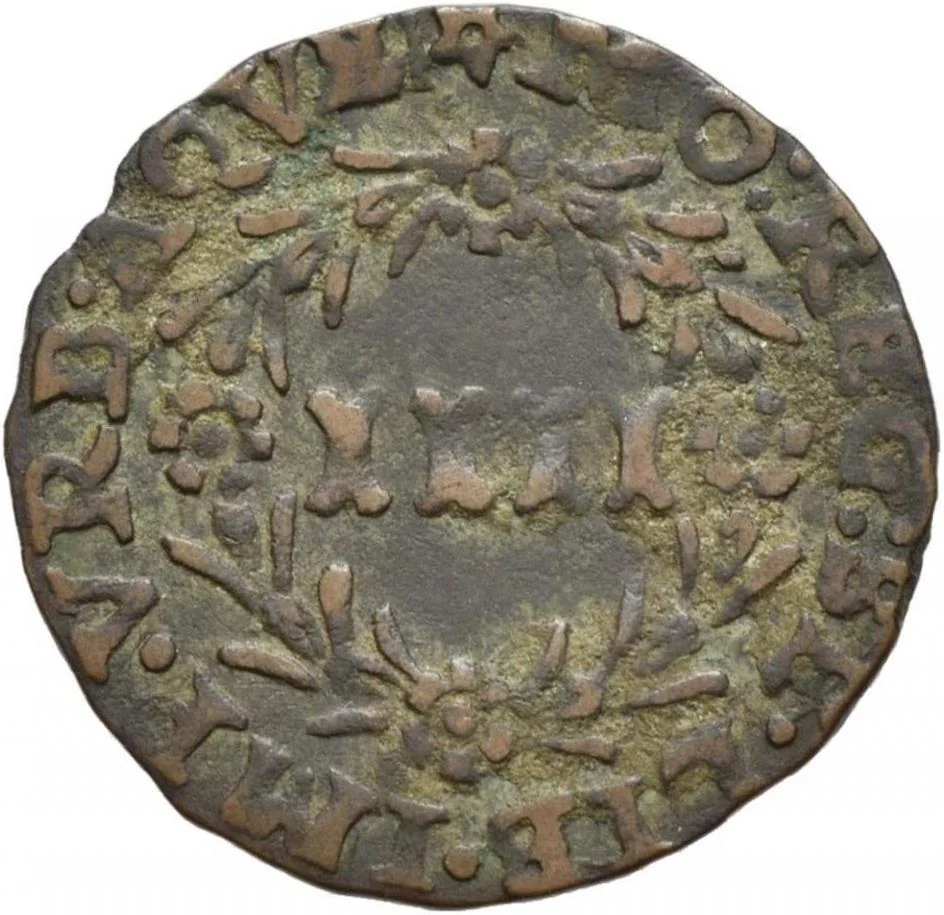

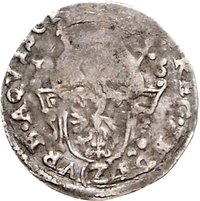
Obverse
Description:
Eagle dates legend.
Inscription:
DEVS FORT ... MEV M
1616
1616
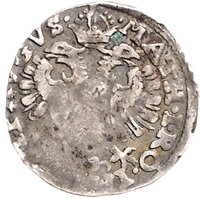
Reverse
Description:
Four I's in wreath
Inscription:
* MONETA REG SE IMP VRB AQVENSIS
IIII
IIII
Edge
Mintings
| Year | Mint Mark | Mintage | Quality | Collection |
|---|---|---|---|---|
| 1614 | — | — | ||
| 1615 | — | 60,000 | ||
| 1616 | — | — |
Historical background
In 1614, the Free Imperial City of Aachen, a significant economic and political hub within the Holy Roman Empire, operated within a complex and fragmented monetary landscape. Like most German territories, it did not mint its own sovereign coinage but instead relied on a system where various regional and foreign currencies circulated simultaneously. The primary legal framework was the Imperial Coinage Ordinance (Reichsmünzordnung), which aimed to standardize the silver Reichsthaler, but in practice, a plethora of coins from neighboring duchies, the Spanish Netherlands (particularly the Patagon), and local ecclesiastical mints were used daily. This created constant challenges for merchants and city officials who had to navigate fluctuating exchange rates and the varying silver content of coins.
The city's magistrates actively managed this situation through regular publication of official exchange rate tables (Kurantzettel), which fixed the value of the many circulating coins against the city's accounting unit, the Aachener Gulden. This was crucial for maintaining public order and commercial trust, as disputes over money were common. Furthermore, Aachen strictly enforced laws against the circulation of debased or counterfeit coins, a persistent problem exacerbated by the ongoing financial strains of the Kipper- und Wipperzeit—a period of currency manipulation and inflation that began to affect the region in the early 1620s, with its roots in the fiscal pressures preceding the Thirty Years' War.
Aachen's currency reality was thus defined by a tension between imperial decrees, practical economic needs, and regional political fragmentation. Its status as a free city granted it administrative autonomy to regulate the market, but it could not escape the empire-wide monetary instability. The year 1614 sits on the precipice of deeper turmoil; while not yet in the full throes of the Kipper- und Wipperzeit, the city's meticulous regulations highlight a preemptive struggle to anchor commerce in a sea of heterogeneous and increasingly unreliable coinage, foreshadowing the severe monetary crises that would engulf the Holy Roman Empire in the coming decade.
The city's magistrates actively managed this situation through regular publication of official exchange rate tables (Kurantzettel), which fixed the value of the many circulating coins against the city's accounting unit, the Aachener Gulden. This was crucial for maintaining public order and commercial trust, as disputes over money were common. Furthermore, Aachen strictly enforced laws against the circulation of debased or counterfeit coins, a persistent problem exacerbated by the ongoing financial strains of the Kipper- und Wipperzeit—a period of currency manipulation and inflation that began to affect the region in the early 1620s, with its roots in the fiscal pressures preceding the Thirty Years' War.
Aachen's currency reality was thus defined by a tension between imperial decrees, practical economic needs, and regional political fragmentation. Its status as a free city granted it administrative autonomy to regulate the market, but it could not escape the empire-wide monetary instability. The year 1614 sits on the precipice of deeper turmoil; while not yet in the full throes of the Kipper- und Wipperzeit, the city's meticulous regulations highlight a preemptive struggle to anchor commerce in a sea of heterogeneous and increasingly unreliable coinage, foreshadowing the severe monetary crises that would engulf the Holy Roman Empire in the coming decade.

✨ Legendary