

2 hellers – Aachen
Add to wishlist
Germany
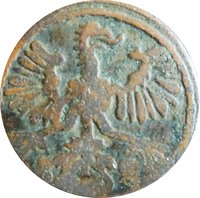
Obverse
Description:
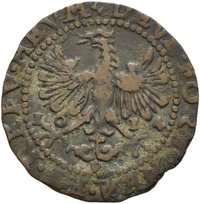
Left-facing eagle, partial date.
Inscription:
65
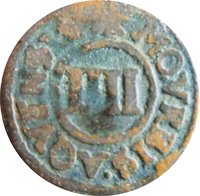
Reverse
Description:
Legend
Inscription:
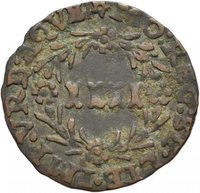
MO CIVIT AQVEN
II
II
Edge
Mints
| Name | Mark |
|---|---|
| Aachen | — |
Mintings
| Year | Mint Mark | Mintage | Quality | Collection |
|---|---|---|---|---|
| 1605 | — | 20,000 |
Historical background
In 1605, the Free Imperial City of Aachen, a significant economic and political hub within the Holy Roman Empire, navigated a complex and often chaotic currency landscape. Like most of the Empire, it did not mint its own major coinage but operated within the framework of the Reichsmünzordnung (Imperial Coinage Ordinance). This system, designed to standardize currency, was chronically undermined by the monetary sovereignty of hundreds of other imperial estates, leading to a proliferation of coins of varying quality and value circulating within its walls. The city's merchants and money changers thus routinely handled a mix of Reichsthalers, goldgulden, and a flood of smaller regional and foreign coins, particularly from the neighboring Spanish Netherlands.
The practical monetary situation was one of persistent instability and "bad money" problems. Debasement was rampant, as many princes and cities issued lightweight coins with face values exceeding their intrinsic metal content. For Aachen, a key transit point for trade, this meant constant vigilance against the inflow of these inferior coins, which could drive good, full-weight money out of circulation (Gresham's Law). The city council likely issued periodic mandates to fix exchange rates for common coins and to regulate the activities of money changers, who were essential for assessing and converting this heterogeneous mix, but these measures provided only temporary relief.
This monetary fragmentation directly impacted Aachen's economy, creating uncertainty for its thriving textile and metalware trades. Contracts often specified payment in specific, trusted coin types to avoid dispute. Ultimately, the currency situation of 1605 reflected Aachen's position: a prosperous and autonomous city, yet inextricably bound to the decentralized and dysfunctional monetary politics of the Holy Roman Empire, where the lack of a strong central monetary authority placed the burden of stability on local authorities and the sharp eyes of its merchants.
The practical monetary situation was one of persistent instability and "bad money" problems. Debasement was rampant, as many princes and cities issued lightweight coins with face values exceeding their intrinsic metal content. For Aachen, a key transit point for trade, this meant constant vigilance against the inflow of these inferior coins, which could drive good, full-weight money out of circulation (Gresham's Law). The city council likely issued periodic mandates to fix exchange rates for common coins and to regulate the activities of money changers, who were essential for assessing and converting this heterogeneous mix, but these measures provided only temporary relief.
This monetary fragmentation directly impacted Aachen's economy, creating uncertainty for its thriving textile and metalware trades. Contracts often specified payment in specific, trusted coin types to avoid dispute. Ultimately, the currency situation of 1605 reflected Aachen's position: a prosperous and autonomous city, yet inextricably bound to the decentralized and dysfunctional monetary politics of the Holy Roman Empire, where the lack of a strong central monetary authority placed the burden of stability on local authorities and the sharp eyes of its merchants.
✨ Legendary