

2 Marks – Aachen
Germany

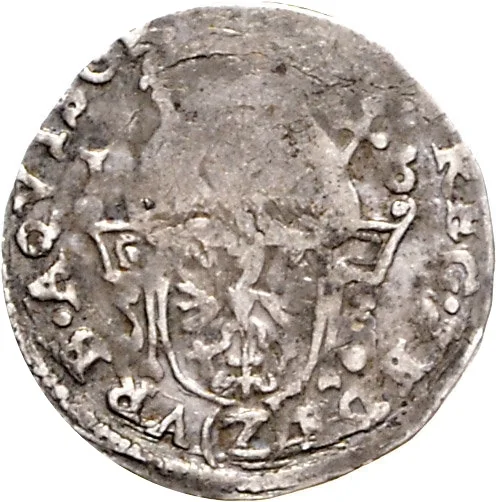
Obverse
Description:
Charlemagne half-figure above arms, date.
Inscription:
MO. REG. SEDIS. VRB. AQVISGR
(Z)
I 6
(Z)
I 6
Script: Latin
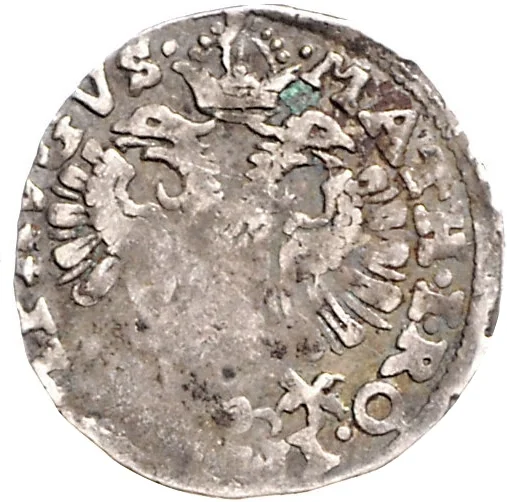
Reverse
Description:
Imperial eagle, Matthias's titles.
Inscription:
MATH. I. RO. IMP. SEMP. AVGVS.
Script: Latin
Edge
Mintings
| Year | Mint Mark | Mintage | Quality | Collection |
|---|---|---|---|---|
| 1615 | — | — | ||
| 1616 | — | — |
Historical background
In 1615, the Free Imperial City of Aachen, a prosperous center of trade and pilgrimage within the Holy Roman Empire, navigated a complex and often chaotic currency landscape. Like most of the Empire, it lacked a unified monetary system, forcing the city to contend with a flood of coins from neighboring territories, each with varying weights, metallic purity, and value. The city council's right to mint its own coins, a key privilege of its imperial immediacy, was exercised cautiously, primarily producing smaller denomination Pfennigs and Albus for local use, while higher-value trade relied on external "good" coins like Reichsthalers.
This period was marked by severe monetary instability known as the Kipper- und Wipperzeit (approximately 1618-1623), a prelude to the Thirty Years' War. Although the crisis peaked slightly later, by 1615 the pressures were already building. Princes and minting authorities across Germany were debasing their coinage—reducing precious metal content to create more money for war chests—which led to inflation and a flight of full-weight coins. For Aachen's merchants and guilds, this meant constant vigilance, as the value of a payment could literally depend on which specific bag of coins was presented.
Consequently, Aachen's city authorities relied heavily on published Münztarife (currency tariffs) to bring order to this chaos. These official ordinances, regularly updated, listed the fixed exchange rates between the myriad of circulating coins and the city's own accounting unit, the Aachener Gulden. This system was crucial for market stability, tax collection, and legal contracts. Thus, in 1615, Aachen's currency situation was one of fragile control, with its civic institutions striving to maintain economic order through regulation, even as the Empire-wide structures that supported reliable money were beginning to corrode on the eve of catastrophic war.
This period was marked by severe monetary instability known as the Kipper- und Wipperzeit (approximately 1618-1623), a prelude to the Thirty Years' War. Although the crisis peaked slightly later, by 1615 the pressures were already building. Princes and minting authorities across Germany were debasing their coinage—reducing precious metal content to create more money for war chests—which led to inflation and a flight of full-weight coins. For Aachen's merchants and guilds, this meant constant vigilance, as the value of a payment could literally depend on which specific bag of coins was presented.
Consequently, Aachen's city authorities relied heavily on published Münztarife (currency tariffs) to bring order to this chaos. These official ordinances, regularly updated, listed the fixed exchange rates between the myriad of circulating coins and the city's own accounting unit, the Aachener Gulden. This system was crucial for market stability, tax collection, and legal contracts. Thus, in 1615, Aachen's currency situation was one of fragile control, with its civic institutions striving to maintain economic order through regulation, even as the Empire-wide structures that supported reliable money were beginning to corrode on the eve of catastrophic war.

✨ Legendary