

1 Ducat – Aachen
Germany
Context
Year: 1646
Country: Germany 
Issuer: Aachen
Period:
(1166—1798)
Ruler: Ferdinand III
Currency:
(1504—1798)
Demonetized: Yes
Material
References
KM: #Click to copy to clipboard28
Numista: #266823
Value
Bullion value: $571.98
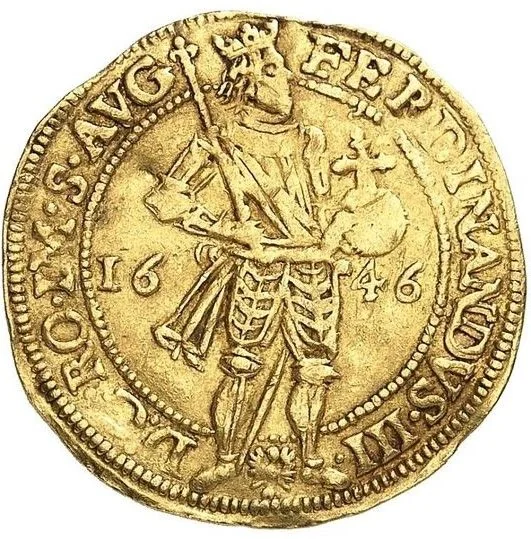
Obverse
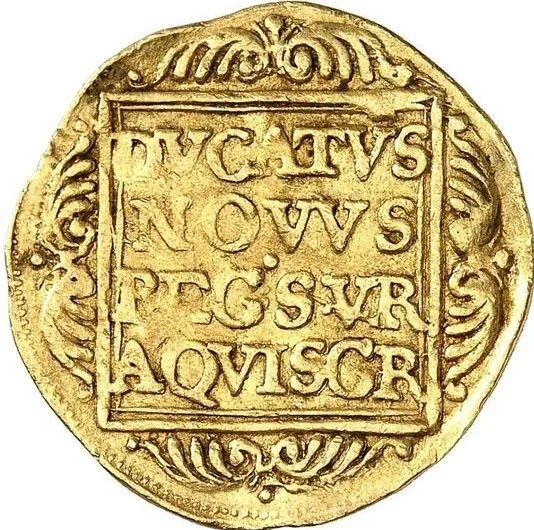
Reverse
Description:
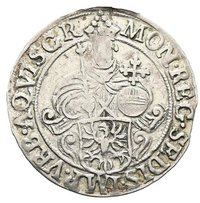
Ferdinand III with eagle beneath.
Inscription:
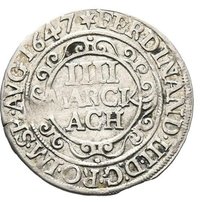
FERDINANVS III D G RO IM S AVG
1645
1645
Script: Latin
Edge
Mintings
| Year | Mint Mark | Mintage | Quality | Collection |
|---|---|---|---|---|
| 1646 | — | — |
Historical background
In 1646, the Free Imperial City of Aachen, like much of the Holy Roman Empire, was grappling with severe monetary instability exacerbated by the final, grinding years of the Thirty Years' War. The city's economy, traditionally reliant on its prestigious cloth trade and pilgrimage traffic, was strained by wartime burdens, including the billeting of soldiers and forced contributions. This context created a desperate need for revenue, leading the city council to frequently manipulate the coinage to cover expenses, a practice known as Kipper- und Wipperzeit (clipping and culling), which had ravaged the Empire's monetary system in the earlier war years.
The currency situation was inherently complex due to the layered monetary sovereignty of the era. While Aachen minted its own lower-denomination coins (such as Albuses and Dreilinge), it operated within a broader framework where the official currency of account was the Reichsthaler, a silver standard set by Imperial ordinances. However, the actual circulating medium was a chaotic mix of domestic coins, neighboring states' issues, and foreign currencies like Dutch Leeuwendaalders, all with fluctuating intrinsic values. The city's own mint often debased its coinage by reducing silver content, a short-term fiscal fix that eroded public trust and sparked inflation, harming local wage-earners and creditors.
By this specific year, with peace negotiations ongoing in Westphalia, the immediate crisis of rampant debasement had slightly abated, but the legacy of monetary chaos persisted. Prices were unstable, and the city's finances remained precarious. The primary challenge for Aachen's authorities was to stabilize the circulating medium, restore confidence in its own coinage, and navigate the transition back to the official Imperial monetary standards that would be reaffirmed with the war's conclusion, all while managing a war-weary economy and preparing for postwar recovery.
The currency situation was inherently complex due to the layered monetary sovereignty of the era. While Aachen minted its own lower-denomination coins (such as Albuses and Dreilinge), it operated within a broader framework where the official currency of account was the Reichsthaler, a silver standard set by Imperial ordinances. However, the actual circulating medium was a chaotic mix of domestic coins, neighboring states' issues, and foreign currencies like Dutch Leeuwendaalders, all with fluctuating intrinsic values. The city's own mint often debased its coinage by reducing silver content, a short-term fiscal fix that eroded public trust and sparked inflation, harming local wage-earners and creditors.
By this specific year, with peace negotiations ongoing in Westphalia, the immediate crisis of rampant debasement had slightly abated, but the legacy of monetary chaos persisted. Prices were unstable, and the city's finances remained precarious. The primary challenge for Aachen's authorities was to stabilize the circulating medium, restore confidence in its own coinage, and navigate the transition back to the official Imperial monetary standards that would be reaffirmed with the war's conclusion, all while managing a war-weary economy and preparing for postwar recovery.

✨ Legendary