

½ speciedaler – Denmark
Add to wishlist
Denmark
Context
Material
References
KM: #
Numista: #109973
Value
Bullion value: $31.59
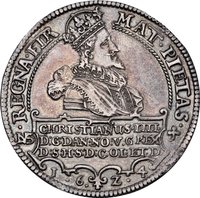
Obverse
Description:
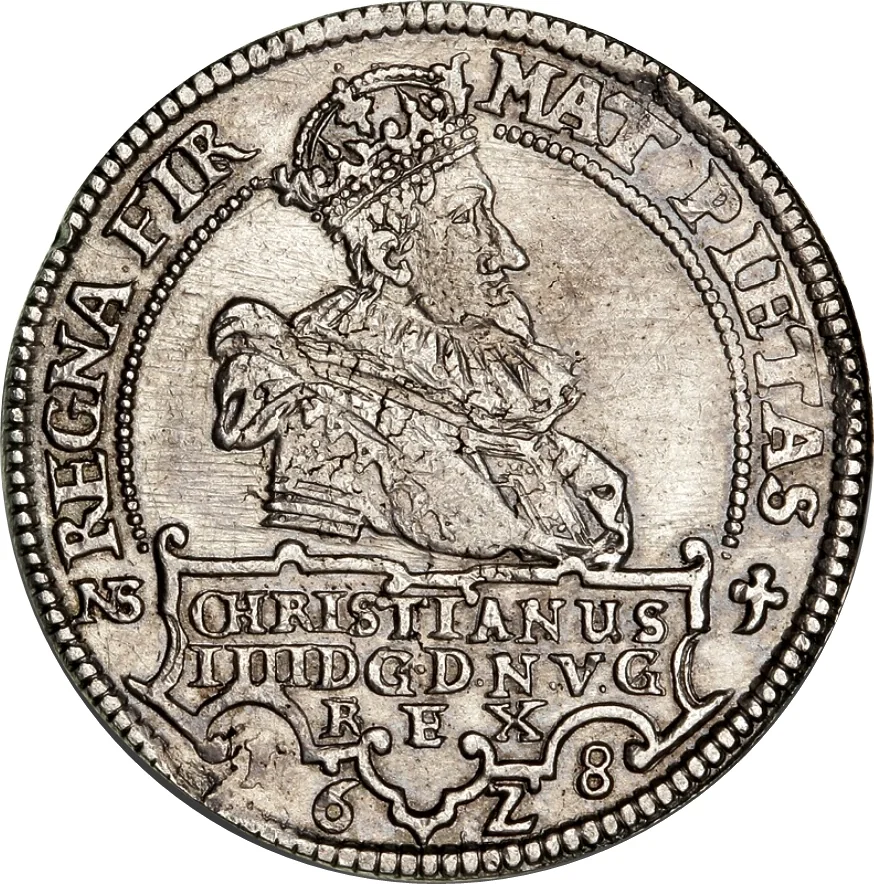
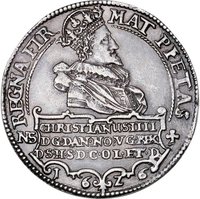
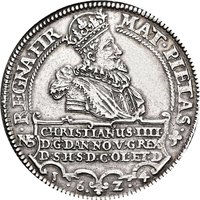
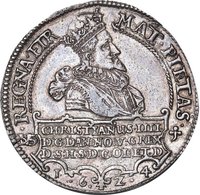
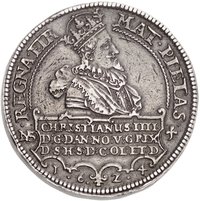
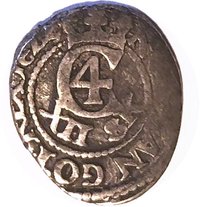
Right-facing bust of Christian IV within a rope circle bearing his motto, over an ornate cartouche with his name and titles. The date numerals flank the cartouche lobes, and mintmarks are at its sides.
Inscription:
REGNA·FIR MAT·PIETAS
NS ☘
CHRISTIANUS
IIII D G D. N. V. G.
REX
16Z8
NS ☘
CHRISTIANUS
IIII D G D. N. V. G.
REX
16Z8
Script: Latin
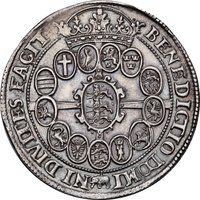
Reverse
Description:
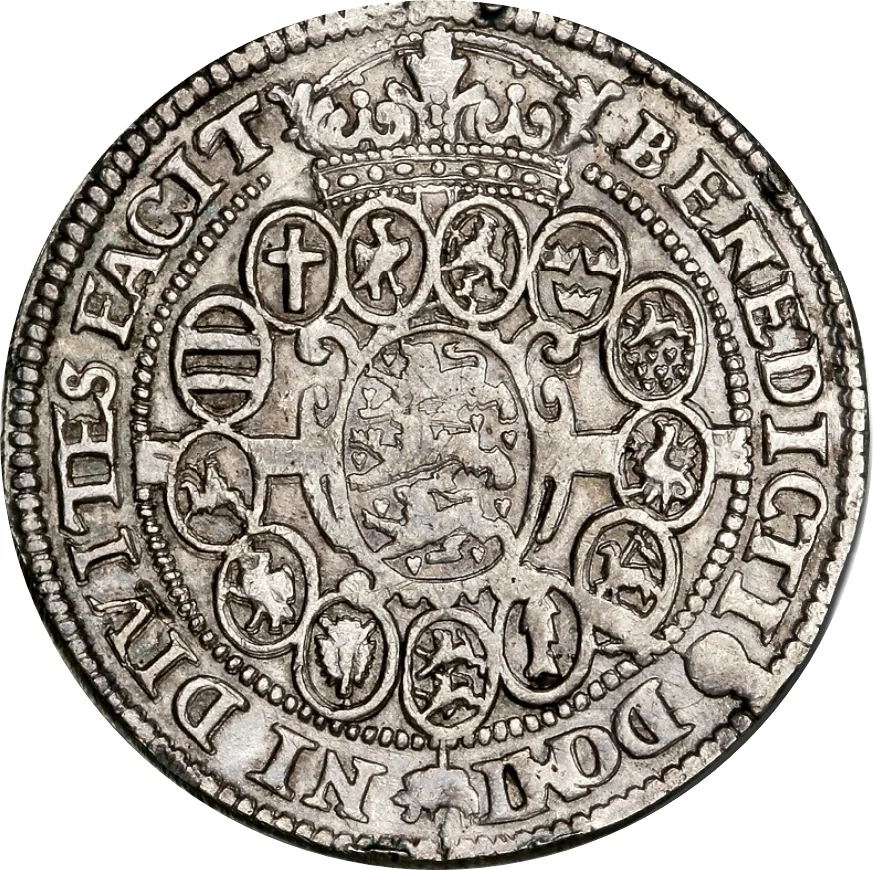
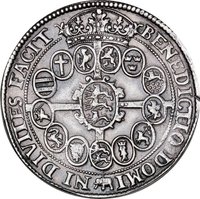
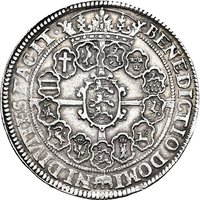
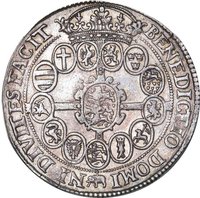
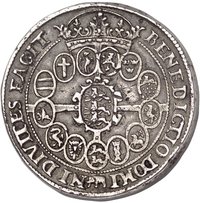
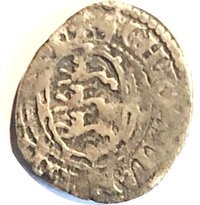
Danish arms on a cross, ringed by 13 shields, within a pearled circle. The Danish crown tops the circle, and the Order of the Elephant pendant hangs below.
Inscription:
BENEDICTO DOMI | NI DIVITES FACIT
Script: Latin
Edge
Mints
| Name | Mark |
|---|---|
| Copenhagen | ☘ |
Mintings
| Year | Mint Mark | Mintage | Quality | Collection |
|---|---|---|---|---|
| 1624 | NS | — | ||
| 1627 | NS | — | ||
| 1628 | NS | — | ||
| 1631 | PG | — | ||
| 1632 | PG | — | ||
| 1634 | PG | — |
Historical background
In 1624, the Danish currency system was in a state of significant strain and transition, largely due to the immense financial burdens of King Christian IV’s ambitious foreign policy. The costly Kalmar War (1611-1613) and the ongoing involvement in the Thirty Years’ War, including the construction of a vast mercenary army, had drained the royal treasury. To finance these ventures, the state had increasingly resorted to debasement—reducing the silver content in coins while maintaining their face value. This practice, though providing short-term liquidity, eroded public trust in the currency and triggered inflation, as people hoarded older, purer coins.
The situation was further complicated by the circulation of a multitude of foreign coins within Denmark, particularly German and Dutch issues, which competed with the debased domestic currency. This created a chaotic monetary environment where exchange rates were unstable and trade was hampered. Recognizing the crisis, the crown attempted a major monetary reform in 1624/25, introducing new, standardized silver coins like the krone and rigsdaler at a fixed relationship, aiming to restore a stable and nationally controlled currency system.
However, the reform’s success was immediately undermined by the state’s continued financial desperation. The pressures of war financing quickly led to the renewed debasement of the very coins just introduced, perpetuating the cycle of inflation and distrust. Therefore, the background of 1624 is one of a pivotal but ultimately faltering attempt to solve a deep-seated fiscal and monetary crisis, where the crown’s immediate need for war funds consistently overpowered its desire for long-term economic stability.
The situation was further complicated by the circulation of a multitude of foreign coins within Denmark, particularly German and Dutch issues, which competed with the debased domestic currency. This created a chaotic monetary environment where exchange rates were unstable and trade was hampered. Recognizing the crisis, the crown attempted a major monetary reform in 1624/25, introducing new, standardized silver coins like the krone and rigsdaler at a fixed relationship, aiming to restore a stable and nationally controlled currency system.
However, the reform’s success was immediately undermined by the state’s continued financial desperation. The pressures of war financing quickly led to the renewed debasement of the very coins just introduced, perpetuating the cycle of inflation and distrust. Therefore, the background of 1624 is one of a pivotal but ultimately faltering attempt to solve a deep-seated fiscal and monetary crisis, where the crown’s immediate need for war funds consistently overpowered its desire for long-term economic stability.
Series: 1624 Denmark circulation coins
✨ Legendary