

⅓ Riksdaler – Sweden
Sweden
Context
Years: 1799–1800
Issuer: Sweden 
Ruler: Gustav IV Adolf
Currency:
(1798—1830)
Demonetized: Yes
Total mintage: 182,835
Material
References
KM: #Click to copy to clipboard551
Numista: #100968
Value
Bullion value: $24.43
Obverse
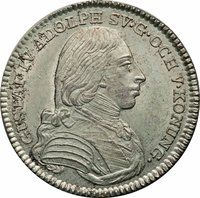
Description:
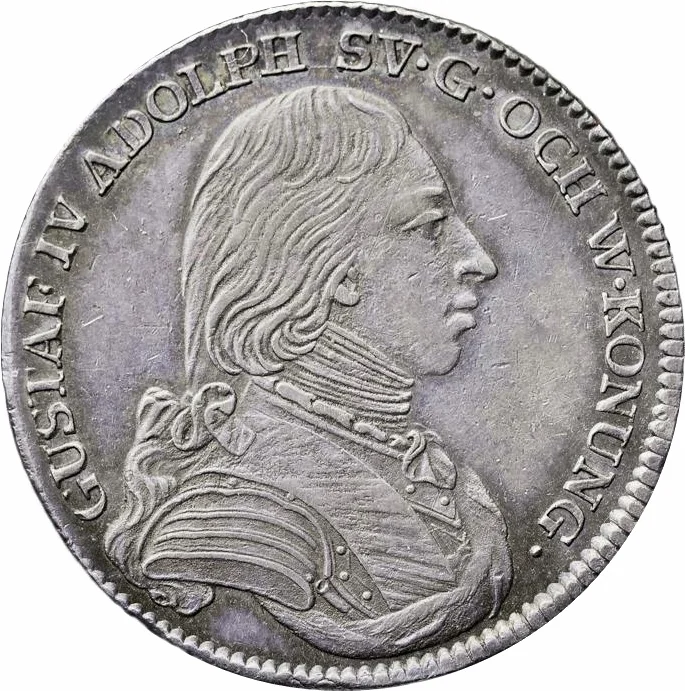
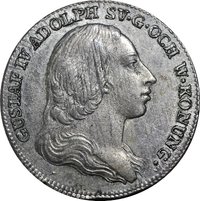
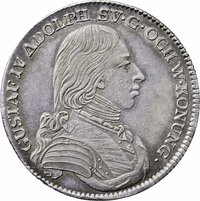
Armored bust of Gustav IV Adolf facing right with encircling legend.
Inscription:
GUSTAF IV ADOLPH SV • G • OCH W • KONUNG •
Script: Latin
Reverse
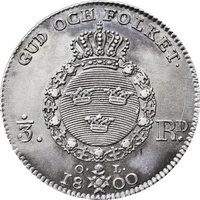
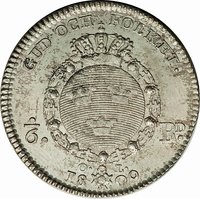
Description:
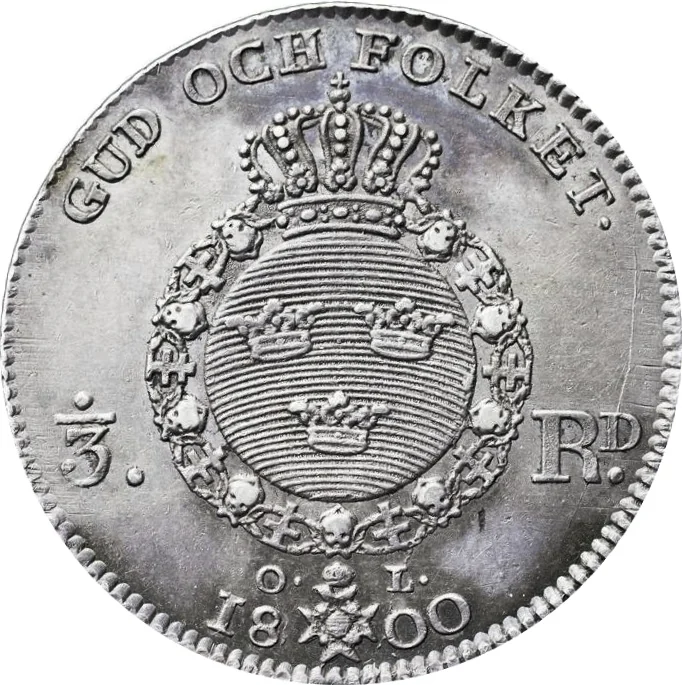
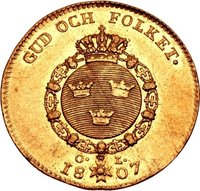
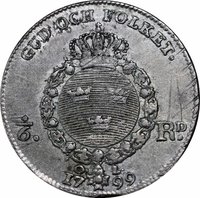
Swedish Three Crowns orb within the Seraphim chain. The pendant divides the date and mintmark; value flanks the orb. The King's motto is above the crown.
Inscription:
GUD OCH FOLKET •
./3• RD:
O• L•
18 00
./3• RD:
O• L•
18 00
Script: Latin
Edge
Categories
| Symbols> Coat of Arms |
Mintings
| Year | Mint Mark | Mintage | Quality | Collection |
|---|---|---|---|---|
| 1799 | OL | 69,591 | ||
| 1800 | OL | 113,244 |
Historical background
In 1799, Sweden operated under a complex and strained monetary system, a legacy of the disastrous Riksdaler currency introduced during the reign of Gustav III. The nation was effectively on a copper standard, where the large, cumbersome plåtmynt (plate money) formed the basis of the currency. However, decades of financing wars, most recently the Russo-Swedish War of 1788–1790, had been paid for through excessive issuance of paper money—the riksgäldssedlar (government debt notes). This created a severe dual-currency problem, as the value of the paper riksdaler rapidly depreciated against the silver-based riksdaler specie.
The result was rampant inflation and a profound loss of public confidence. By 1799, the paper money circulated at a steep discount to its face value, causing economic instability, hoarding of silver coin, and difficulties in both domestic trade and international commerce. The regency government for the young King Gustav IV Adolf, which had taken power after the assassination of Gustav III in 1792, faced immense pressure to stabilize the currency but was hampered by a weak state treasury and the enormous war debt that the paper money represented.
Consequently, the year 1799 fell within a period of monetary crisis and political paralysis regarding a solution. Serious debates about reform were ongoing, but decisive action would not come until 1803, with the adoption of the riksgaldscontoret system that formally devalued the paper money and established a clearer, though still imperfect, link to silver. Thus, in 1799, Sweden’s economy was characterized by a depreciating paper currency, a heavy burden of sovereign debt, and widespread uncertainty, all of which hindered economic growth and fiscal stability.
The result was rampant inflation and a profound loss of public confidence. By 1799, the paper money circulated at a steep discount to its face value, causing economic instability, hoarding of silver coin, and difficulties in both domestic trade and international commerce. The regency government for the young King Gustav IV Adolf, which had taken power after the assassination of Gustav III in 1792, faced immense pressure to stabilize the currency but was hampered by a weak state treasury and the enormous war debt that the paper money represented.
Consequently, the year 1799 fell within a period of monetary crisis and political paralysis regarding a solution. Serious debates about reform were ongoing, but decisive action would not come until 1803, with the adoption of the riksgaldscontoret system that formally devalued the paper money and established a clearer, though still imperfect, link to silver. Thus, in 1799, Sweden’s economy was characterized by a depreciating paper currency, a heavy burden of sovereign debt, and widespread uncertainty, all of which hindered economic growth and fiscal stability.
✨ Legendary