

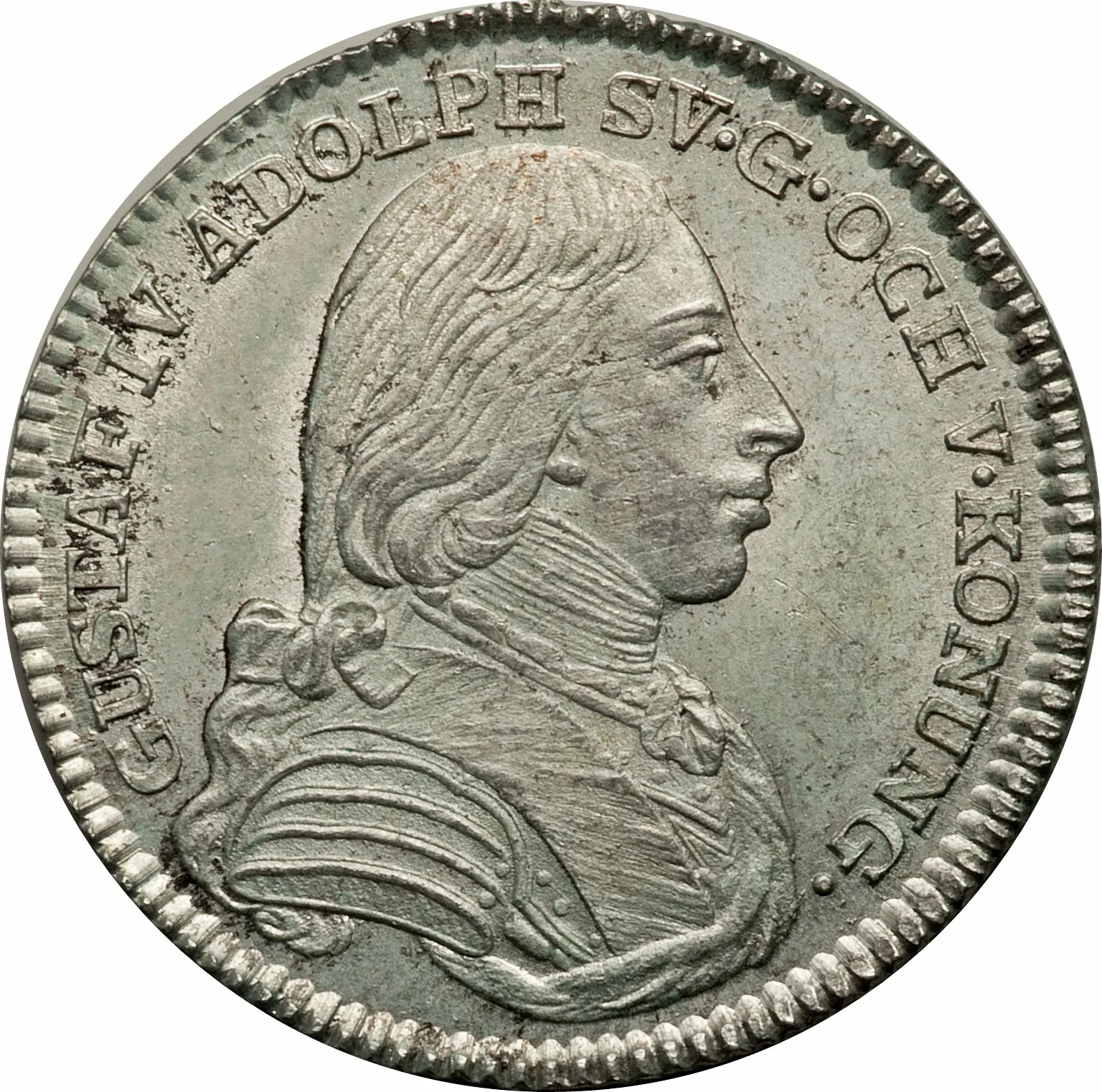
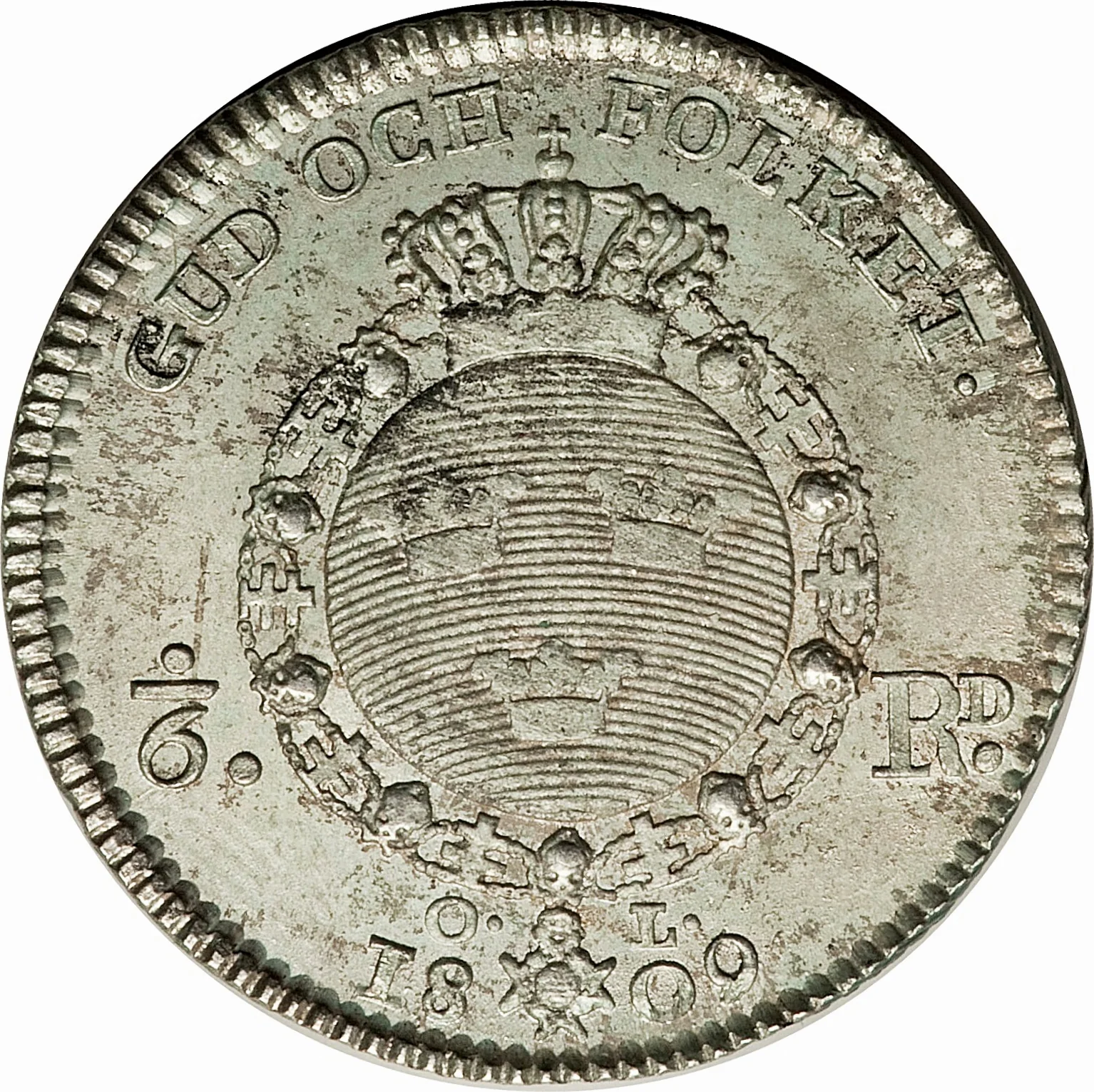
⅙ Riksdaler – Sweden
Sweden
Context
Years: 1800–1809
Issuer: Sweden 
Ruler: Gustav IV Adolf
Currency:
(1798—1830)
Demonetized: Yes
Total mintage: 9,025,170
Material
References
KM: #Click to copy to clipboard560
Numista: #39218
Value
Bullion value: $12.22
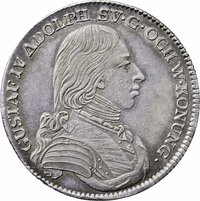
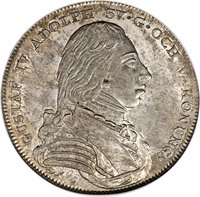
Obverse
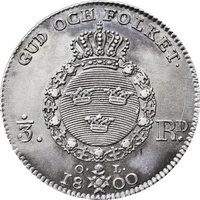
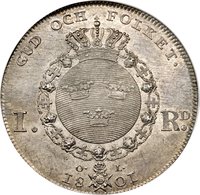
Reverse
Edge
Plain
Categories
| Symbols> Coat of Arms |
Mintings
| Year | Mint Mark | Mintage | Quality | Collection |
|---|---|---|---|---|
| 1800 | OL | 105,840 | ||
| 1801 | OL | 420,126 | ||
| 1802 | OL | 125,386 | ||
| 1803 | OL | 2,340,792 | ||
| 1804 | OL | 2,155,980 | ||
| 1805 | OL | 977,646 | ||
| 1806 | OL | 340,842 | ||
| 1807 | OL | 908,700 | ||
| 1808 | OL | 942,858 | ||
| 1809 | OL | 707,000 |
Historical background
In 1800, Sweden was grappling with a severe and complex currency crisis, a legacy of the disastrous Great Northern War and decades of financial mismanagement. The nation operated on a dual currency system: the riksdaler specie, a silver-based coin intended for international trade, and the heavily depreciated riksdaler banco, paper money issued by the central bank, the Riksbank. Due to the crown's extensive borrowing of banco notes to finance wars, their value had plummeted, leading to a vast and unstable gap between the two forms of money. This created economic chaos, with prices often quoted in both currencies and widespread public distrust in the paper money.
The root of the problem lay in the rigid official exchange rate, which was fixed by law at par (1:1) between the silver riksdaler and the paper banco. However, in reality, the market rate saw the banco notes trade at a significant discount, sometimes as low as a quarter of their face value in silver. This fixed official rate stifled trade, encouraged speculation, and made government finances opaque, as the state's debts were nominally in silver but often paid in depreciated paper. The situation was exacerbated by a chronic shortage of silver coinage, which further eroded confidence in the monetary system.
This unsustainable currency situation set the stage for the major monetary reform that would follow in the early 19th century. The crisis highlighted the urgent need for a unified and stable currency, ultimately leading King Gustav IV Adolf and the Riksdag to enact the myntrealisation of 1803. This reform legally devalued the riksdaler banco to match its market value against silver, establishing a new, unified silver-based riksdaler. While a crucial step toward stability, the underlying fiscal weaknesses remained, and Sweden would continue to face monetary challenges in the decades ahead.
The root of the problem lay in the rigid official exchange rate, which was fixed by law at par (1:1) between the silver riksdaler and the paper banco. However, in reality, the market rate saw the banco notes trade at a significant discount, sometimes as low as a quarter of their face value in silver. This fixed official rate stifled trade, encouraged speculation, and made government finances opaque, as the state's debts were nominally in silver but often paid in depreciated paper. The situation was exacerbated by a chronic shortage of silver coinage, which further eroded confidence in the monetary system.
This unsustainable currency situation set the stage for the major monetary reform that would follow in the early 19th century. The crisis highlighted the urgent need for a unified and stable currency, ultimately leading King Gustav IV Adolf and the Riksdag to enact the myntrealisation of 1803. This reform legally devalued the riksdaler banco to match its market value against silver, establishing a new, unified silver-based riksdaler. While a crucial step toward stability, the underlying fiscal weaknesses remained, and Sweden would continue to face monetary challenges in the decades ahead.
💎 Very Rare