

1 speciedaler – Norway
Add to wishlist
Norway
Context
Years: 1792–1795
Issuer: Norway
Ruler: Christian VII
Currency:
(1746—1814)
Demonetized: Yes
Total mintage: 196,200
Material
References
KM: #
Numista: #401274
Value
Bullion value: $64.09
Obverse
Description:
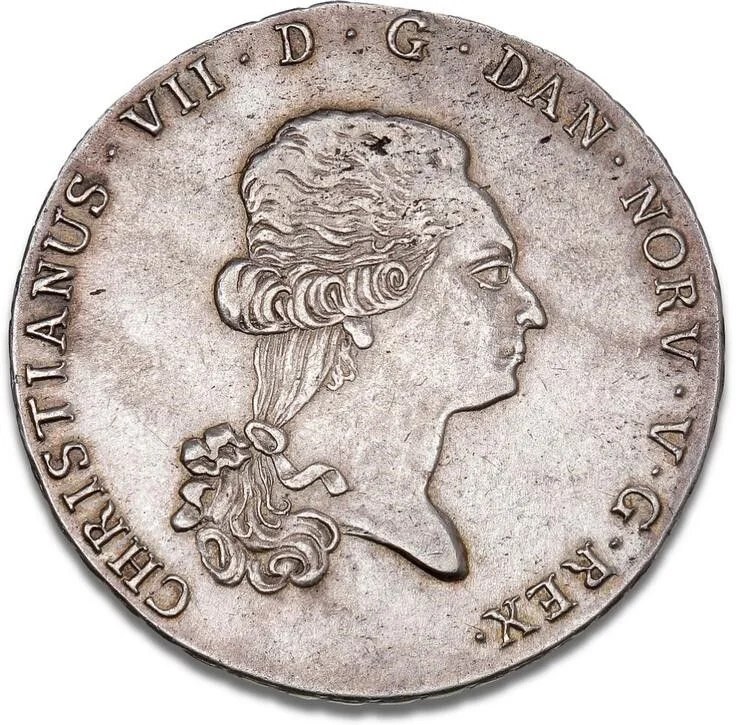
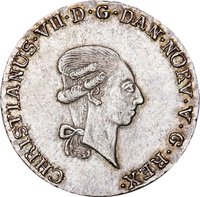
Bust of King Christian VII facing right, with long hair, encircled by an inscription.
Inscription:
CHRISTIANUS · VII · D · G · DAN · NORV · V · G · REX ·
Script: Latin
Reverse
Description:
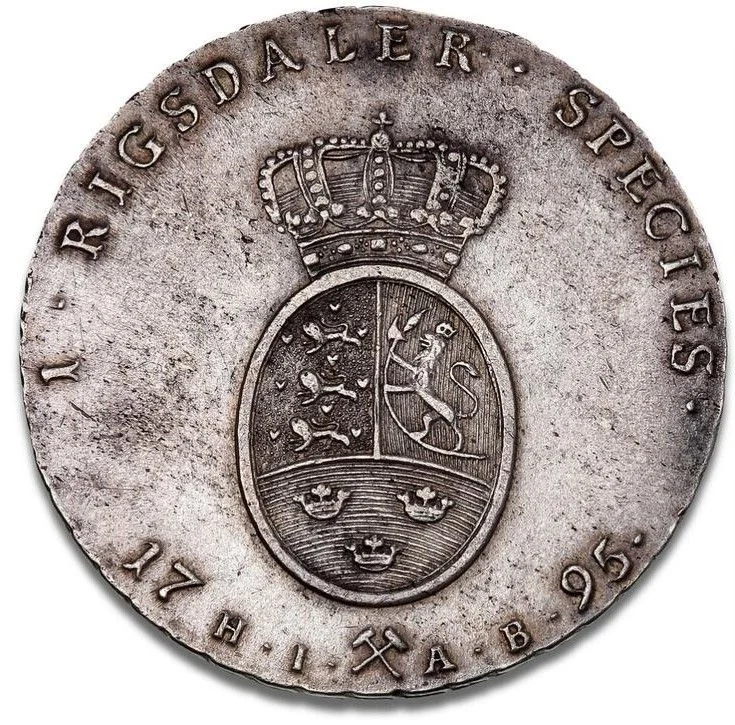
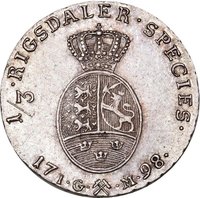
Danish, Norwegian, and Holstein arms in a crowned shield. Inscription surrounds. Date and mintmaster initials flank mintmark below.
Inscription:
· 1 · RIGSDALER · SPECIES ·
·17·H·I·⚒·A·B·95·
·17·H·I·⚒·A·B·95·
Script: Latin
Edge
© AgIsSilver
Mints
| Name | Mark |
|---|---|
| Norwegian Mint | — |
Mintings
| Year | Mint Mark | Mintage | Quality | Collection |
|---|---|---|---|---|
| 1792 | — | — | BU | |
| 1793 | — | 63,900 | ||
| 1794 | — | 36,500 | ||
| 1795 | — | 95,800 |
Historical background
In 1792, Norway was part of the dual monarchy of Denmark-Norway, governed from Copenhagen. The currency system was complex and strained, operating on a silver standard. The primary unit was the riksdaler specie, a large silver coin, but everyday transactions relied on a confusing array of subsidiary coins like skilling and mark, with 96 skilling to a riksdaler. A severe shortage of small change plagued the economy, hindering local trade and causing significant public inconvenience, as people often had to resort to barter or private credit notes for minor purchases.
This monetary scarcity was exacerbated by broader economic challenges. Norway's balance of trade was often negative, leading to an outflow of silver. Furthermore, the European wars following the French Revolution disrupted commerce and made it difficult to import bullion. The state's finances were also under pressure, limiting the Crown's ability to mint sufficient new coinage to meet demand. This created a situation where the official, centrally-minted currency was increasingly scarce in circulation, especially outside major ports.
Consequently, a patchwork of unofficial and emergency solutions filled the void. Various private entities, including merchants, mines, and even some town authorities, issued their own kreditivsedler (credit notes) and token coins to facilitate local exchange. While these measures provided a pragmatic stopgap, they led to a fragmented and unreliable monetary landscape with varying values and acceptance. Thus, on the eve of the Napoleonic Wars, Norway's currency situation was characterized by an official system in distress and a de facto reliance on decentralized, makeshift substitutes.
This monetary scarcity was exacerbated by broader economic challenges. Norway's balance of trade was often negative, leading to an outflow of silver. Furthermore, the European wars following the French Revolution disrupted commerce and made it difficult to import bullion. The state's finances were also under pressure, limiting the Crown's ability to mint sufficient new coinage to meet demand. This created a situation where the official, centrally-minted currency was increasingly scarce in circulation, especially outside major ports.
Consequently, a patchwork of unofficial and emergency solutions filled the void. Various private entities, including merchants, mines, and even some town authorities, issued their own kreditivsedler (credit notes) and token coins to facilitate local exchange. While these measures provided a pragmatic stopgap, they led to a fragmented and unreliable monetary landscape with varying values and acceptance. Thus, on the eve of the Napoleonic Wars, Norway's currency situation was characterized by an official system in distress and a de facto reliance on decentralized, makeshift substitutes.
✨ Legendary