

Obverse
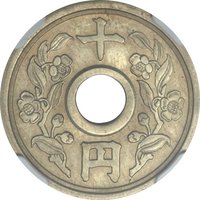
Description:
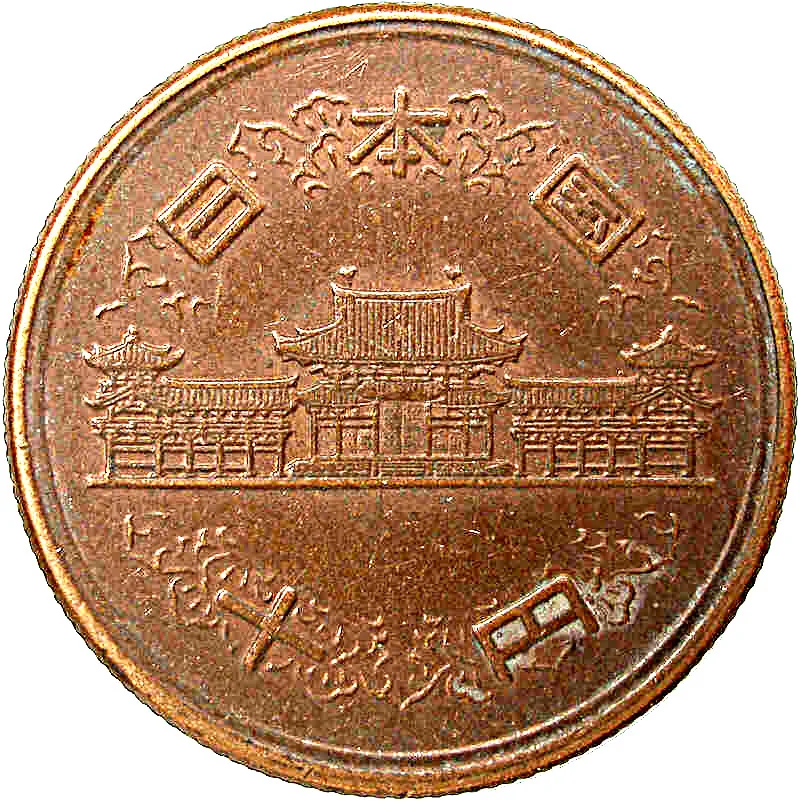
Japan
Phoenix Hall (Byōdō-in Temple)
Phoenix Hall (Byōdō-in Temple)
Inscription:
日 本 国
十 円
十 円
Translation:
Japan
Ten Yen
Ten Yen
Language: Japanese
Reverse
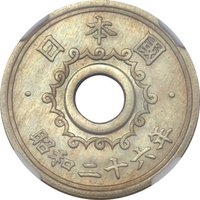
Description:
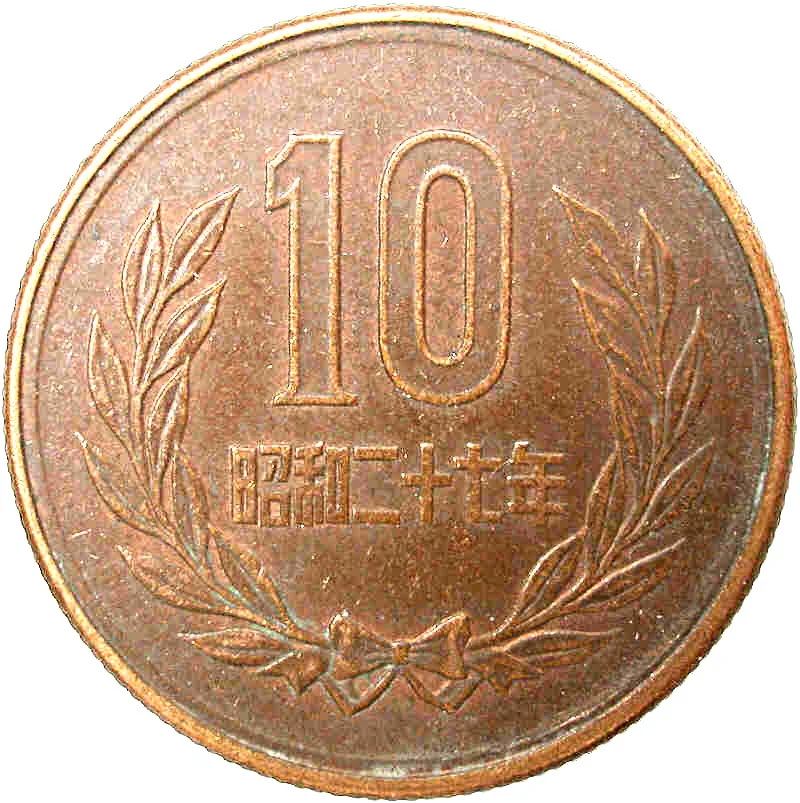
Value and date encircled
Inscription:
10
昭和二十七年
昭和二十七年
Translation:
Showa 27
Language: Japanese
Edge
Reeded
Categories
| Building> Religious building |
| Symbol> Wreath |
Mints
| Name | Mark |
|---|---|
| Japan Mint | — |
Mintings
| Year | Mint Mark | Mintage | Quality | Collection |
|---|---|---|---|---|
| 1951 | — | 101,068,000 | ||
| 1952 | — | 486,632,000 | ||
| 1953 | — | 466,300,000 | ||
| 1954 | — | 520,900,000 | ||
| 1955 | — | 123,100,000 | ||
| 1957 | — | 50,000,000 | ||
| 1958 | — | 25,000,000 |
Historical background
In 1951, Japan's currency situation was fundamentally shaped by the Allied Occupation and the early stages of post-war economic reconstruction. The yen operated under a fixed exchange rate system established by the Occupation authorities in 1949, set at 360 yen to 1 US dollar through the "Dodge Line" austerity plan. This rate, intended to stabilize hyperinflation and anchor the economy, was maintained by strict capital controls and the centralized management of foreign exchange by the government. All external transactions were funneled through the Foreign Exchange Control Board, meaning the yen was not a convertible currency on international markets, and its value was an administrative tool rather than a market price.
Economically, the 360 yen/dollar rate was pivotal for Japan's recovery. It provided a crucial foundation for export-led growth by making Japanese goods, particularly textiles and light industrial products, competitively priced in international markets. This period also saw the formal end of the Occupation with the signing of the San Francisco Peace Treaty in September 1951, which restored Japan's sovereignty but did not immediately alter its financial arrangements. The country remained heavily dependent on US economic aid and procurement spending from the ongoing Korean War (1950-1953), which generated vital dollar inflows to support the fixed exchange rate and finance imports of raw materials and technology.
Looking forward, the currency regime of 1951 established a framework that would last for over two decades, underpinning the "Japanese economic miracle." The stable and undervalued yen, combined with protective capital controls, allowed Japanese industries to develop without the pressure of currency fluctuations or foreign takeovers. While successful for growth, this system also sowed the seeds for future trade frictions, as Japan's persistent trade surpluses grew. Thus, 1951 represents a moment of entrenched stability, where a managed currency became the bedrock for Japan's dramatic re-entry into the global economy.
Economically, the 360 yen/dollar rate was pivotal for Japan's recovery. It provided a crucial foundation for export-led growth by making Japanese goods, particularly textiles and light industrial products, competitively priced in international markets. This period also saw the formal end of the Occupation with the signing of the San Francisco Peace Treaty in September 1951, which restored Japan's sovereignty but did not immediately alter its financial arrangements. The country remained heavily dependent on US economic aid and procurement spending from the ongoing Korean War (1950-1953), which generated vital dollar inflows to support the fixed exchange rate and finance imports of raw materials and technology.
Looking forward, the currency regime of 1951 established a framework that would last for over two decades, underpinning the "Japanese economic miracle." The stable and undervalued yen, combined with protective capital controls, allowed Japanese industries to develop without the pressure of currency fluctuations or foreign takeovers. While successful for growth, this system also sowed the seeds for future trade frictions, as Japan's persistent trade surpluses grew. Thus, 1951 represents a moment of entrenched stability, where a managed currency became the bedrock for Japan's dramatic re-entry into the global economy.
🌱 Very Common