

100 Yen – Japan
Circulating commemorative coins
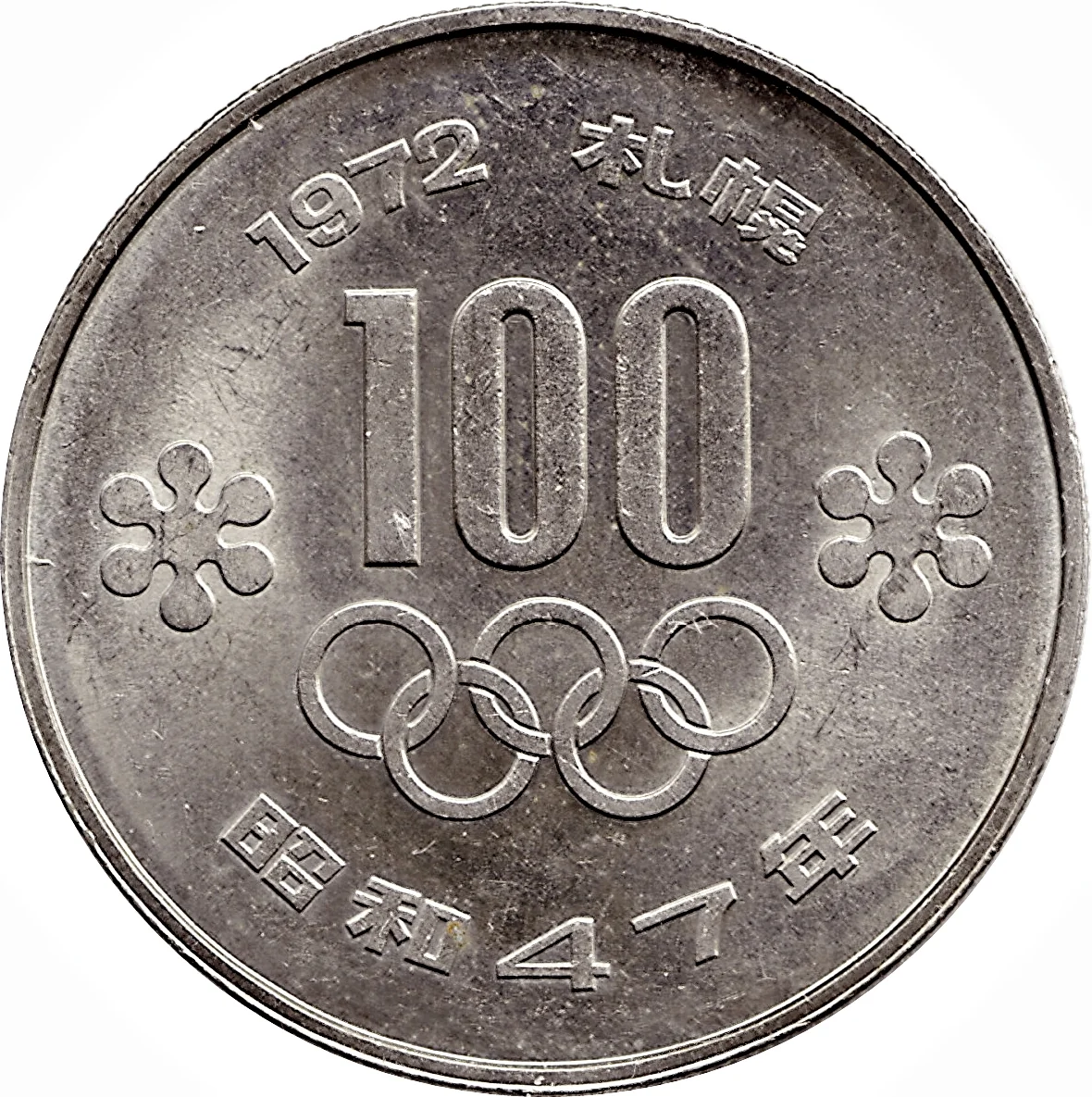
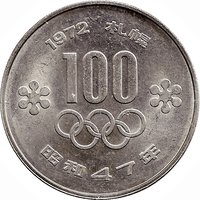
Commemoration: 1972 Winter Olympics, Sapporo
Japan
Context
Year: 1972
Japanese - Shōwa era Year: 47
Issuer: Japan 
Ruler: Shōwa
Currency:
(since 1871)
Total mintage: 30,000,000
Material
References
Y: #Click to copy to clipboard84
Numista: #6026
Value
Exchange value: 100 JPY = $0.64
Inflation-adjusted value: 330.08 JPY
Obverse
Description:
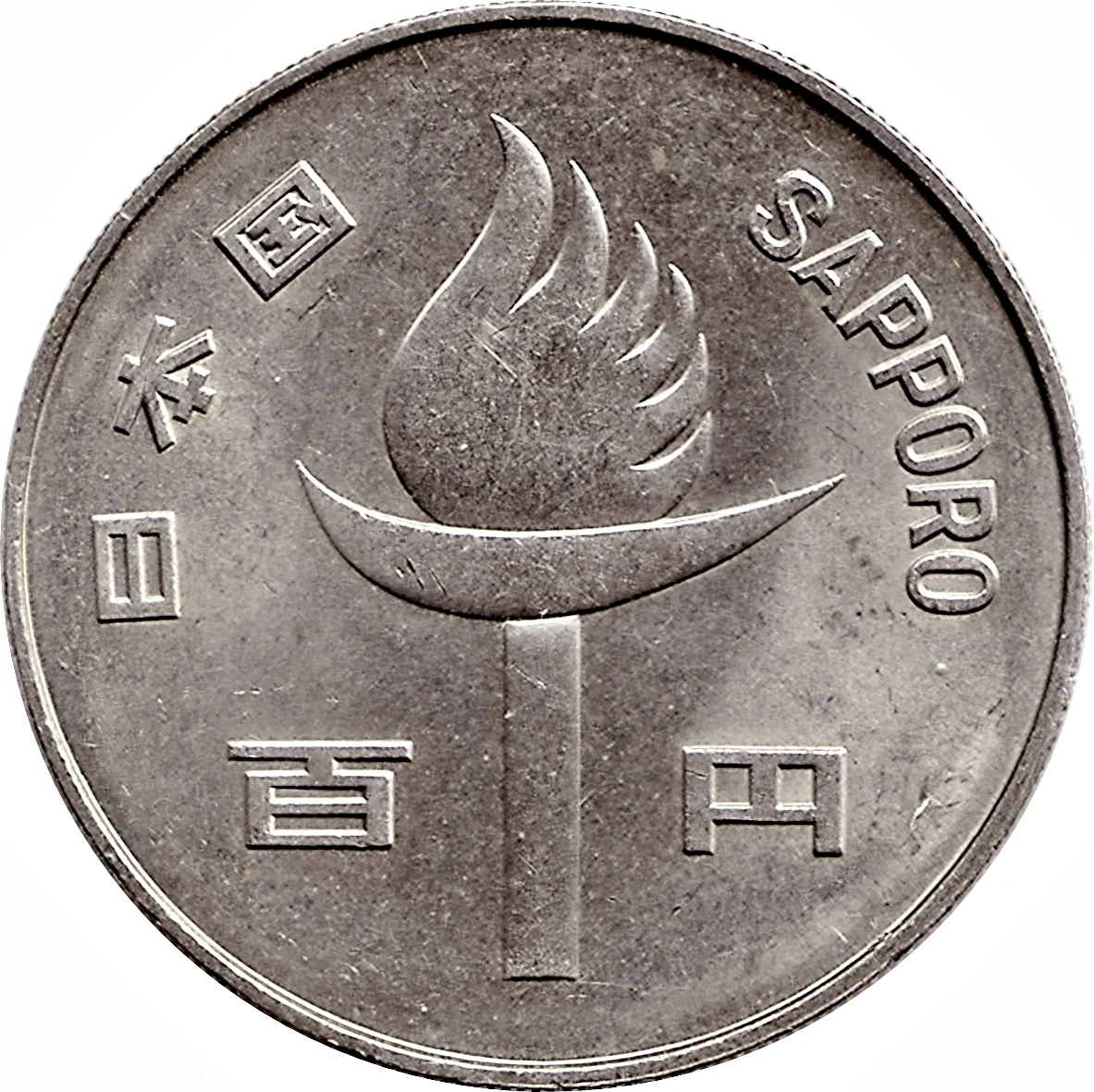
Olympic flame and torch
Inscription:
日本国 SAPPORO
百 円
百 円
Translation:
Japan SAPPORO
One Hundred Yen
One Hundred Yen
Language: Japanese
Reverse
Edge
Reeded
Categories
| Sport> Winter Olympic Games |
Mints
| Name | Mark |
|---|---|
| Japan Mint | — |
Mintings
| Year | Mint Mark | Mintage | Quality | Collection |
|---|---|---|---|---|
| 1972 | — | 30,000,000 |
Historical background
In 1972, Japan's currency situation was dominated by the turbulent aftermath of the collapse of the Bretton Woods system. The previous year, the Nixon Shock had abruptly ended the convertibility of the US dollar to gold, forcing the yen and other major currencies into a new era of floating exchange rates. After decades of a fixed rate of 360 yen to the dollar—a cornerstone of Japan's post-war export-led economic miracle—the yen was now subject to market forces. This led to a significant and rapid appreciation, with the yen strengthening to around 308 yen per dollar by the end of 1972, creating immediate pressure on the nation's export-oriented industries.
Domestically, this monetary upheaval occurred amidst a period of extraordinary economic growth known as the "Iwato Boom," which had transitioned into an overheated economy. The Bank of Japan (BOJ), concerned about the potential deflationary impact of a stronger yen and aiming to maintain growth, pursued an aggressively loose monetary policy. This "low-interest rate policy" flooded the economy with liquidity, intending to counteract the yen's rise and support business activity. However, this cheap money, combined with strong corporate investment and rising wages, began to fuel rampant asset inflation and speculative investment.
Consequently, 1972 stands as a pivotal and contradictory year, setting the stage for the severe inflation of the 1973 Oil Crisis. The government and the BOJ were attempting to navigate a dual challenge: managing the disruptive external shock of a freely floating, appreciating yen while simultaneously stoking domestic demand to unsustainable levels. The policy choices made in 1972, particularly the excessive monetary easing, are widely seen in retrospect as a primary cause of the asset-inflated "bubble economy" that would emerge more fully in the late 1980s, making it a critical juncture in Japan's modern financial history.
Domestically, this monetary upheaval occurred amidst a period of extraordinary economic growth known as the "Iwato Boom," which had transitioned into an overheated economy. The Bank of Japan (BOJ), concerned about the potential deflationary impact of a stronger yen and aiming to maintain growth, pursued an aggressively loose monetary policy. This "low-interest rate policy" flooded the economy with liquidity, intending to counteract the yen's rise and support business activity. However, this cheap money, combined with strong corporate investment and rising wages, began to fuel rampant asset inflation and speculative investment.
Consequently, 1972 stands as a pivotal and contradictory year, setting the stage for the severe inflation of the 1973 Oil Crisis. The government and the BOJ were attempting to navigate a dual challenge: managing the disruptive external shock of a freely floating, appreciating yen while simultaneously stoking domestic demand to unsustainable levels. The policy choices made in 1972, particularly the excessive monetary easing, are widely seen in retrospect as a primary cause of the asset-inflated "bubble economy" that would emerge more fully in the late 1980s, making it a critical juncture in Japan's modern financial history.
🌱 Common