

1 Tangka – Tibet
China
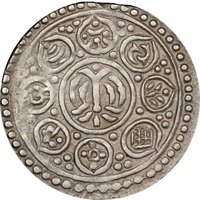
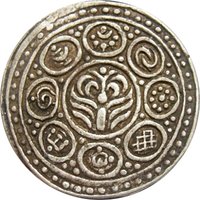
Obverse
Description:
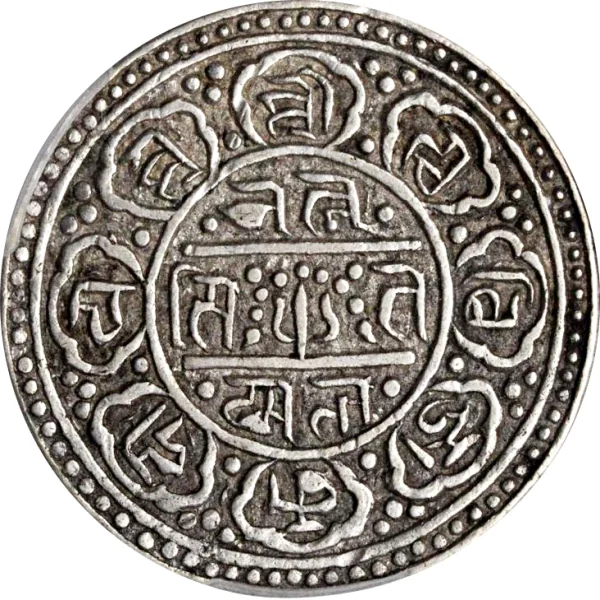
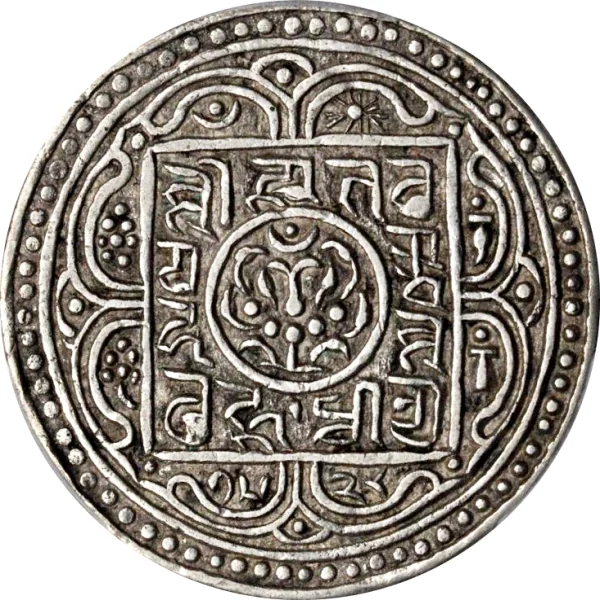
Undeciphered Ranjana script within an eight-petalled lotus.
Script: Ranjana
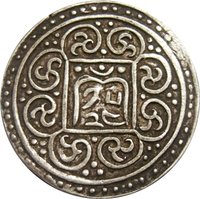
Reverse
Edge
Plain
Mintings
| Year | Mint Mark | Mintage | Quality | Collection |
|---|---|---|---|---|
| — | — | — | ||
| 1894 | — | — | ||
| 1896 | — | — | ||
| 1906 | — | — | ||
| 1912 | — | — |
Historical background
In 1880, Tibet operated under a largely closed monetary system, distinct from the broader Qing Empire to which it nominally belonged. The primary circulating currency was the Tibetan silver tangka (or srang), a coin minted locally in Lhasa and Shigatse. These coins, often debased with copper, circulated alongside a smaller number of Nepalese mohars and Indian rupees, particularly in southern border regions for trade. However, the system was plagued by inconsistency, as various regional mints produced coins of varying weight and purity, leading to confusion and hindering commerce.
This monetary fragmentation occurred within a tense political context. While Tibet was under Qing suzerainty, the Manchu Amban's direct authority in Lhasa was often weak. The Tibetan government (Ganden Phodrang) fiercely guarded its internal autonomy, including financial matters. A significant external monetary relationship existed with Nepal, governed by a centuries-old treaty that required Tibet to mint its coins from Nepalese silver. This arrangement was a source of recurring friction, as Nepal frequently complained about the debasement of the tangka, which devalued their silver. This dispute would eventually escalate into the 1855-56 war, and by 1880, the relationship remained strained, with Nepal exerting economic pressure.
Furthermore, the wider economic picture was one of isolation and stagnation. The Qing dynasty's own monetary system, based on silver taels and copper cash, had limited penetration into Tibet beyond state-related expenditures. There was no standardized, high-value currency for large transactions, and barter remained common, especially in rural areas. The lack of a unified, trusted currency reflected the region's insular economic policy, designed to minimize external influence. This financial disarray would persist until the early 20th century, when attempts at reform and the increasing inflow of Indian rupees began to alter the monetary landscape.
This monetary fragmentation occurred within a tense political context. While Tibet was under Qing suzerainty, the Manchu Amban's direct authority in Lhasa was often weak. The Tibetan government (Ganden Phodrang) fiercely guarded its internal autonomy, including financial matters. A significant external monetary relationship existed with Nepal, governed by a centuries-old treaty that required Tibet to mint its coins from Nepalese silver. This arrangement was a source of recurring friction, as Nepal frequently complained about the debasement of the tangka, which devalued their silver. This dispute would eventually escalate into the 1855-56 war, and by 1880, the relationship remained strained, with Nepal exerting economic pressure.
Furthermore, the wider economic picture was one of isolation and stagnation. The Qing dynasty's own monetary system, based on silver taels and copper cash, had limited penetration into Tibet beyond state-related expenditures. There was no standardized, high-value currency for large transactions, and barter remained common, especially in rural areas. The lack of a unified, trusted currency reflected the region's insular economic policy, designed to minimize external influence. This financial disarray would persist until the early 20th century, when attempts at reform and the increasing inflow of Indian rupees began to alter the monetary landscape.
💎 Extremely Rare