

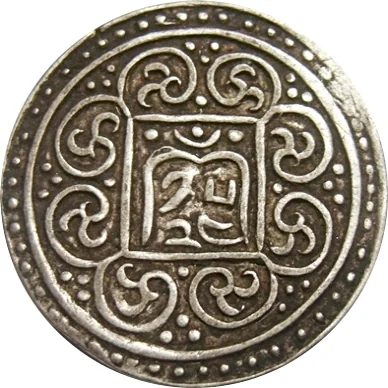

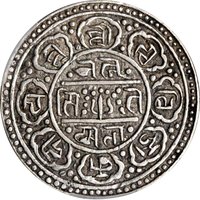
Obverse
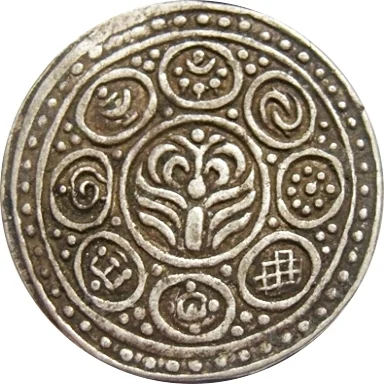
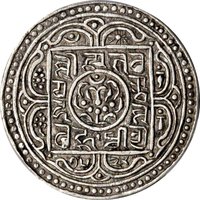
Reverse
Description:
A lotus encircled by the Eight Auspicious Symbols, all within an eight-petaled lotus.
Edge
Plain
Mintings
| Year | Mint Mark | Mintage | Quality | Collection |
|---|---|---|---|---|
| 1890 | — | — | ||
| 1891 | — | — |
Historical background
In 1890, Tibet operated within a complex and isolated monetary system, largely separate from the formal Qing dynasty administration. The primary circulating currency was the Tibetan silver tangka (or srang), a locally minted coin that was often debased with copper. Its value fluctuated significantly by region and its acceptance outside Tibet was limited. Alongside this, significant trade, especially with Nepal and British India, was conducted using Nepalese mohars and, increasingly, Indian rupees, which were trusted for their consistent silver content. Chinese silver sycee ingots and copper cash coins also circulated, particularly in eastern areas and for official transactions, reflecting nominal Qing suzerainty.
This multi-currency environment created chronic instability. The debasement of the tangka by Tibetan authorities and the Lhasa mint led to inflation and popular discontent, as the intrinsic silver value of the coins fell. Meanwhile, the inflow of high-quality Indian rupees through border trade began to dominate, effectively putting parts of Tibet's economy on a rupee standard. This monetary fragmentation complicated taxation and trade, and highlighted the weakening economic control of both the Lhasa government and the distant Qing administration.
The currency situation was directly tied to broader geopolitical pressures. The 1890 Convention of Calcutta between Britain and Qing China, which concerned Sikkim and Tibet's borders, implicitly acknowledged these economic realities. While not directly addressing coinage, the treaty aimed to regulate cross-border trade where rupee transactions were paramount. Thus, Tibet's currency landscape in 1890 was a reflection of its political ambiguity: caught between local authority, a weakening Qing imperial claim, and growing British-Indian economic influence along its frontiers.
This multi-currency environment created chronic instability. The debasement of the tangka by Tibetan authorities and the Lhasa mint led to inflation and popular discontent, as the intrinsic silver value of the coins fell. Meanwhile, the inflow of high-quality Indian rupees through border trade began to dominate, effectively putting parts of Tibet's economy on a rupee standard. This monetary fragmentation complicated taxation and trade, and highlighted the weakening economic control of both the Lhasa government and the distant Qing administration.
The currency situation was directly tied to broader geopolitical pressures. The 1890 Convention of Calcutta between Britain and Qing China, which concerned Sikkim and Tibet's borders, implicitly acknowledged these economic realities. While not directly addressing coinage, the treaty aimed to regulate cross-border trade where rupee transactions were paramount. Thus, Tibet's currency landscape in 1890 was a reflection of its political ambiguity: caught between local authority, a weakening Qing imperial claim, and growing British-Indian economic influence along its frontiers.

💎 Extremely Rare