

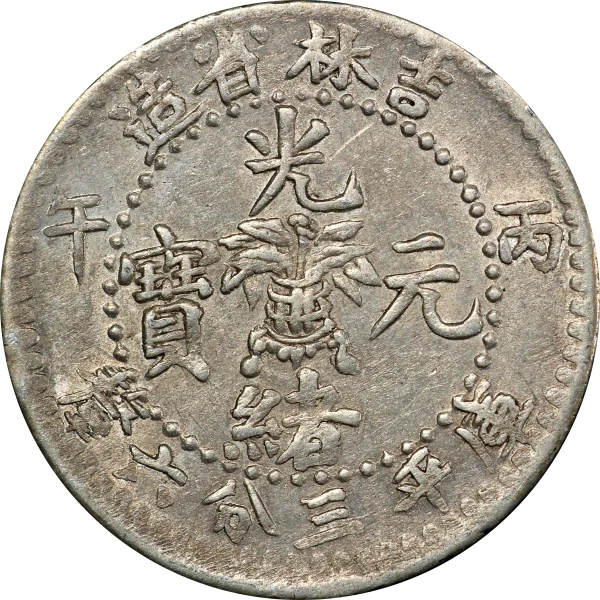
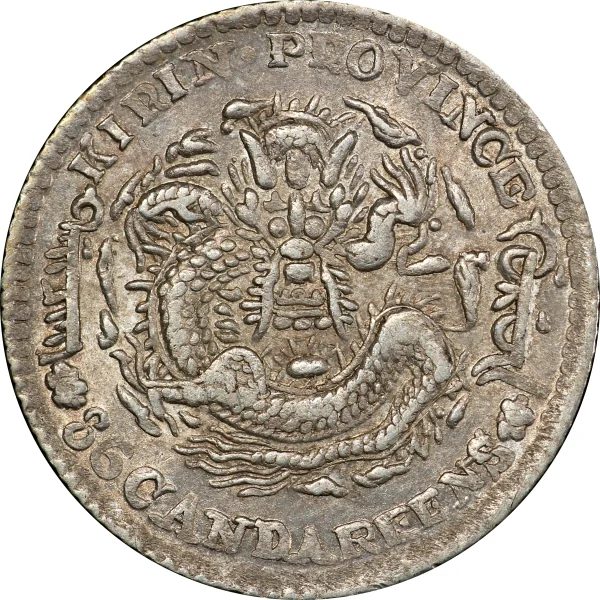
5 fen – Kirin Province
Add to wishlist
China
Context
Years: 1898–1908
Country: China
Issuer: Kirin Province
Ruler: Guangxu
Currency:
(1898—1909)
Demonetized: Yes
Material
References
Y: #
Numista: #42190
Value
Bullion value: $3.22
Obverse
Description:
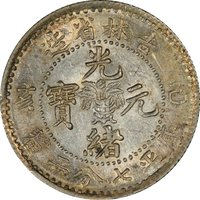
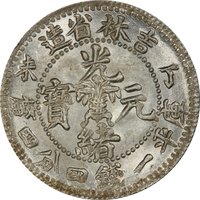
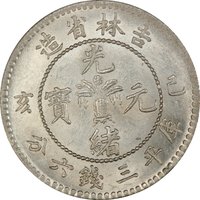
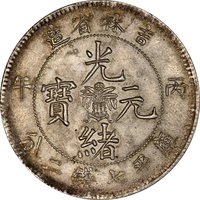
Vase encircled by Chinese ideograms, read top to bottom and right to left.
Inscription:
造省林吉
午丙
光
寶元
緒
釐六分三平庫
午丙
光
寶元
緒
釐六分三平庫
Translation:
Made in Jilin Province.
Bingwu Year.
Guangxu Era.
Treasure Coin, Three Mace Six Candareens, Pingku Standard.
Bingwu Year.
Guangxu Era.
Treasure Coin, Three Mace Six Candareens, Pingku Standard.
Language: Classical Chinese
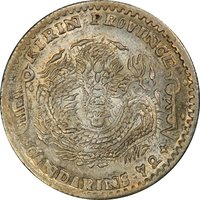
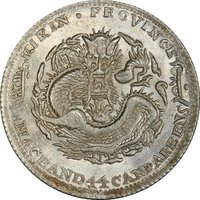
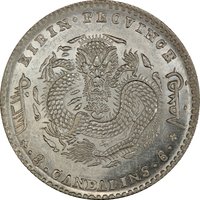
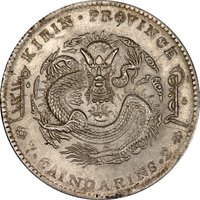
Reverse
Edge
Reeded.
Categories
| Mythology> Fantastic animal |
Mintings
| Year | Mint Mark | Mintage | Quality | Collection |
|---|---|---|---|---|
| 1898 | — | — | ||
| 1899 | — | — | ||
| 1900 | — | — | ||
| 1906 | — | — | ||
| 1907 | — | — | ||
| 1908 | — | — |
Historical background
In 1898, Kirin Province (Jilin) in Northeast China existed within a complex monetary ecosystem shaped by foreign encroachment, domestic weakness, and regional trade. As part of the Qing Empire, the province nominally used the national currency system based on silver—both sycee (unminted silver by weight) and, increasingly, silver yuan coins. However, the state system was fragmented and unreliable. The primary circulating medium in everyday commerce was the "Fengtian tiao" or "Fengpiao," a silver-denominated banknote issued by the Official Bank of the Three Eastern Provinces in nearby Fengtian (Shenyang). These notes were crucial for large transactions and inter-city trade but were prone to depreciation based on the bank's reserves and regional stability.
This landscape was profoundly complicated by the intense geopolitical rivalry in the region, particularly from Russia. Following the 1896 Sino-Russian Secret Treaty and the 1898 lease of Port Arthur, Russian economic influence expanded rapidly. The Russian Ruble, especially notes from the Russo-Chinese Bank, circulated widely in northern Kirin, particularly along the Chinese Eastern Railway corridor under construction. The ruble competed directly with the Fengpiao, creating a dual-currency zone where merchants and officials had to navigate fluctuating exchange rates. Meanwhile, traditional Chinese copper cash coins remained the backbone of small-scale local markets, but their value against silver was also unstable.
The overall currency situation was therefore one of competing sovereignties and inherent instability. The Qing central government had limited ability to impose a uniform standard, while provincial authorities struggled to maintain confidence in the Fengpiao. The influx of Russian rubles represented a tangible loss of financial control, making Kirin’s economy a fiscal battleground. This monetary disorder reflected the broader reality of the late Qing dynasty: a weakening state apparatus facing imperialist pressures, leading to a fractured economic environment that hindered development and exposed the population to the risks of inflation and exchange losses.
This landscape was profoundly complicated by the intense geopolitical rivalry in the region, particularly from Russia. Following the 1896 Sino-Russian Secret Treaty and the 1898 lease of Port Arthur, Russian economic influence expanded rapidly. The Russian Ruble, especially notes from the Russo-Chinese Bank, circulated widely in northern Kirin, particularly along the Chinese Eastern Railway corridor under construction. The ruble competed directly with the Fengpiao, creating a dual-currency zone where merchants and officials had to navigate fluctuating exchange rates. Meanwhile, traditional Chinese copper cash coins remained the backbone of small-scale local markets, but their value against silver was also unstable.
The overall currency situation was therefore one of competing sovereignties and inherent instability. The Qing central government had limited ability to impose a uniform standard, while provincial authorities struggled to maintain confidence in the Fengpiao. The influx of Russian rubles represented a tangible loss of financial control, making Kirin’s economy a fiscal battleground. This monetary disorder reflected the broader reality of the late Qing dynasty: a weakening state apparatus facing imperialist pressures, leading to a fractured economic environment that hindered development and exposed the population to the risks of inflation and exchange losses.

💎 Extremely Rare