

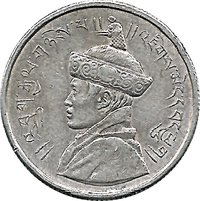
Obverse
Description:
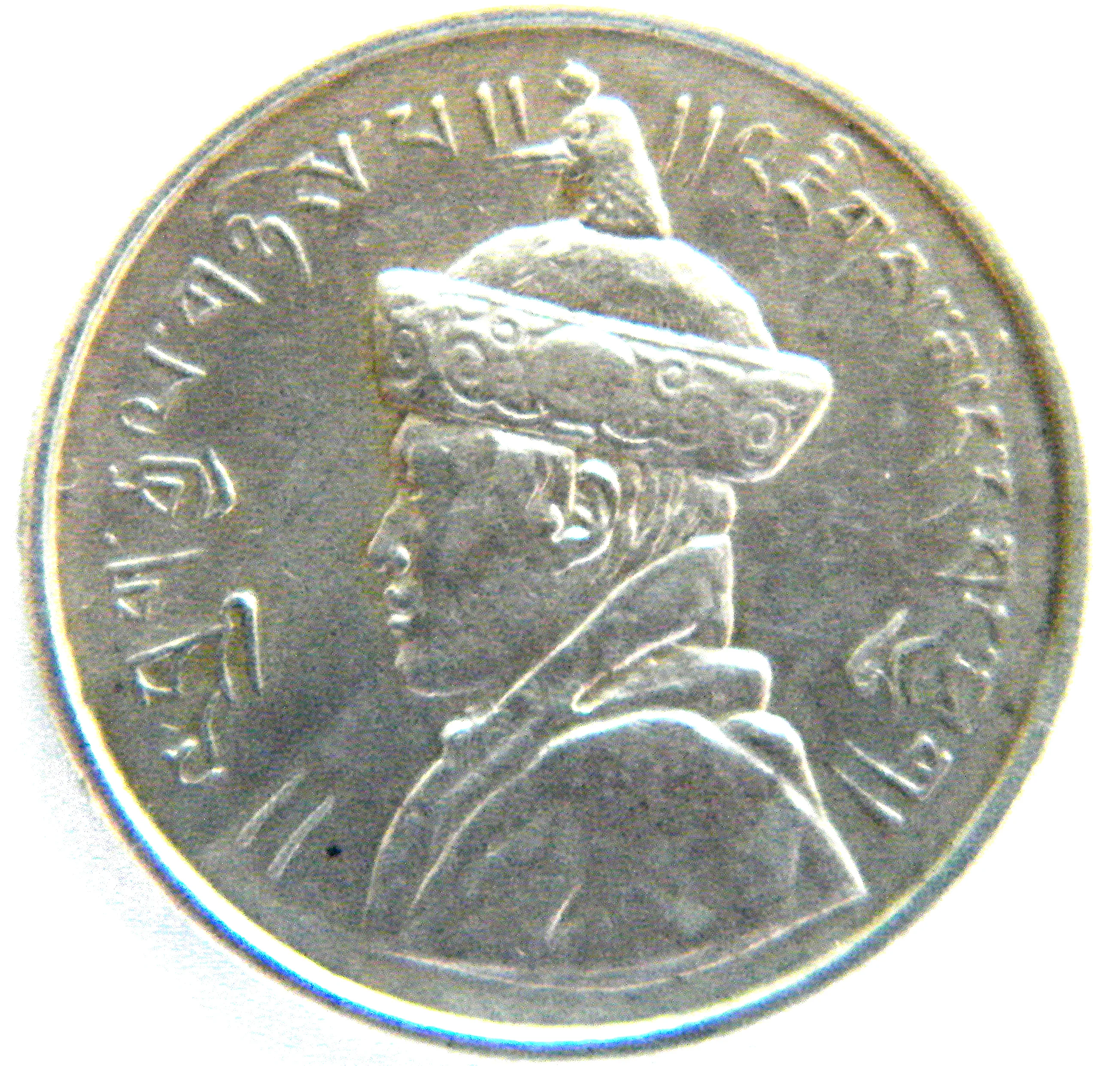
King Jigme Wangchuck left-facing crowned bust.
Script: Tibetan
Engraver: Albert Pearson Spencer
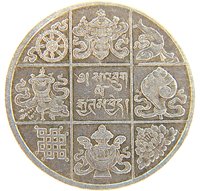
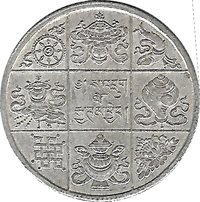
Reverse
Description:
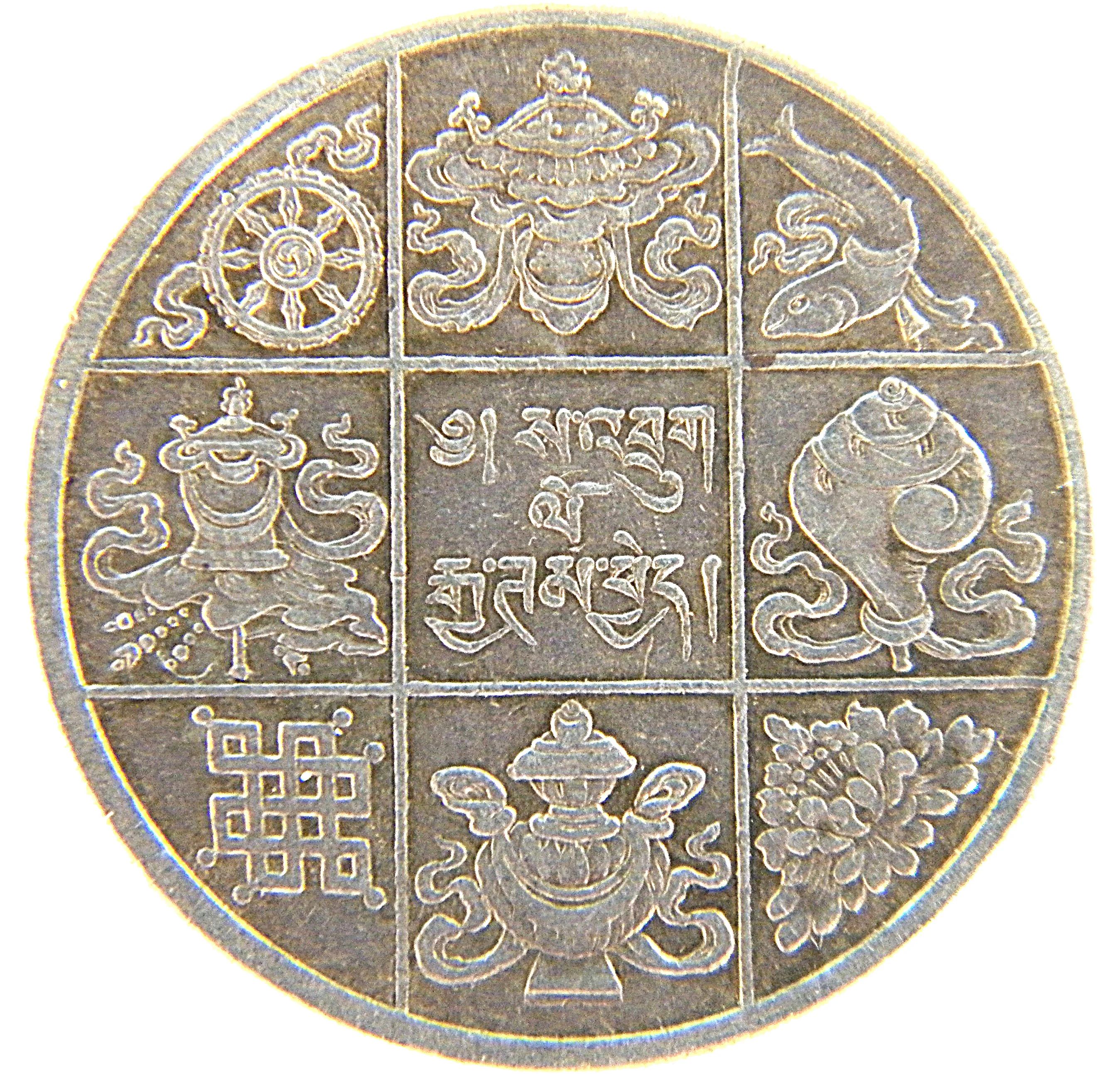
Nine sections: eight outer panels display the Ashtamangala symbols, with a three-line legend in the center. The symbols, clockwise from top left, are: Dharma Wheel, sovereignty umbrella, golden fish, conch shell, lotus, treasure vase, endless knot, and victory banner.
Script: Tibetan
Engraver: Albert Pearson Spencer
Edge
Reeded
Mints
| Name | Mark |
|---|---|
| Kolkata / Calcutta / Murshidabad | — |
Mintings
| Year | Mint Mark | Mintage | Quality | Collection |
|---|---|---|---|---|
| 1930 | — | 30,000 |
Historical background
In 1930, Bhutan's currency situation was characterized by a dual system, where both traditional and introduced forms of money circulated. The primary medium of exchange for most daily transactions, especially in rural areas, remained commodity-based. This included barter for goods like rice, butter, and textiles, as well as the use of coins from neighboring regions. Notably, the silver Doti coin from the Indian princely state of Cooch Behar was widely accepted and served as a key unit of account, reflecting Bhutan's deep economic ties with the Indian subcontinent.
Formally, the monetary system was under the authority of the Wangchuck monarchy, which had begun issuing its own silver and copper coins in the late 1920s. These first national coins, minted in the traditional chetrum and tikchung denominations, bore the name of King Jigme Wangchuck. However, their circulation in 1930 was still limited and symbolic, not yet having fully displaced the older, familiar currencies. The state treasury, meanwhile, operated largely on a system of grain taxes and labor dues, with cash playing a secondary role in the central economy.
This period represented a transitional phase between a medieval, subsistence-based economy and a modern monetary one. The coexistence of barter, foreign coins, and new national coinage illustrated Bhutan's gradual integration into broader regional trade networks while maintaining its distinct identity. The currency landscape of 1930 was thus a tangible reflection of a kingdom cautiously navigating change, with the foundations of a unified national currency only just being laid by the centralizing monarchy.
Formally, the monetary system was under the authority of the Wangchuck monarchy, which had begun issuing its own silver and copper coins in the late 1920s. These first national coins, minted in the traditional chetrum and tikchung denominations, bore the name of King Jigme Wangchuck. However, their circulation in 1930 was still limited and symbolic, not yet having fully displaced the older, familiar currencies. The state treasury, meanwhile, operated largely on a system of grain taxes and labor dues, with cash playing a secondary role in the central economy.
This period represented a transitional phase between a medieval, subsistence-based economy and a modern monetary one. The coexistence of barter, foreign coins, and new national coinage illustrated Bhutan's gradual integration into broader regional trade networks while maintaining its distinct identity. The currency landscape of 1930 was thus a tangible reflection of a kingdom cautiously navigating change, with the foundations of a unified national currency only just being laid by the centralizing monarchy.

💎 Very Rare