

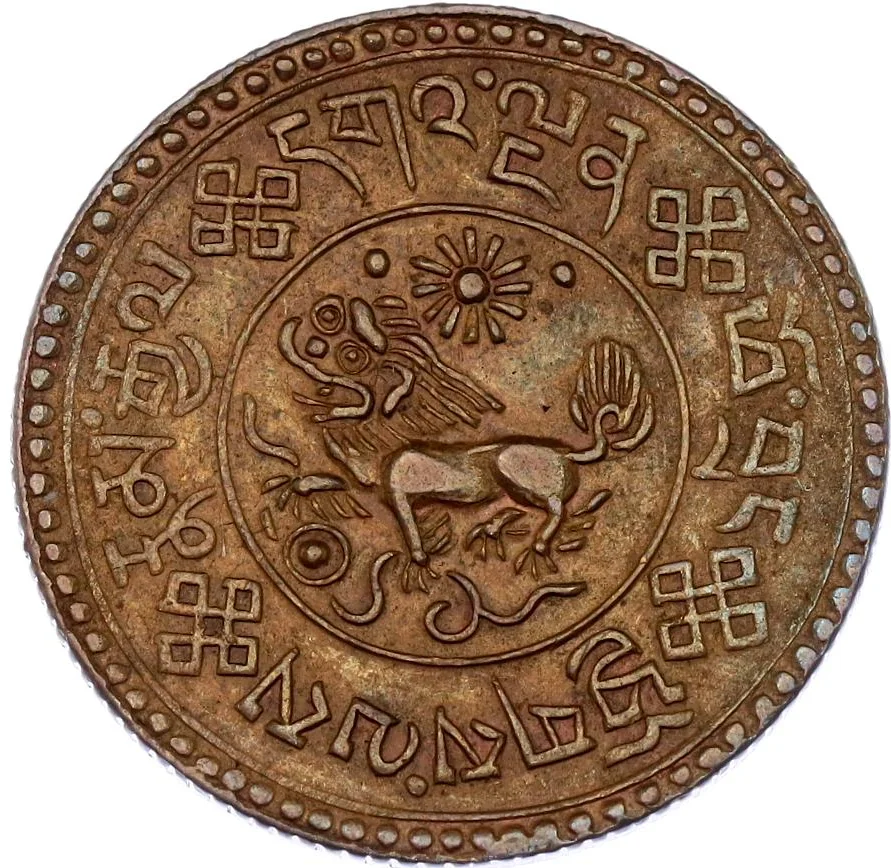
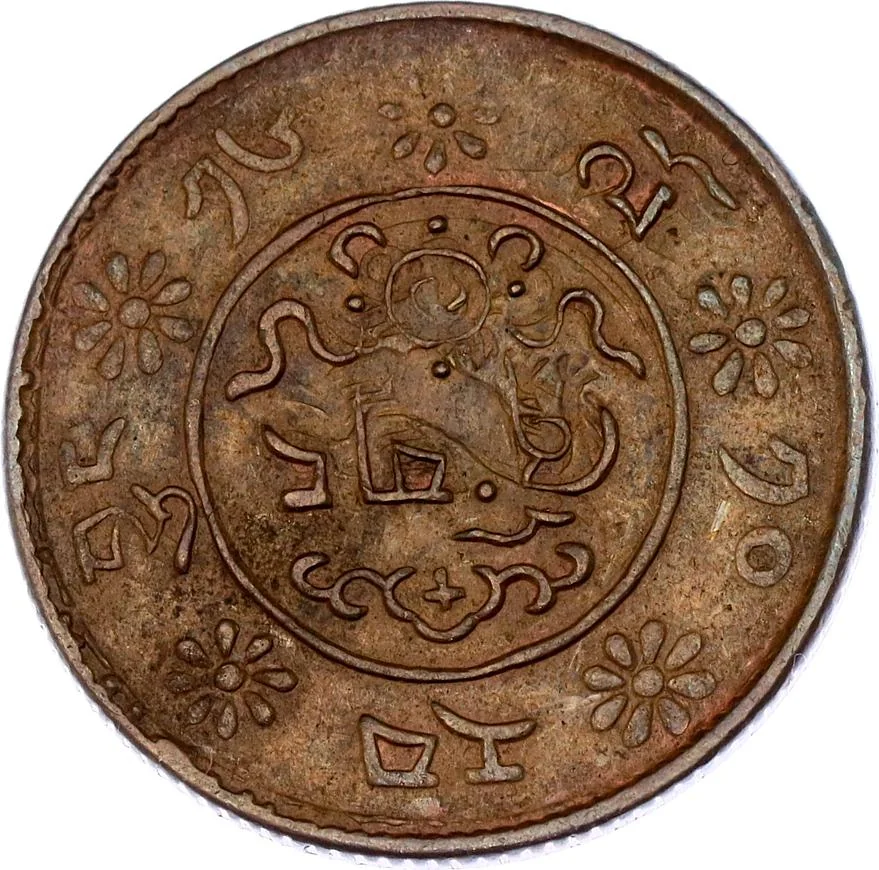
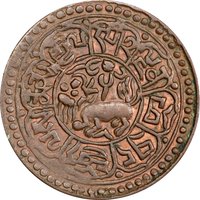
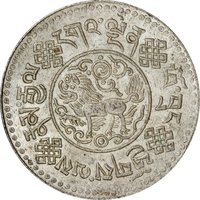
Obverse
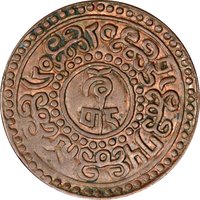
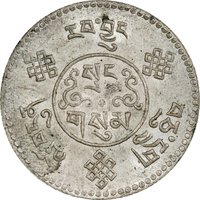
Reverse
Edge
Reeded.
Mints
| Name | Mark |
|---|---|
| Tapchi Electric Machine Factory | — |
Mintings
| Year | Mint Mark | Mintage | Quality | Collection |
|---|---|---|---|---|
| 1932 | — | 6,000,000 | ||
| 1933 | — | — | ||
| 1934 | — | — | ||
| 1935 | — | — | ||
| 1936 | — | — | ||
| 1937 | — | — | ||
| 1938 | — | — | ||
| 1942 | — | — |
Historical background
In 1932, Tibet existed in a complex state of de facto political autonomy from the Republic of China, though both the Chinese government and the Tibetan administration in Lhasa claimed sovereignty. This political ambiguity directly shaped the monetary landscape, which was characterized by a multi-currency system without a single, unified authority. The primary circulating medium was the Tibetan srang (also known as the tangka), a silver coin minted by the Lhasa government. However, these coins competed with a flood of other silver currencies, most notably the silver dollar (Dayang) from British India, which entered via trade routes, and Chinese silver yuan coins from Sichuan and Yunnan.
The monetary situation was unstable and regionally fragmented. The Tibetan government's mint in Lhasa produced coins of varying silver purity and weight, leading to inconsistencies in value and facilitating clipping and counterfeiting. In eastern Tibetan regions like Kham, which experienced greater Chinese influence and military presence, Chinese currencies often held more sway. Furthermore, the British Indian rupee served as the dominant currency for Tibet's substantial cross-border trade with India, creating a de facto dollarization in commercial centers. This lack of a standardized, trusted currency hampered trade and economic integration within Tibet itself.
Internationally, the period was marked by the global crisis of the Silver Standard. As the price of silver plummeted on world markets in the early 1930s, the intrinsic metal value of silver coins like the srang fell sharply. This created severe economic disruption, draining currency out of Tibet and causing inflation, as more debased coins were required to purchase goods. Consequently, the Tibetan economy in 1932 was financially vulnerable, caught between internal minting limitations, competing external currencies, and the destabilizing forces of the international silver market.
The monetary situation was unstable and regionally fragmented. The Tibetan government's mint in Lhasa produced coins of varying silver purity and weight, leading to inconsistencies in value and facilitating clipping and counterfeiting. In eastern Tibetan regions like Kham, which experienced greater Chinese influence and military presence, Chinese currencies often held more sway. Furthermore, the British Indian rupee served as the dominant currency for Tibet's substantial cross-border trade with India, creating a de facto dollarization in commercial centers. This lack of a standardized, trusted currency hampered trade and economic integration within Tibet itself.
Internationally, the period was marked by the global crisis of the Silver Standard. As the price of silver plummeted on world markets in the early 1930s, the intrinsic metal value of silver coins like the srang fell sharply. This created severe economic disruption, draining currency out of Tibet and causing inflation, as more debased coins were required to purchase goods. Consequently, the Tibetan economy in 1932 was financially vulnerable, caught between internal minting limitations, competing external currencies, and the destabilizing forces of the international silver market.
🌱 Common