

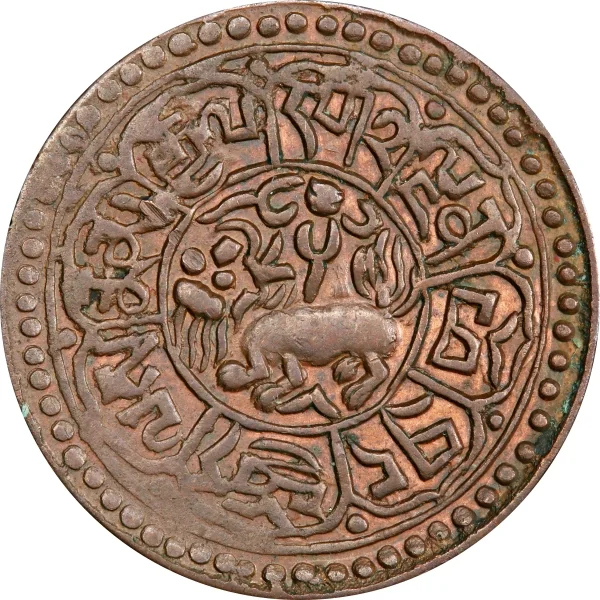
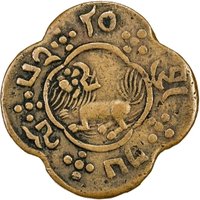
Obverse
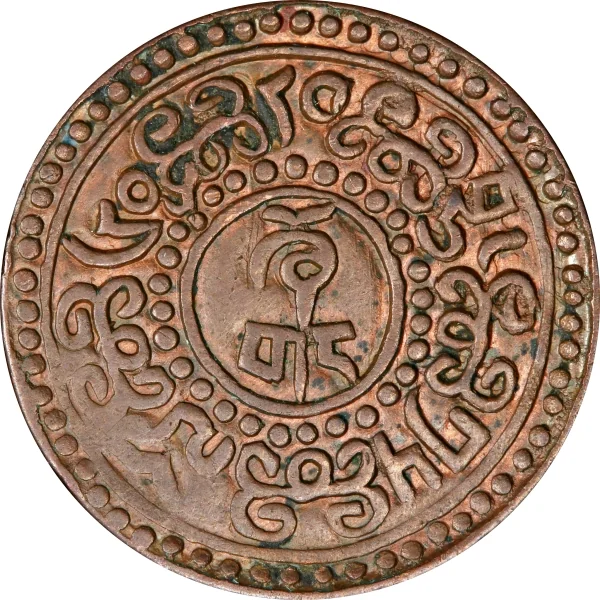
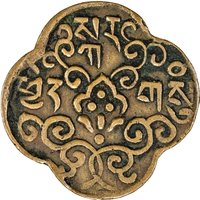
Reverse
Edge
Reeded.
Mintings
| Year | Mint Mark | Mintage | Quality | Collection |
|---|---|---|---|---|
| 1922 | — | — | ||
| 1923 | — | — | ||
| 1924 | — | — | ||
| 1925 | — | — | ||
| 1926 | — | — | ||
| 1927 | — | — | ||
| 1928 | — | — |
Historical background
In 1922, Tibet operated under a complex and fragmented monetary system, reflecting its de facto political autonomy from China and its regional economic ties. The primary currency in circulation was the Tibetan silver tangka (or srang), a coin minted by the government in Lhasa. These coins, often struck from melted-down silver dollars, varied in purity and weight, leading to fluctuations in their value. Alongside the tangka, a system of fractional copper coins called skar was used for smaller transactions, creating a bimetallic standard that was often unstable.
This local currency coexisted with significant foreign silver, most notably the Mexican Silver Dollar and the British Indian Rupee. These foreign coins circulated heavily, especially in trade hubs and southern regions near British India, due to Tibet's active cross-border trade. The rupee's influence was particularly strong, underscoring the economic pull of the British Raj. Furthermore, Chinese silver yuan from the Republican era also flowed into border areas, adding another layer of monetary complexity. The simultaneous circulation of these multiple coinages, without a fixed exchange rate, created a challenging environment for commerce.
The monetary situation was a direct manifestation of Tibet's geopolitical position. The Lhasa government's ability to mint its own coinage was a key symbol of its administrative autonomy. However, the reliance on imported silver and the circulation of foreign currencies highlighted the region's economic dependencies and the competing spheres of influence from China and British India. This unstable and multi-sourced currency system posed practical difficulties for daily trade and was symptomatic of the broader political uncertainties Tibet faced in the early 20th century.
This local currency coexisted with significant foreign silver, most notably the Mexican Silver Dollar and the British Indian Rupee. These foreign coins circulated heavily, especially in trade hubs and southern regions near British India, due to Tibet's active cross-border trade. The rupee's influence was particularly strong, underscoring the economic pull of the British Raj. Furthermore, Chinese silver yuan from the Republican era also flowed into border areas, adding another layer of monetary complexity. The simultaneous circulation of these multiple coinages, without a fixed exchange rate, created a challenging environment for commerce.
The monetary situation was a direct manifestation of Tibet's geopolitical position. The Lhasa government's ability to mint its own coinage was a key symbol of its administrative autonomy. However, the reliance on imported silver and the circulation of foreign currencies highlighted the region's economic dependencies and the competing spheres of influence from China and British India. This unstable and multi-sourced currency system posed practical difficulties for daily trade and was symptomatic of the broader political uncertainties Tibet faced in the early 20th century.
🌱 Fairly Common