

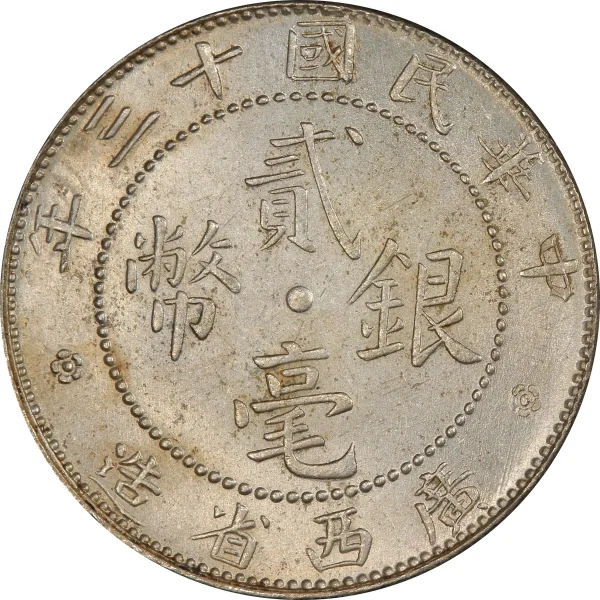
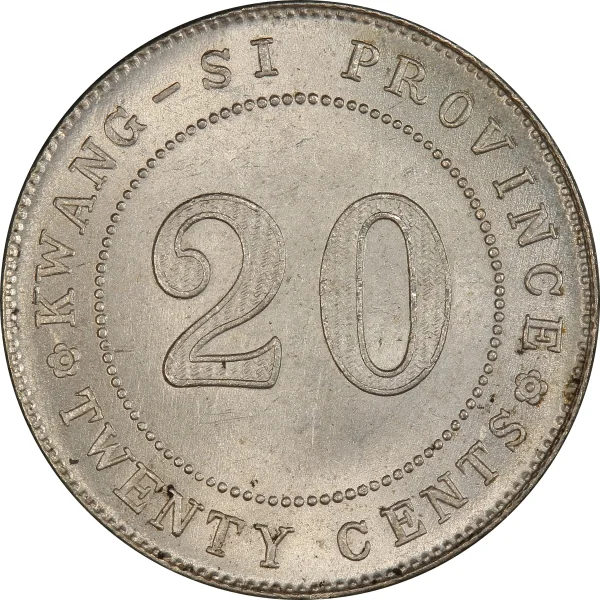
2 Jiao – Kwangsi Province
China
Context
Years: 1919–1925
Country: China 
Issuer: Kwangsi Province
Period:
(1912—1949)
Currency:
(1905—1949)
Demonetized: Yes
Material
References
Y: #Click to copy to clipboard415a
Numista: #36537
Value
Bullion value: $14.92
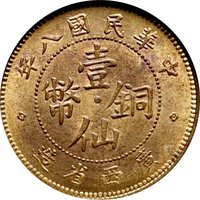
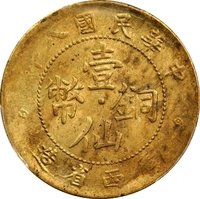
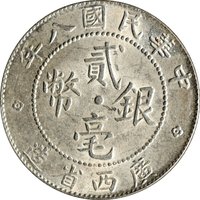
Obverse
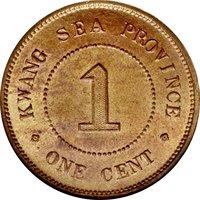
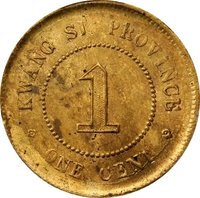
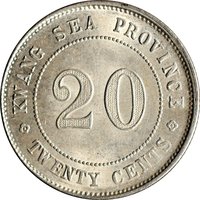
Reverse
Edge
Reeded.
Mintings
| Year | Mint Mark | Mintage | Quality | Collection |
|---|---|---|---|---|
| 1919 | — | — | ||
| 1920 | — | — | ||
| 1922 | — | — | ||
| 1923 | — | — | ||
| 1924 | — | — | ||
| 1925 | — | — |
Historical background
In 1919, the currency situation in Kwangsi (Guangxi) Province was characterized by profound instability and fragmentation, a direct legacy of the warlord era following the collapse of the Qing Dynasty. The province, under the control of the Guangxi Clique led by Lu Rongting, operated with de facto autonomy from the weak central government in Beijing. As such, it did not have a unified, standardized monetary system. Instead, circulation was a chaotic mix of old imperial silver coins (yuan and subsidiary coins), silver bullion by weight (taels), and a vast array of copper cash coins. Crucially, the province also issued its own paper currency, often through militarized provincial banks like the Guangxi Provincial Bank, but these notes were not trusted beyond local areas and frequently depreciated.
This monetary disorder was exacerbated by two major factors. First, the warlord government, needing to finance its military and administrative apparatus, frequently resorted to unrestrained printing of paper notes, leading to severe inflation and a wide gap between the face value of paper and its actual silver value. Second, Kwangsi was economically underdeveloped and suffered from a chronic outflow of silver, as it was used to pay for imported goods from other provinces and abroad. This created a persistent shortage of hard currency, forcing reliance on the depreciating paper and further undermining public confidence.
Consequently, the daily economic life for merchants and peasants was fraught with difficulty. Transactions required constant negotiation over exchange rates between different coinages, paper, and silver, creating friction in commerce and making long-term planning nearly impossible. The situation placed a heavy burden on the rural populace, who often had to pay taxes in silver while earning income in depreciating local currency. This unstable monetary environment reflected the broader political fragmentation of China in 1919, where provincial power, military exigency, and a lack of central authority directly dictated economic hardship at the local level.
This monetary disorder was exacerbated by two major factors. First, the warlord government, needing to finance its military and administrative apparatus, frequently resorted to unrestrained printing of paper notes, leading to severe inflation and a wide gap between the face value of paper and its actual silver value. Second, Kwangsi was economically underdeveloped and suffered from a chronic outflow of silver, as it was used to pay for imported goods from other provinces and abroad. This created a persistent shortage of hard currency, forcing reliance on the depreciating paper and further undermining public confidence.
Consequently, the daily economic life for merchants and peasants was fraught with difficulty. Transactions required constant negotiation over exchange rates between different coinages, paper, and silver, creating friction in commerce and making long-term planning nearly impossible. The situation placed a heavy burden on the rural populace, who often had to pay taxes in silver while earning income in depreciating local currency. This unstable monetary environment reflected the broader political fragmentation of China in 1919, where provincial power, military exigency, and a lack of central authority directly dictated economic hardship at the local level.
💎 Very Rare