

2 jiao – Kwangtung Province
Add to wishlist
China
Context
Year: 1924
Chinese republican Year:: 13
Country: China
Issuer: Kwangtung Province
Period:
(1912—1949)
Currency:
(1900—1949)
Demonetized: Yes
Material
References
Y: #
Numista: #36527
Value
Bullion value: $13.54
Obverse
Description:
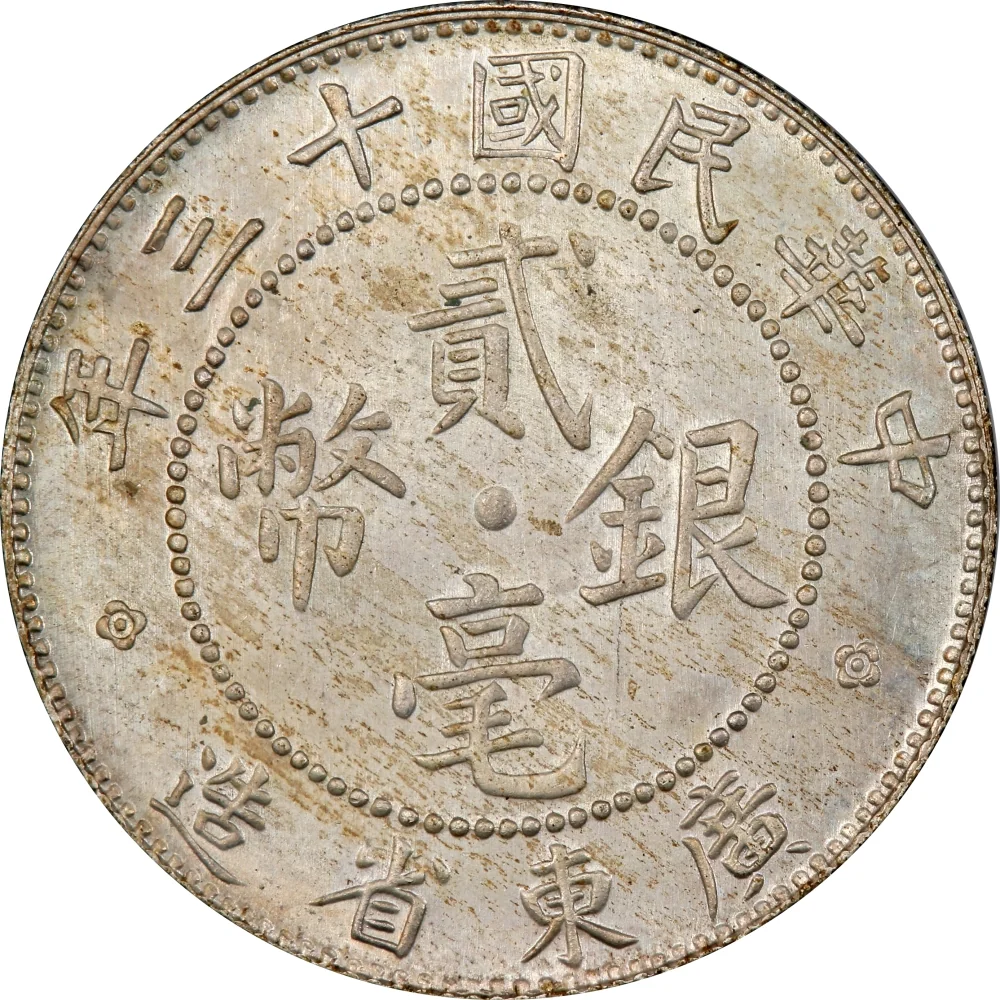
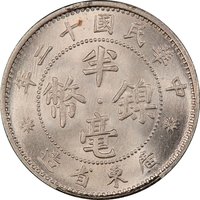
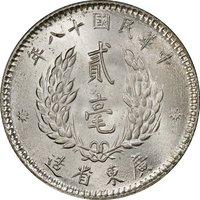
Four ideograms read vertically, right to left, encircled by more characters.
Inscription:
年三十國民華中
貳
幣銀
毫
造省東廣
貳
幣銀
毫
造省東廣
Translation:
THIRTIETH YEAR OF THE REPUBLIC OF CHINA
TWO
SILVER COIN
CANTARE
MINTED IN KWANGTUNG PROVINCE
TWO
SILVER COIN
CANTARE
MINTED IN KWANGTUNG PROVINCE
Language: Chinese
Reverse
Description:
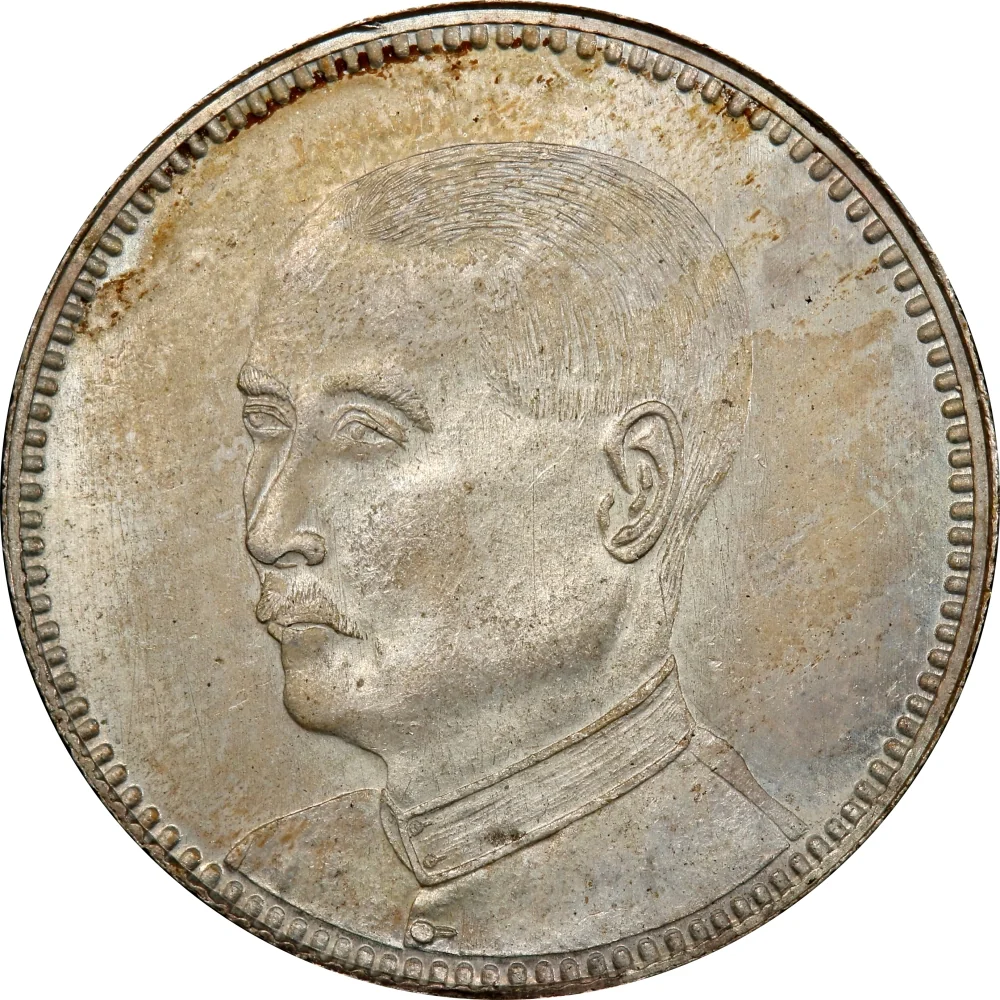
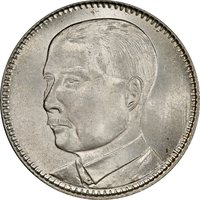
Sun Yat-sen bust in left profile.
Edge
Reeded.
Categories
| Person> Politician |
| Mustache/Beard |
Mintings
| Year | Mint Mark | Mintage | Quality | Collection |
|---|---|---|---|---|
| 1924 | — | — |
Historical background
In 1924, Kwangtung (Guangdong) Province was a chaotic monetary landscape, emblematic of China's broader political fragmentation. The province was the power base of Sun Yat-sen's Nationalist government in Canton, but its authority was contested by local warlords, merchant militias, and foreign interests. This political disunity was directly reflected in its currency, which saw a bewildering coexistence of multiple systems. Silver dollars (notably Mexican "Eagle" dollars and Sun Yat-sen "Junk" dollars), silver sycee, copper cash, and a vast array of private banknotes issued by native banks and even large merchants all circulated simultaneously, with values fluctuating by locality and issuer.
The most disruptive element was the proliferation of paper money. To finance military campaigns and administration, both the Canton government and regional warlords forcibly issued unbacked or under-backed banknotes, such as the "Canton Mint Notes." These notes rapidly depreciated, causing severe inflation and eroding public trust. Compounding the problem, the powerful Hong Kong and Shanghai Banking Corporation (HSBC) issued its own banknotes, pegged to the silver standard, which often circulated at a premium compared to local Chinese issues, further undermining the local monetary sovereignty.
This monetary chaos severely hampered trade and burdened the peasantry and urban poor. Sun Yat-sen's government recognized the need for financial consolidation to build a viable state and fund the Northern Expedition. Efforts to centralize currency issuance through the newly established Central Bank of Canton in 1924 were a direct response to this crisis, aiming to displace warlord notes and create a unified provincial currency. However, in 1924, these efforts were in their infancy, and Kwangtung remained a textbook example of the economic disarray that characterized the warlord era.
The most disruptive element was the proliferation of paper money. To finance military campaigns and administration, both the Canton government and regional warlords forcibly issued unbacked or under-backed banknotes, such as the "Canton Mint Notes." These notes rapidly depreciated, causing severe inflation and eroding public trust. Compounding the problem, the powerful Hong Kong and Shanghai Banking Corporation (HSBC) issued its own banknotes, pegged to the silver standard, which often circulated at a premium compared to local Chinese issues, further undermining the local monetary sovereignty.
This monetary chaos severely hampered trade and burdened the peasantry and urban poor. Sun Yat-sen's government recognized the need for financial consolidation to build a viable state and fund the Northern Expedition. Efforts to centralize currency issuance through the newly established Central Bank of Canton in 1924 were a direct response to this crisis, aiming to displace warlord notes and create a unified provincial currency. However, in 1924, these efforts were in their infancy, and Kwangtung remained a textbook example of the economic disarray that characterized the warlord era.
✨ Legendary