

2 Jiao – Kwangtung Province
China
Context
Years: 1928–1930
Country: China 
Issuer: Kwangtung Province
Period:
(1912—1949)
Currency:
(1900—1949)
Demonetized: Yes
Total mintage: 808,268,000
Material
References
Y: #Click to copy to clipboard426
Numista: #14086
Value
Bullion value: $14.85
Obverse
Description:
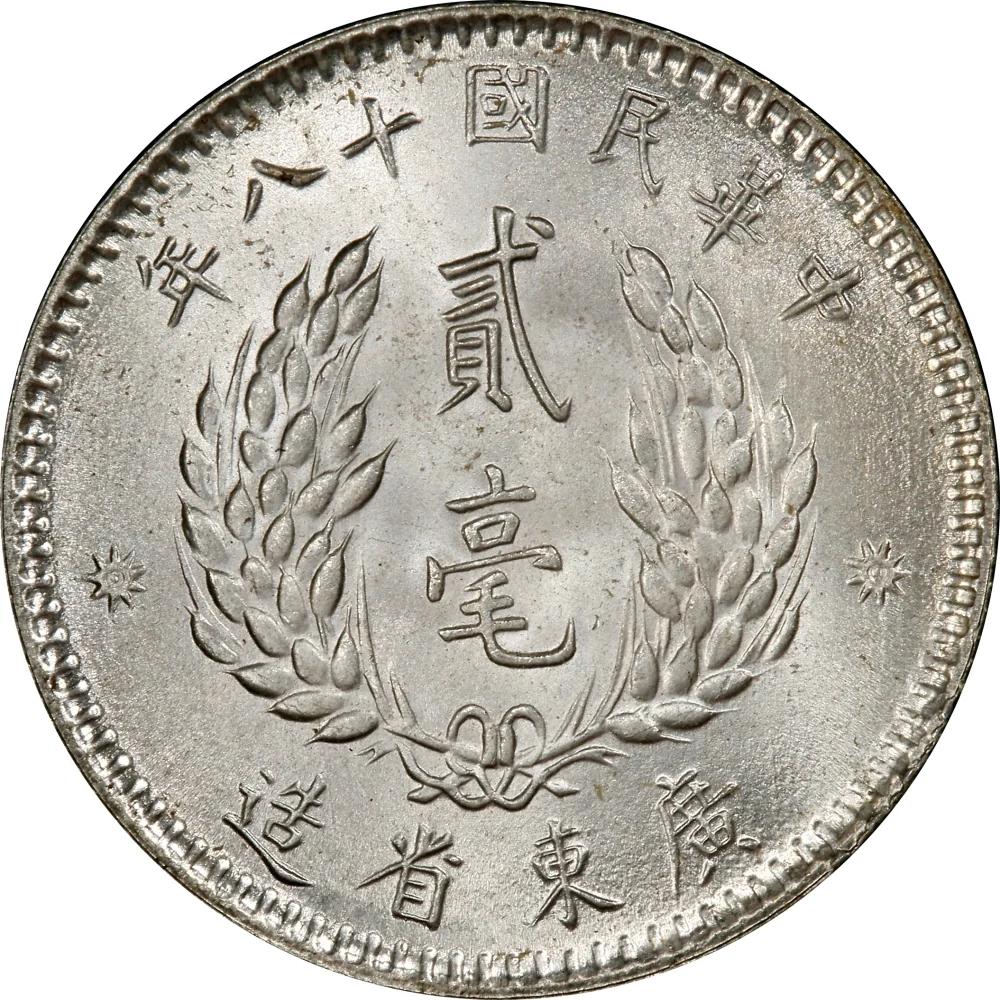
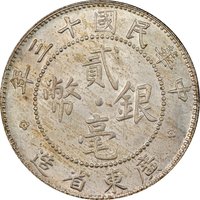
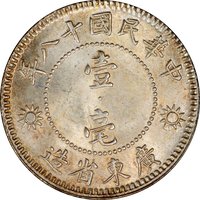
Wreath encircling two Chinese characters, flanked by more above and below.
Inscription:
年八十國民華中
貳
毫
造省東廣
貳
毫
造省東廣
Translation:
EIGHTIETH YEAR OF THE REPUBLIC OF CHINA
TWO CENTS
MADE IN KWANGTUNG PROVINCE
TWO CENTS
MADE IN KWANGTUNG PROVINCE
Language: Chinese
Reverse
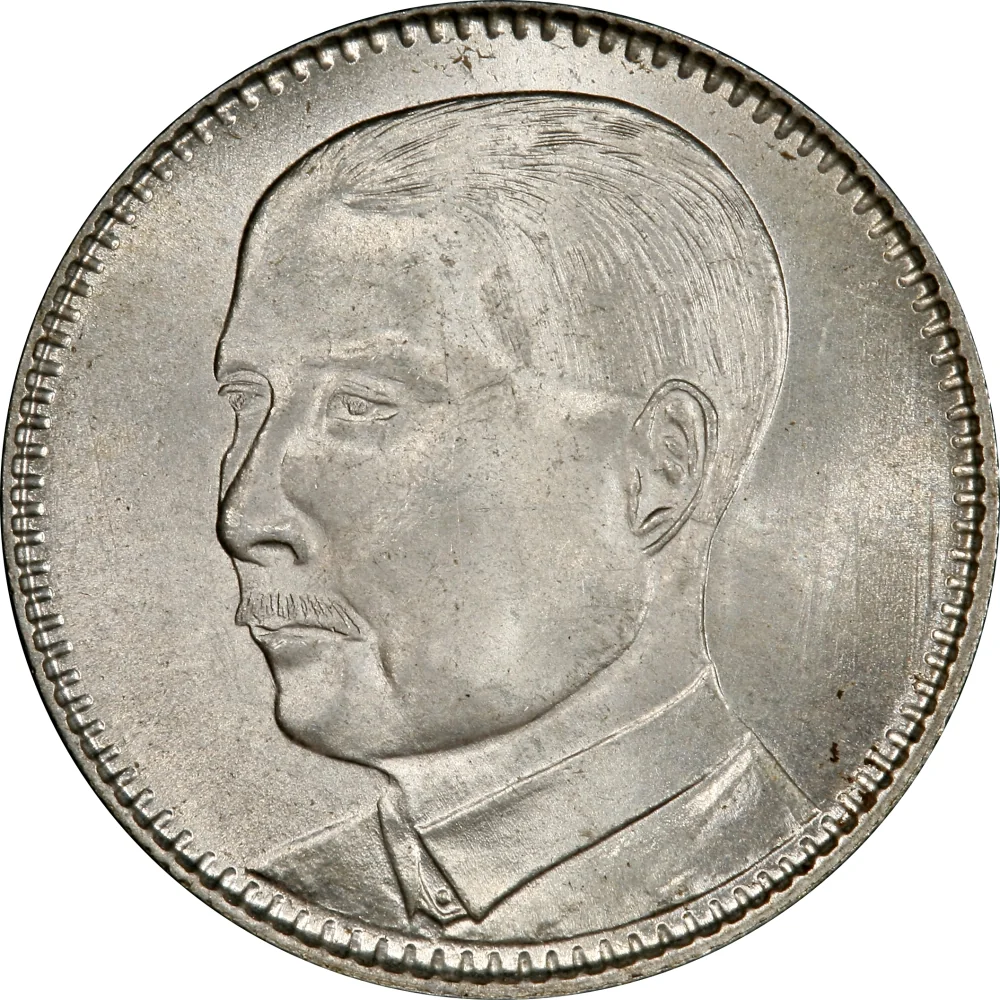
Description:
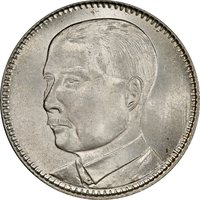
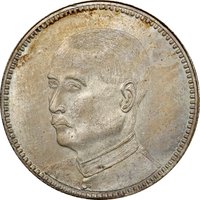
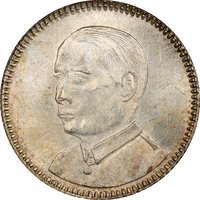
Sun Yat-sen bust in left profile.
Edge
Reeded.
Categories
| Person> Politician |
| Mustache/Beard |
| Symbol> Wreath |
Mintings
| Year | Mint Mark | Mintage | Quality | Collection |
|---|---|---|---|---|
| 1928 | — | 28,530,000 | ||
| 1929 | — | 779,738,000 | ||
| 1930 | — | — |
Historical background
In 1928, Kwangtung (Guangdong) Province was caught in a complex and chaotic multi-currency environment, a legacy of the late Qing dynasty and the warlord era. The national currency, the silver yuan issued by the Central Bank of China in Nanking, had limited circulation and authority in the south. Instead, the province's financial system was dominated by the Guangdong Provincial Bank, which issued its own paper notes, the Guangdong yinpiao (銀票). These notes were theoretically backed by silver reserves but were often over-issued to fund the military and administrative expenditures of the provincial regime, leading to frequent depreciation and public distrust.
This instability was compounded by the widespread use of physical silver in various forms, including foreign-minted silver dollars (notably Mexican "Eagle" dollars and British trade dollars), Chinese silver yuan from other mints, and sycee (silver ingots). The value of these coins fluctuated daily based on weight and purity, creating a cumbersome and inefficient system for trade. Furthermore, Hong Kong dollars circulated heavily, especially in the Pearl River Delta, due to extensive commercial links with the British colony, acting as a more stable alternative and undermining the sovereignty of Chinese currency.
The situation reflected the political fragmentation of the period. While the Kuomintang's Nationalist Government had nominally reunified China in 1928, its control over Kwangtung remained tenuous, with local militarists and political factions exerting significant autonomy. Consequently, attempts at national monetary unification had little immediate effect. The province's currency chaos stifled economic development, facilitated speculation, and burdened merchants and peasants alike, who bore the risk of sudden devaluations. It was a tangible manifestation of the broader struggle between central authority and regional power that would persist for years.
This instability was compounded by the widespread use of physical silver in various forms, including foreign-minted silver dollars (notably Mexican "Eagle" dollars and British trade dollars), Chinese silver yuan from other mints, and sycee (silver ingots). The value of these coins fluctuated daily based on weight and purity, creating a cumbersome and inefficient system for trade. Furthermore, Hong Kong dollars circulated heavily, especially in the Pearl River Delta, due to extensive commercial links with the British colony, acting as a more stable alternative and undermining the sovereignty of Chinese currency.
The situation reflected the political fragmentation of the period. While the Kuomintang's Nationalist Government had nominally reunified China in 1928, its control over Kwangtung remained tenuous, with local militarists and political factions exerting significant autonomy. Consequently, attempts at national monetary unification had little immediate effect. The province's currency chaos stifled economic development, facilitated speculation, and burdened merchants and peasants alike, who bore the risk of sudden devaluations. It was a tangible manifestation of the broader struggle between central authority and regional power that would persist for years.
🌱 Fairly Common