

10 Cash – Kiangnan Province
China
Context
Year: 1905
Country: China 
Issuer: Kiangnan Province
Ruler: Guangxu
Currency:
(1898—1949)
Demonetized: Yes
Material
References
Y: #Click to copy to clipboardD140
Numista: #296990
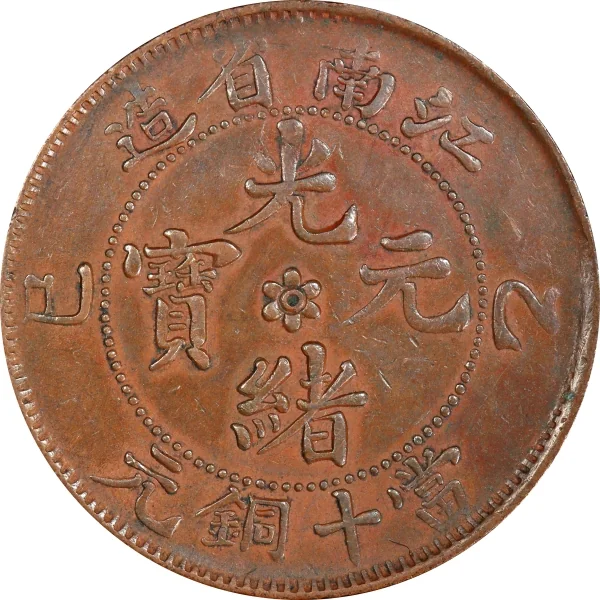
Obverse
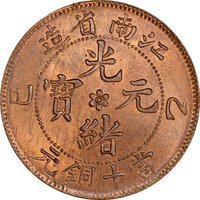
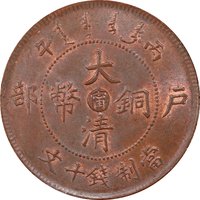
Description:
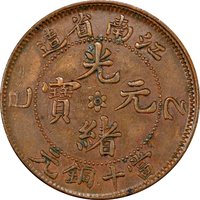
Four Chinese ideograms arranged vertically around a central flower, surrounded by additional characters.
Inscription:
造省南江
巳乙
光
寶 元
緒
元銅十當
巳乙
光
寶 元
緒
元銅十當
Translation:
Made in the Southern Jiangxi Province
Yi-Si (Year 1905)
Guangxu
Treasure
Ten Cash Coin
(10 Cash Coin from the 1st Year of the Guangxu Reign, minted in Southern Jiangxi Province)
Yi-Si (Year 1905)
Guangxu
Treasure
Ten Cash Coin
(10 Cash Coin from the 1st Year of the Guangxu Reign, minted in Southern Jiangxi Province)
Language: Classical Chinese
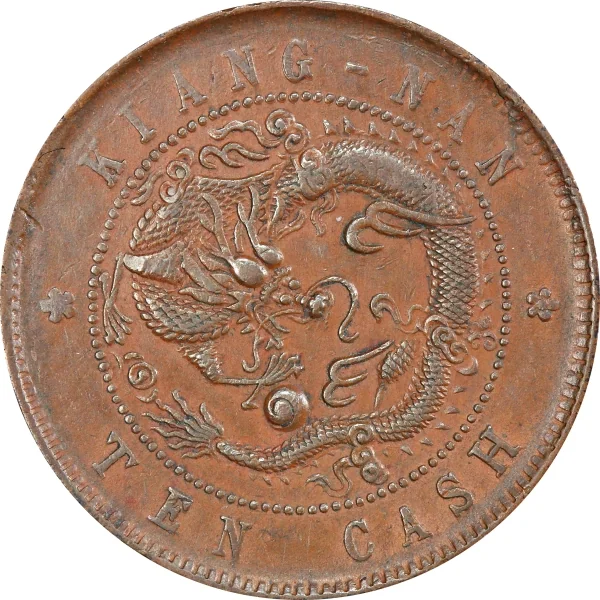
Reverse
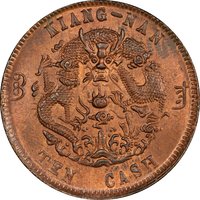
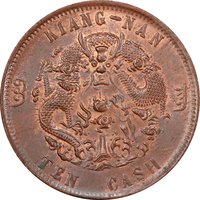
Description:
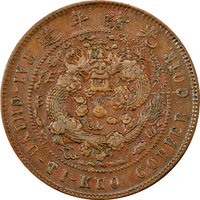
Dragon encircling a pearl, surrounded by English text.
Inscription:
KIANG-NAN
TEN CASH
TEN CASH
Edge
Plain
Categories
| Mythology> Fantastic animal |
| Plants> Flower |
Mintings
| Year | Mint Mark | Mintage | Quality | Collection |
|---|---|---|---|---|
| 1905 | — | — |
Historical background
In 1905, the currency situation in Kiangnan Province (centered on Shanghai and the lower Yangtze Delta) was one of profound complexity and instability, reflecting China's late Qing dynasty struggles with modernization and foreign encroachment. The monetary system was not unified but a chaotic mix of competing currencies. These included various silver sycee ingots (taels) weighed and assayed differently by locale, foreign-minted silver dollars (notably Mexican and British trade dollars), a growing number of Chinese provincial silver and copper coinages, and a vast circulation of copper cash coins for daily small transactions. The most important unit for large commercial transactions was the Shanghai tael, a purely imaginary accounting unit used on the Shanghai Money Market, which further abstracted value from physical coin.
This multiplicity created severe handicaps for commerce and government finance. Every transaction required expert assessment and exchange between currencies, with fluctuating discount rates (shui) causing inefficiency and risk. The provincial mint in Nanking, alongside others, attempted to standardize coinage by issuing new silver and copper yuan, but these competed with the entrenched tael system and the preferred foreign dollars, which were seen as more reliable. Furthermore, the declining intrinsic value of copper cash due to debasement caused inflation and hardship for the peasantry, while the silver-based tael system exposed the economy to volatile international silver prices.
The currency chaos in China's wealthiest province was a powerful catalyst for reformist agitation. By 1905, influential merchants, compradors, and officials in Shanghai were increasingly vocal in demanding the unification of the currency on a decimal, yuan-based standard and the abolition of the tael. This pressure, combined with the Qing government's own need for fiscal consolidation, would lead to serious, though initially unsuccessful, imperial edicts for monetary reform in the subsequent years, setting the stage for the major currency reforms attempted after the 1911 Revolution.
This multiplicity created severe handicaps for commerce and government finance. Every transaction required expert assessment and exchange between currencies, with fluctuating discount rates (shui) causing inefficiency and risk. The provincial mint in Nanking, alongside others, attempted to standardize coinage by issuing new silver and copper yuan, but these competed with the entrenched tael system and the preferred foreign dollars, which were seen as more reliable. Furthermore, the declining intrinsic value of copper cash due to debasement caused inflation and hardship for the peasantry, while the silver-based tael system exposed the economy to volatile international silver prices.
The currency chaos in China's wealthiest province was a powerful catalyst for reformist agitation. By 1905, influential merchants, compradors, and officials in Shanghai were increasingly vocal in demanding the unification of the currency on a decimal, yuan-based standard and the abolition of the tael. This pressure, combined with the Qing government's own need for fiscal consolidation, would lead to serious, though initially unsuccessful, imperial edicts for monetary reform in the subsequent years, setting the stage for the major currency reforms attempted after the 1911 Revolution.
✨ Legendary