

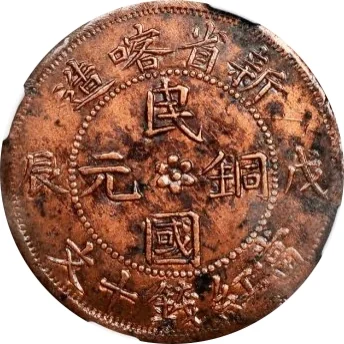
10 cash – Sinkiang Province
Add to wishlist
China
Context
Year: 1928
Country: China
Issuer: Sinkiang Province
Period:
(1912—1949)
Currency:
(1939—1949)
Demonetized: Yes
Material
References
Y: #
Numista: #296534
Obverse
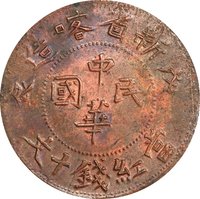
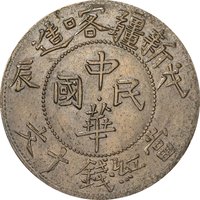
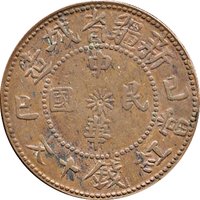
Description:
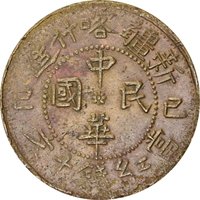
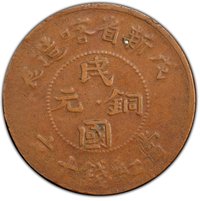
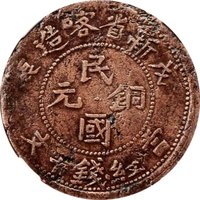
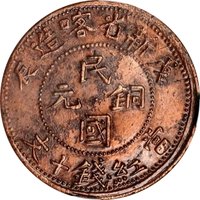
Four ideograms read vertically, right to left, encircled by more characters.
Inscription:
造喀省新
辰戊
民
元銅
國
文十錢紅當
辰戊
民
元銅
國
文十錢紅當
Translation:
Made in Kashing Province
Minting Year: Wuchen
Republic
Ten Cash Copper Coin
Red Standard
Minting Year: Wuchen
Republic
Ten Cash Copper Coin
Red Standard
Language: Chinese
Reverse
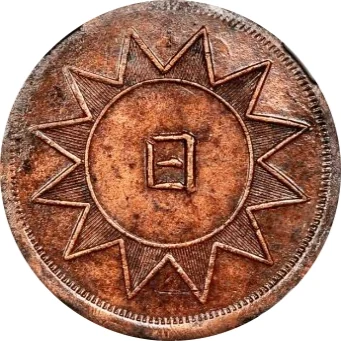
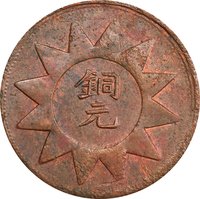
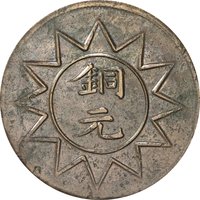
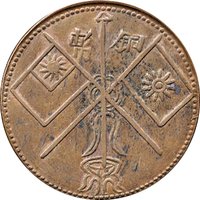
Description:
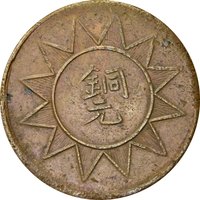
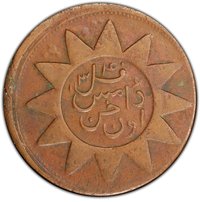
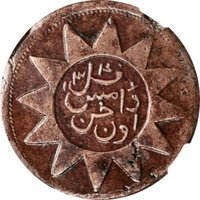
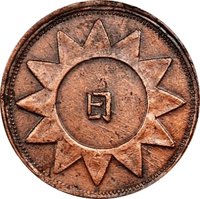
A Chinese character in a sun with twelve outlined rays.
Inscription:
日
Translation:
Sun
Language: Japanese
Edge
Mintings
| Year | Mint Mark | Mintage | Quality | Collection |
|---|---|---|---|---|
| 1928 | — | — |
Historical background
In 1928, Sinkiang (Xinjiang) Province operated under a chaotic and fragmented monetary system, a direct reflection of its political isolation and weak control from the Nanjing-based Nationalist government. The province was effectively an autonomous warlord domain under Governor Jin Shuren, who succeeded the long-ruling Yang Zengxin that same year. The economy was primarily agrarian and pastoral, with limited modern industry, and its remote location, separated by deserts and mountains, made it difficult for central Chinese currency to circulate effectively. Consequently, the financial landscape was a patchwork of old Chinese silver taels and silver yuan coins, alongside a substantial influx of foreign currencies, particularly the Russian Tsarist rubles and later Soviet chervonets, which dominated trade along the northern borders.
The most pressing monetary issue was Jin Shuren's introduction of poorly backed paper currency to solve chronic fiscal deficits. The provincial treasury, known as the Xinjiang Provincial Treasury, issued handwritten and later printed notes denominated in taels and yuan. These notes, not backed by sufficient silver reserves, quickly began to depreciate, especially outside the provincial capital of Dihua (Ürümqi). This depreciation led to severe price inflation, harming the populace and undermining economic stability. The situation was exacerbated by the coexistence of multiple currency types, which complicated trade and encouraged speculation, while primitive banking infrastructure and a lack of public confidence further hindered monetary unity.
Overall, the currency situation in 1928 Sinkiang was characterized by a weak provincial fiat currency competing with physical silver and stronger foreign notes. This monetary disarray mirrored Jin Shuren's tenuous grip on power and the province's economic vulnerability. The deteriorating value of paper money sowed widespread discontent, becoming one of the key factors that would contribute to the major rebellions and political upheaval that erupted in the early 1930s, ultimately ending Jin's rule.
The most pressing monetary issue was Jin Shuren's introduction of poorly backed paper currency to solve chronic fiscal deficits. The provincial treasury, known as the Xinjiang Provincial Treasury, issued handwritten and later printed notes denominated in taels and yuan. These notes, not backed by sufficient silver reserves, quickly began to depreciate, especially outside the provincial capital of Dihua (Ürümqi). This depreciation led to severe price inflation, harming the populace and undermining economic stability. The situation was exacerbated by the coexistence of multiple currency types, which complicated trade and encouraged speculation, while primitive banking infrastructure and a lack of public confidence further hindered monetary unity.
Overall, the currency situation in 1928 Sinkiang was characterized by a weak provincial fiat currency competing with physical silver and stronger foreign notes. This monetary disarray mirrored Jin Shuren's tenuous grip on power and the province's economic vulnerability. The deteriorating value of paper money sowed widespread discontent, becoming one of the key factors that would contribute to the major rebellions and political upheaval that erupted in the early 1930s, ultimately ending Jin's rule.
✨ Legendary