

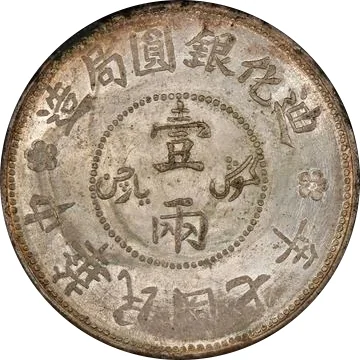
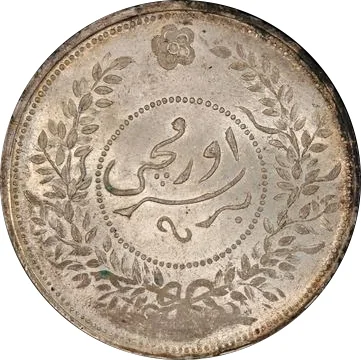
1 sar – Sinkiang Province
Add to wishlist
China
Context
Year: 1918
Chinese republican Year:: 7
Country: China
Issuer: Sinkiang Province
Period:
(1912—1949)
Demonetized: Yes
Material
References
Y: #
Numista: #290734
Value
Bullion value: $87.86
Obverse
Reverse
Edge
Mintings
| Year | Mint Mark | Mintage | Quality | Collection |
|---|---|---|---|---|
| 1918 | — | — |
Historical background
In 1918, Sinkiang (Xinjiang) Province existed in a state of monetary fragmentation and instability, a direct reflection of its isolated and contested political situation. The province was under the nominal control of Governor Yang Zengxin, who ruled with a pragmatic and autocratic hand, balancing between the weak Republican government in Beijing and powerful local interests. The economy was not integrated with China's coastal financial systems, leading to a severe shortage of standardized national currency (Yuan). Instead, the monetary landscape was a complex patchwork of older Chinese silver taels and yuan coins, Russian Tsarist rubles (a legacy of pre-Revolutionary trade), and a vast array of local and privately issued notes and coins.
The most pressing currency issue was the hyperinflation of the provincial paper money, known as Xinjiang Provincial Currency or Xinjiang piao. Governor Yang's administration, facing revenue shortfalls and the high cost of maintaining his military and bureaucracy, resorted to excessive printing of these notes without sufficient silver reserves. This led to a rapid devaluation, with the piao trading at a steep and worsening discount against silver. In the northern Ili region, which had stronger historical ties to Russia, the more stable silver-based Rouble notes from the Tsarist era (and briefly, Kerensky rubles) remained in widespread use, creating a dual monetary system that further complicated trade and governance.
This chaotic currency situation exacerbated economic hardship for the population and distorted regional trade. The instability was compounded by the geopolitical turmoil of the period, including the Russian Revolution and Civil War, which disrupted cross-border commerce and cut off sources of more stable foreign currency. Yang Zengxin's primary goal was political control, not monetary reform, and his printing presses continued to run, storing up severe inflationary problems for the decade to follow. Thus, in 1918, Sinkiang's currency was not a unified system but a symptom of its geographical isolation, weak central authority, and the governor's fiscal policies aimed at preserving his own power above all else.
The most pressing currency issue was the hyperinflation of the provincial paper money, known as Xinjiang Provincial Currency or Xinjiang piao. Governor Yang's administration, facing revenue shortfalls and the high cost of maintaining his military and bureaucracy, resorted to excessive printing of these notes without sufficient silver reserves. This led to a rapid devaluation, with the piao trading at a steep and worsening discount against silver. In the northern Ili region, which had stronger historical ties to Russia, the more stable silver-based Rouble notes from the Tsarist era (and briefly, Kerensky rubles) remained in widespread use, creating a dual monetary system that further complicated trade and governance.
This chaotic currency situation exacerbated economic hardship for the population and distorted regional trade. The instability was compounded by the geopolitical turmoil of the period, including the Russian Revolution and Civil War, which disrupted cross-border commerce and cut off sources of more stable foreign currency. Yang Zengxin's primary goal was political control, not monetary reform, and his printing presses continued to run, storing up severe inflationary problems for the decade to follow. Thus, in 1918, Sinkiang's currency was not a unified system but a symptom of its geographical isolation, weak central authority, and the governor's fiscal policies aimed at preserving his own power above all else.
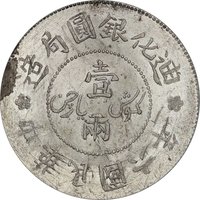
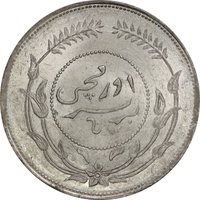
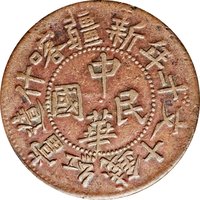
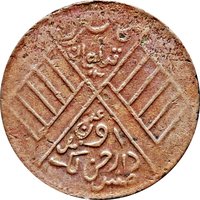
✨ Legendary